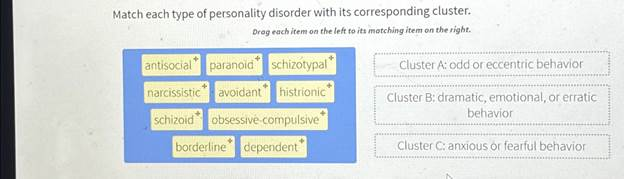
Drag each item on the left to its matching item on the right.
Cluster A: odd or eccentric behavior
Cluster B: dramatic, emotional, or erratic behavior
Cluster C: anxious or fearful behavior
The Correct Answer and Explanation is :
Personality disorders are categorized into three clusters based on shared characteristics:
Cluster A: Odd or Eccentric Behavior
This cluster includes disorders characterized by unusual or odd behaviors and thoughts.
- Paranoid Personality Disorder: Individuals exhibit pervasive distrust and suspicion of others without sufficient evidence.
- Schizoid Personality Disorder: Marked by detachment from social relationships and a limited range of emotional expression.
- Schizotypal Personality Disorder: Characterized by acute discomfort in close relationships, cognitive or perceptual distortions, and eccentric behavior.
Cluster B: Dramatic, Emotional, or Erratic Behavior
Disorders in this cluster involve intense emotions and erratic behaviors.
- Antisocial Personality Disorder: Involves a disregard for the rights of others, deceitfulness, and manipulation for personal gain.
- Borderline Personality Disorder: Characterized by instability in interpersonal relationships, self-image, and emotions, along with marked impulsivity.
- Histrionic Personality Disorder: Involves excessive emotionality and attention-seeking behavior.
- Narcissistic Personality Disorder: Marked by grandiosity, need for admiration, and lack of empathy.
Cluster C: Anxious or Fearful Behavior
This cluster includes disorders characterized by anxiety and fear.
- Avoidant Personality Disorder: Characterized by social inhibition, feelings of inadequacy, and hypersensitivity to negative evaluation.
- Dependent Personality Disorder: Involves submissive and clinging behavior, with fears of separation.
- Obsessive-Compulsive Personality Disorder: Marked by preoccupation with orderliness, perfectionism, and mental and interpersonal control.
Understanding these clusters aids in diagnosing and treating personality disorders by recognizing patterns of behavior and thought.