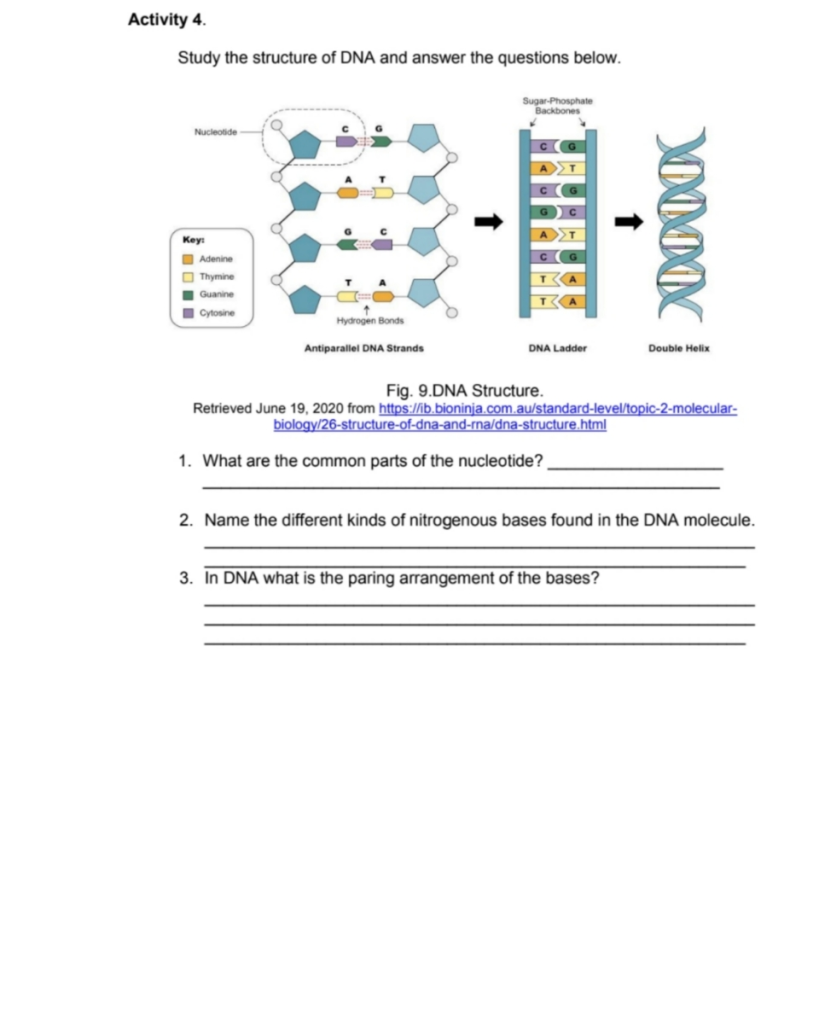
What are the common parts of the nucleotide? 2. Name the different kinds of nitrogenous bases found in the DNA molecule. 3. In DNA what is the paring arrangement of the bases?
The Correct Answer and Explanation is :
- Common parts of a nucleotide: A nucleotide consists of three components: a phosphate group, a five-carbon sugar (either deoxyribose in DNA or ribose in RNA), and a nitrogenous base.
- Nitrogenous bases in DNA: DNA contains four types of nitrogenous bases:
- Purines: Adenine (A), Guanine (G)
- Pyrimidines: Cytosine (C), Thymine (T)
- Base pairing in DNA: In DNA, the bases pair in a specific manner:
- Adenine (A) pairs with Thymine (T)
- Cytosine (C) pairs with Guanine (G)
This pairing is based on hydrogen bonds: A-T pairs form two hydrogen bonds, while C-G pairs form three. This complementary base pairing is crucial for the stability of the DNA double helix structure. The two strands of DNA are anti-parallel, meaning they run in opposite directions, which is necessary for the proper pairing of the bases.
The structure of DNA enables it to replicate accurately during cell division, as each strand serves as a template for a new complementary strand. Additionally, the specific pairing ensures that the genetic information encoded in the sequence of bases is preserved and passed on correctly. The sequence of nitrogenous bases along a DNA molecule determines the genetic code, which is essential for protein synthesis and cellular function.