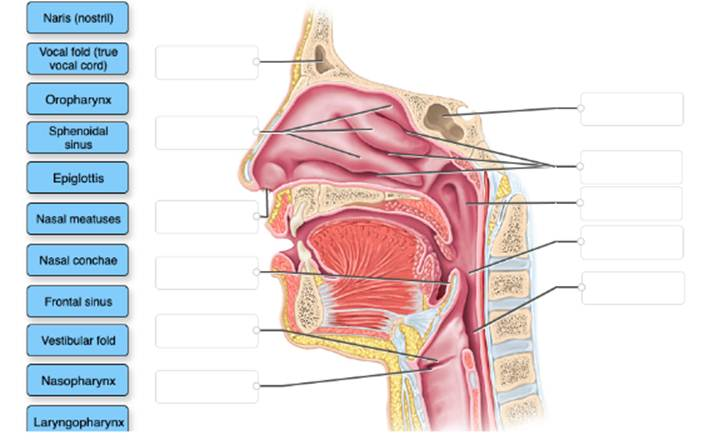
Label the structures of the upper respiratory tract (sagittal view) by clicking and dragging the labels to the correct location.
The Correct Answer and Explanation is :
The upper respiratory tract comprises the anatomical structures involved in the initial stages of respiration, including the nose, nasal cavities, pharynx, and larynx. A sagittal view provides a side perspective, allowing for a clear understanding of the spatial relationships among these components.
Nose and Nasal Cavities:
Air enters the body through the nostrils (nares) and passes into the nasal cavities. These cavities are lined with mucous membranes and cilia that filter, warm, and humidify the incoming air. The nasal conchae, or turbinates, are scroll-shaped bones within the nasal cavities that further aid in air filtration and conditioning.
Pharynx:
The pharynx, commonly known as the throat, is a muscular tube that serves both respiratory and digestive functions. It is divided into three regions:
- Nasopharynx: Located posterior to the nasal cavity, it serves solely as a passageway for air.
- Oropharynx: Situated posterior to the oral cavity, it serves as a passageway for both air and ingested food.
- Laryngopharynx: Located posterior to the larynx, it connects to the esophagus and larynx.
Larynx:
Commonly known as the voice box, the larynx connects the pharynx to the trachea. It houses the vocal cords (vocal folds), which vibrate to produce sound. The larynx is composed of several cartilages, including the thyroid cartilage (Adam’s apple), cricoid cartilage, and the epiglottis, which acts as a flap to prevent food from entering the airway during swallowing.
Trachea:
Although not part of the upper respiratory tract, the trachea (windpipe) is often included in sagittal views for context. It is a tube that extends from the larynx and conducts air to the bronchi and lungs.
Understanding the anatomy of the upper respiratory tract is essential for comprehending how air is conditioned and directed to the lungs, as well as how speech is produced. Each structure plays a vital role in ensuring efficient respiration and vocalization.