What does the size and shape of teeth say about the diets of each primate?
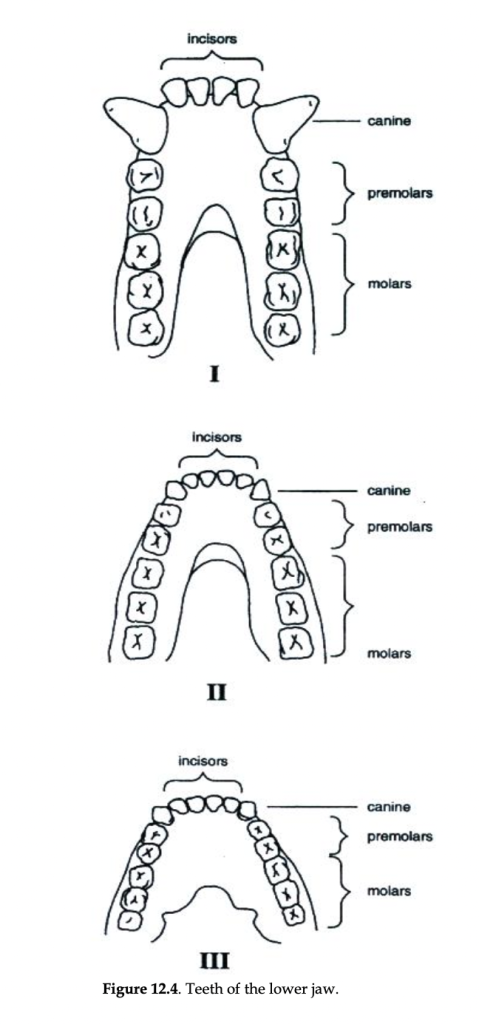
Consider the following image of the teeth in the lower jaw of select primates. What does the size and shape of teeth say about the diets of each primate?
The Correct Answer and Explanation is :
The size and shape of teeth in primates are closely linked to their diets, as different foods require different types of chewing and processing. Based on the image you provided, here’s what the size and shape of teeth suggest about the diets of the primates depicted:
- Large Canines: Species with prominent and sharp canines, such as baboons or chimpanzees, often consume a mixed diet but rely on these teeth for defense or dominance displays. While they may eat fruits and leaves, their large canines suggest some occasional meat consumption or competition within the group.
- Flat Molars with Thick Enamel: Primates with flat molars and thick enamel, like orangutans, are adapted for grinding tough, fibrous plant material. These teeth are suited to chewing leaves, stems, and fruits with hard exteriors.
- Sharp, Pointed Molars: Insectivorous primates, such as some smaller species like tarsiers, tend to have sharp and pointed molars for piercing and slicing through the exoskeletons of insects.
- Broad, Rounded Molars: Primates like gorillas, which eat fibrous leaves and stems, have broad molars to grind these foods efficiently. Their diets are primarily herbivorous, and their teeth reflect the need to process high-fiber material.
- Small Canines and Incisors: Primates like lemurs or howler monkeys with smaller canines and incisors suggest diets primarily based on soft fruits or leaves. They don’t rely heavily on tearing or cutting tough material.
Explanation:
The diversity in primate dentition highlights evolutionary adaptations to specific ecological niches. Teeth are critical tools for processing food, and their morphology provides direct clues about a species’ dietary habits. For example, large canines are not necessarily linked to carnivory but often relate to social interactions or competition. Conversely, molar shape reflects the type of mechanical processing required—flat surfaces for grinding fibrous plants and sharp edges for cutting meat or insects. These adaptations underscore the strong relationship between dental morphology and diet, shaped by millions of years of evolution.