In the activation-synthesis model of dreaming, what is synthesized?
A. primitive aggressive impulses
B. the four stages of NREM sleep so that more REM sleep may occur
C. the neurotransmitter serotonin and the hormone melatonin
D. a mixture of memories and sensations that are internally generated by the brain
The Correct Answer and Explanation is :
The correct answer is D. a mixture of memories and sensations that are internally generated by the brain.
Explanation:
The activation-synthesis model of dreaming was proposed by Allan Hobson and Robert McCarley in 1977. According to this model, dreams are the brain’s attempt to make sense of random neural activity that occurs during REM (Rapid Eye Movement) sleep. These bursts of activity, originating from the brainstem (specifically the pons), are random and not necessarily tied to external stimuli or thoughts. However, the brain still tries to interpret and create meaning from these signals.
During REM sleep, the brain remains highly active, but the body is in a state of paralysis to prevent us from physically acting out our dreams. The activation-synthesis model suggests that the brain synthesizes or organizes this random neural activity by associating it with stored memories, thoughts, and emotions. Essentially, the brain attempts to make sense of the chaos by weaving it into coherent stories, leading to dreams.
These dreams often incorporate fragments of recent experiences, memories, sensations, and emotions, which are processed and integrated in the brain. This interpretation of internal stimuli gives rise to the vivid, sometimes bizarre, content of dreams. Dreams may involve scenarios, faces, and objects that seem familiar or unfamiliar, with no clear connection to our conscious thoughts. The model highlights that dreams are not necessarily meaningful but rather the brain’s effort to impose order on random neural firing.
To summarize, according to the activation-synthesis theory, dreams are the result of the brain synthesizing a combination of memories, emotions, and sensations generated by random neural activity during REM sleep.
I will now generate an image to illustrate this concept visually.
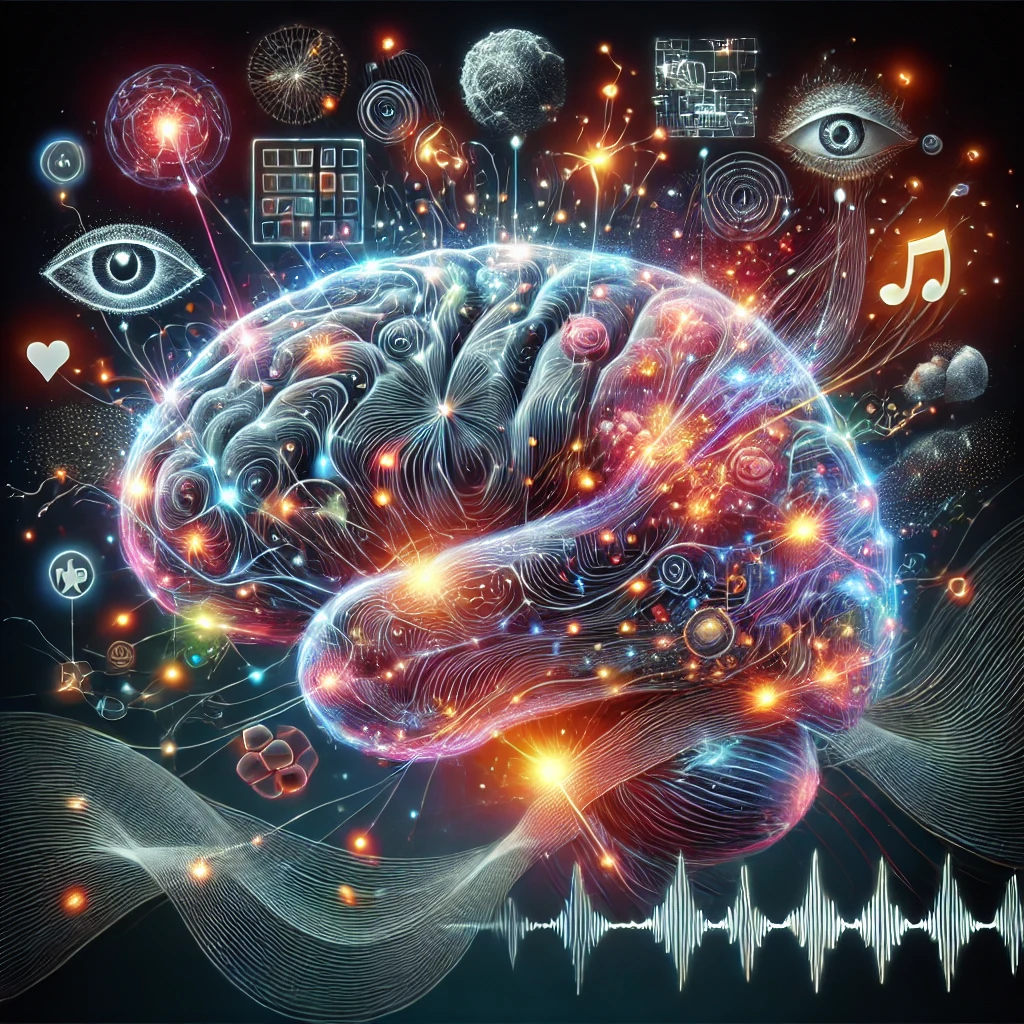
Here is a conceptual image that visualizes the activation-synthesis model of dreaming. It shows the brain during REM sleep, with electrical signals firing and synthesizing random memories, emotions, and sensations into a dream. The dynamic activity in the brain, represented by glowing connections and abstract symbols, reflects how the brain tries to make sense of random neural activity.
Let me know if you’d like further details or another image!