Sunspots are
a. dark clouds in the sun’s atmosphere
b. regions somewhat cooler than the rest of the sun’s surface
c. regions somewhat hotter than the rest of the sun’s surface
d. of unknown nature
The correct answer and explanation is :
The correct answer is:
b. regions somewhat cooler than the rest of the sun’s surface
Explanation:
Sunspots are temporary, dark regions on the surface of the Sun (the photosphere) that appear darker because they are cooler than the surrounding areas. They are caused by intense magnetic activity, which inhibits the normal flow of energy from the Sun’s interior to its surface.
- Temperature Difference:
- The average surface temperature of the Sun is about 5,500°C (9,932°F), while sunspots are cooler, around 3,800°C to 4,200°C (6,872°F to 7,592°F).
- This temperature difference makes sunspots appear dark compared to the brighter, hotter surroundings.
- Magnetic Activity:
- Sunspots occur in areas where the Sun’s magnetic field is exceptionally strong.
- These magnetic fields can be thousands of times stronger than Earth’s.
- They disrupt the normal convective flow of heat from the Sun’s interior, causing the surface to cool down in those regions.
- Solar Cycle Influence:
- Sunspots follow an 11-year cycle, known as the solar cycle, during which their number increases and decreases.
- During periods of high sunspot activity (solar maximum), the Sun’s overall activity, including solar flares and coronal mass ejections, is more intense.
- Impact on Earth:
- Increased sunspot activity is often associated with greater solar storms, which can impact satellite communications, power grids, and even auroras on Earth.
Thus, sunspots are not clouds, nor hotter than the surrounding areas, and they are well understood by astronomers.
Now, let me generate an image of a sunspot for you.
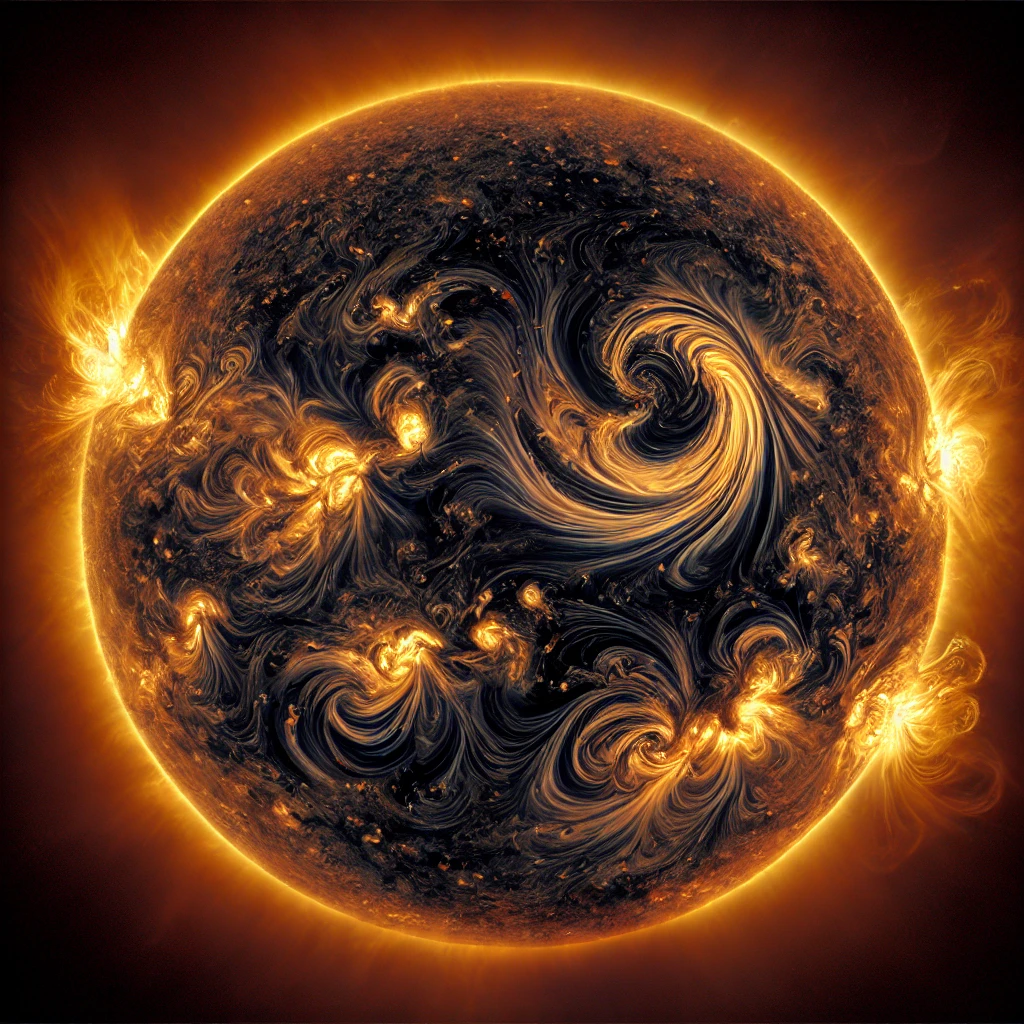
Here is an image of sunspots on the surface of the Sun. It visually represents the dark patches of sunspots against the bright, fiery solar plasma, showcasing the swirling magnetic activity and temperature contrast.