1. When communicating with a disaster survivor whose English proficiency is limited, it helps to repeat information loudly and slowly. A. True
B. False
The Correct Answer and Explanation is :
The correct answer is B. False.
When communicating with a disaster survivor whose English proficiency is limited, repeating information loudly and slowly may not be the most effective strategy. The key to effective communication in such situations is clarity and simplicity, not just volume or speed.
Here’s why:
- Cultural Sensitivity and Respect: Raising your voice or speaking too slowly might make the person feel disrespected or uncomfortable, as it can be perceived as condescending. Effective communication is about building trust and rapport, and treating the person with respect is essential in this context.
- Language and Cognitive Load: Even if someone speaks limited English, they are likely processing the language at their own pace. Repeating the message slowly might not be as helpful as breaking down the information into simpler, more understandable terms. It’s more important to use simple, clear words and avoid jargon.
- Non-verbal Communication: In some disaster situations, survivors might not be able to understand verbal communication effectively. It’s essential to pair your words with visual aids (like maps, pictures, or gestures), body language, and non-verbal cues to help convey the message more efficiently.
- Active Listening: It’s vital to allow survivors to express their concerns and ask questions. Being patient and listening carefully can ensure that the communication is two-way. This helps you understand their needs better and tailor your message accordingly.
- Using Interpreters or Translators: In many cases, working with a translator or interpreter can significantly improve communication. It’s essential to consider this option if available, as it can eliminate language barriers effectively.
By keeping the language simple, using visuals, and being respectful in tone and manner, the communication becomes more effective and helpful for disaster survivors.
Now, I’ll create an image to visually depict the importance of clear communication.
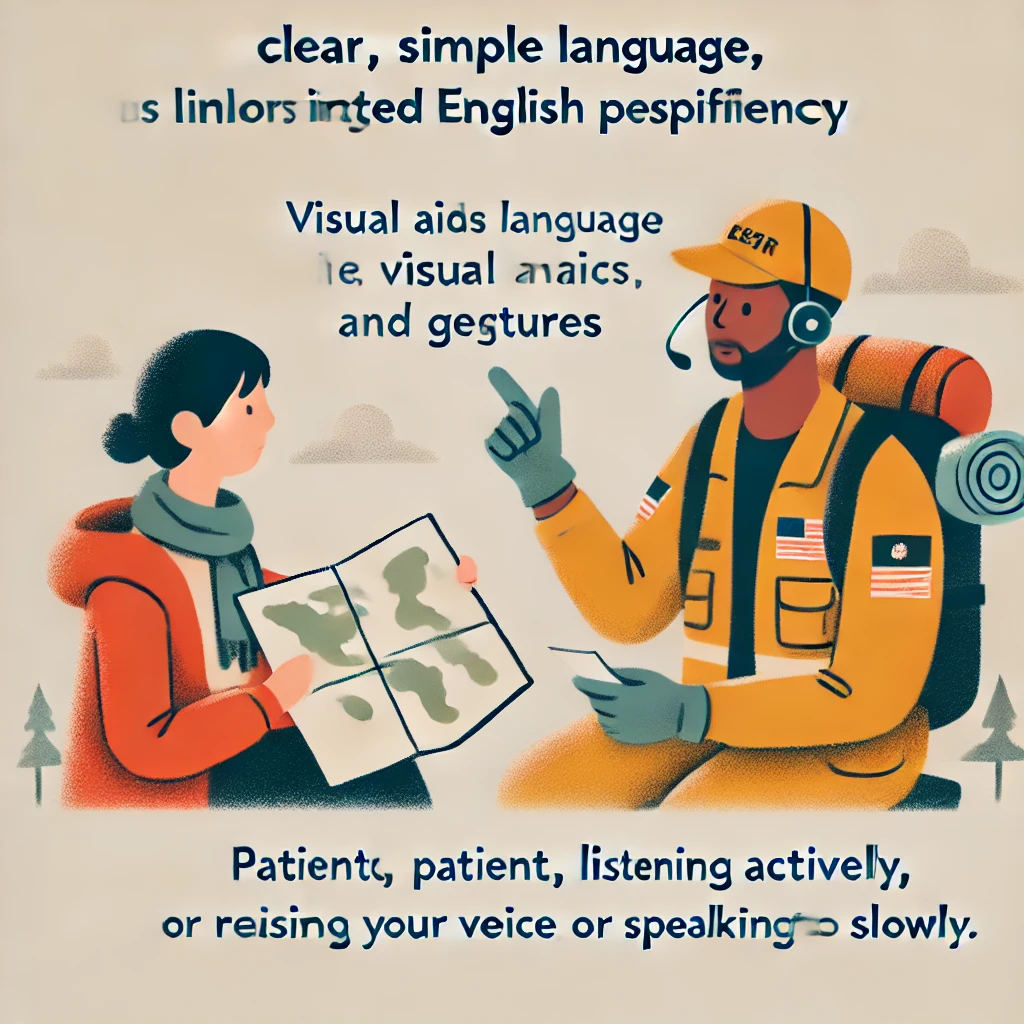
Here is an image depicting the scenario of a disaster relief worker communicating effectively with a survivor who has limited English proficiency. It highlights the importance of clear language, visual aids, and respectful, patient communication.