An upward sloping yield curve means that investors expect
A short-term interest rates to rise.
B short-term interest rates to fall. inflation rates to fall.
C long-term bonds to be less risky than short-term bonds.
D all of the answers are correct.
E Yield curves are always upward sloping
The correct answer and explanation is :
The correct answer is A) short-term interest rates to rise.
Explanation:
An upward-sloping yield curve reflects a situation where long-term interest rates are higher than short-term rates. This is the most common shape of the yield curve, particularly during periods of economic growth. The yield curve plots the yields (interest rates) of bonds of varying maturities, with the short-term bonds on the left and long-term bonds on the right.
The shape of the yield curve is influenced by various economic factors, including expectations of future interest rates, inflation, and economic growth. When the yield curve slopes upwards, it generally indicates that investors expect the economy to grow and inflation to rise over time. The higher long-term rates are usually the result of expectations that the central bank (such as the Federal Reserve) will raise short-term interest rates in the future to combat inflation.
Let’s go through the other options:
- B) Short-term interest rates to fall. This is incorrect because an upward-sloping yield curve indicates expectations that short-term rates will rise, not fall. Falling short-term rates would typically lead to a downward-sloping or flat yield curve.
- C) Long-term bonds to be less risky than short-term bonds. This is incorrect. Long-term bonds are generally considered more risky than short-term bonds due to the greater uncertainty associated with longer periods of time, such as inflation risk, interest rate risk, and changes in the economic environment.
- D) All of the answers are correct. This is incorrect because not all of the other answers are correct, especially “B” and “C.”
- E) Yield curves are always upward sloping. This is incorrect because yield curves can also be flat or downward sloping, depending on economic conditions. A flat curve indicates that there is little difference between short-term and long-term interest rates, and a downward-sloping curve often occurs when investors expect economic downturns or falling interest rates.
Image:
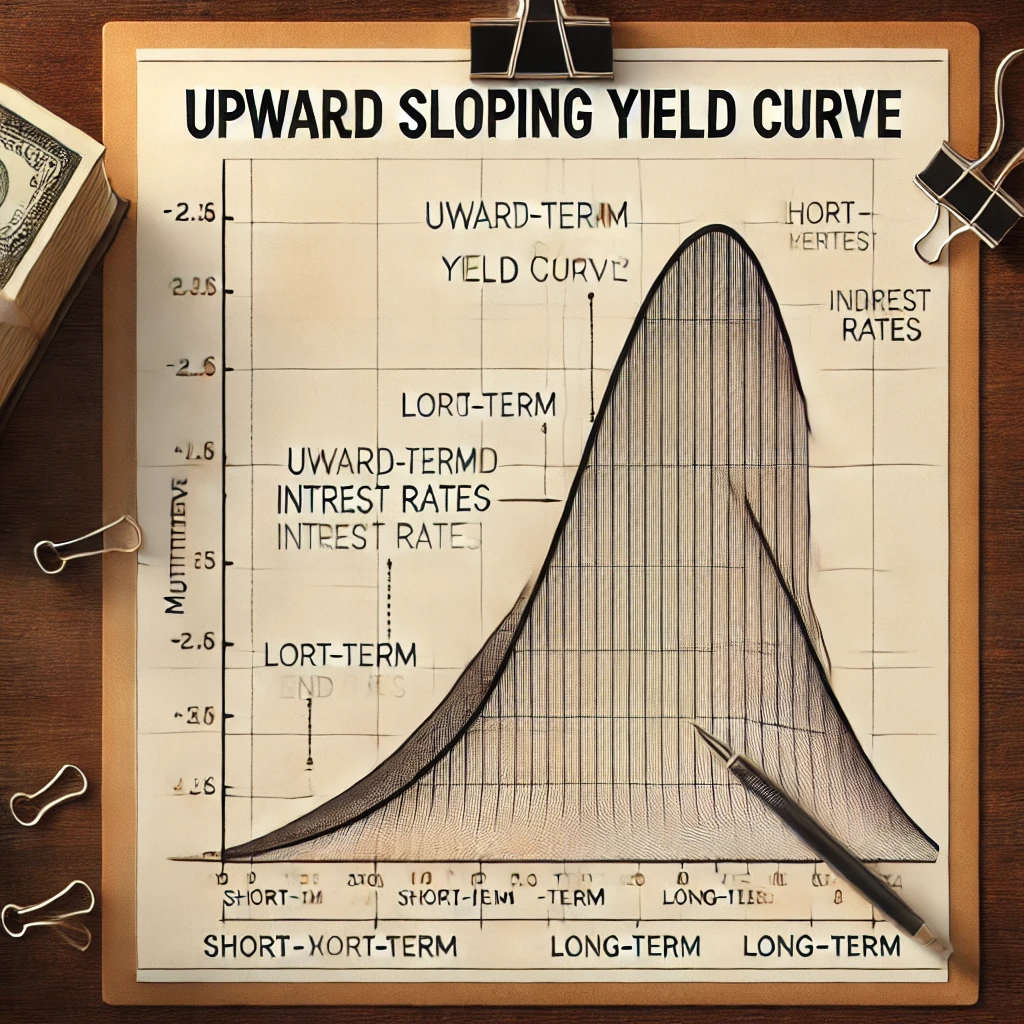
Here is an image illustrating an upward-sloping yield curve. As shown, it demonstrates how long-term interest rates are higher than short-term rates, which typically signals expectations of rising short-term interest rates in the future.