During the maturity stage of the product life cycle, there is a de-profit assessment because: there are more and more competitors in the market. better products exist in the growth stage. production costs increase the more a firm has to manufacture the same product. there is fierce price competition among sellers. marketing is focused on widening target markets.
The correct answer and explanation is :
The correct answer is: there is fierce price competition among sellers.
Explanation:
The maturity stage of the product life cycle is a crucial phase where a product has reached its peak in terms of market acceptance. However, at this point, growth slows down as the market becomes saturated, and competition intensifies. Several factors contribute to a decline in profitability during the maturity stage, but one of the most prominent is fierce price competition among sellers. Here’s why:
- Increased Competition: As the product matures, more and more competitors enter the market because the product is well-known and demand is established. With more firms offering similar products, each one tries to attract customers by offering lower prices, which leads to a price war. The more intense the competition, the harder it becomes for firms to maintain high profit margins.
- Market Saturation: By the time a product reaches the maturity stage, most potential customers have already purchased the product or have switched to a competitor. The demand starts to stabilize, which means that sales growth is minimal. Companies must use price reductions and promotional offers to attract remaining customers, further eroding profits.
- Product Differentiation Decreases: In the maturity stage, the product has been on the market long enough that differentiation becomes more difficult. The uniqueness of the product is no longer a key selling point, as competitors have often replicated the product. This makes the product a commodity, and price becomes the primary factor in customers’ purchasing decisions.
- Increased Production Costs: As competition grows, firms may find that production costs increase due to factors like scaling up operations or meeting the demands of a larger customer base. While economies of scale should ideally reduce costs, the pressure to cut prices can negate these savings.
Marketing Focus:
During this stage, marketing efforts shift from creating awareness to maintaining market share. This includes widening target markets, but this alone doesn’t guarantee profitability. The key issue remains price competition and its effects on profit margins.
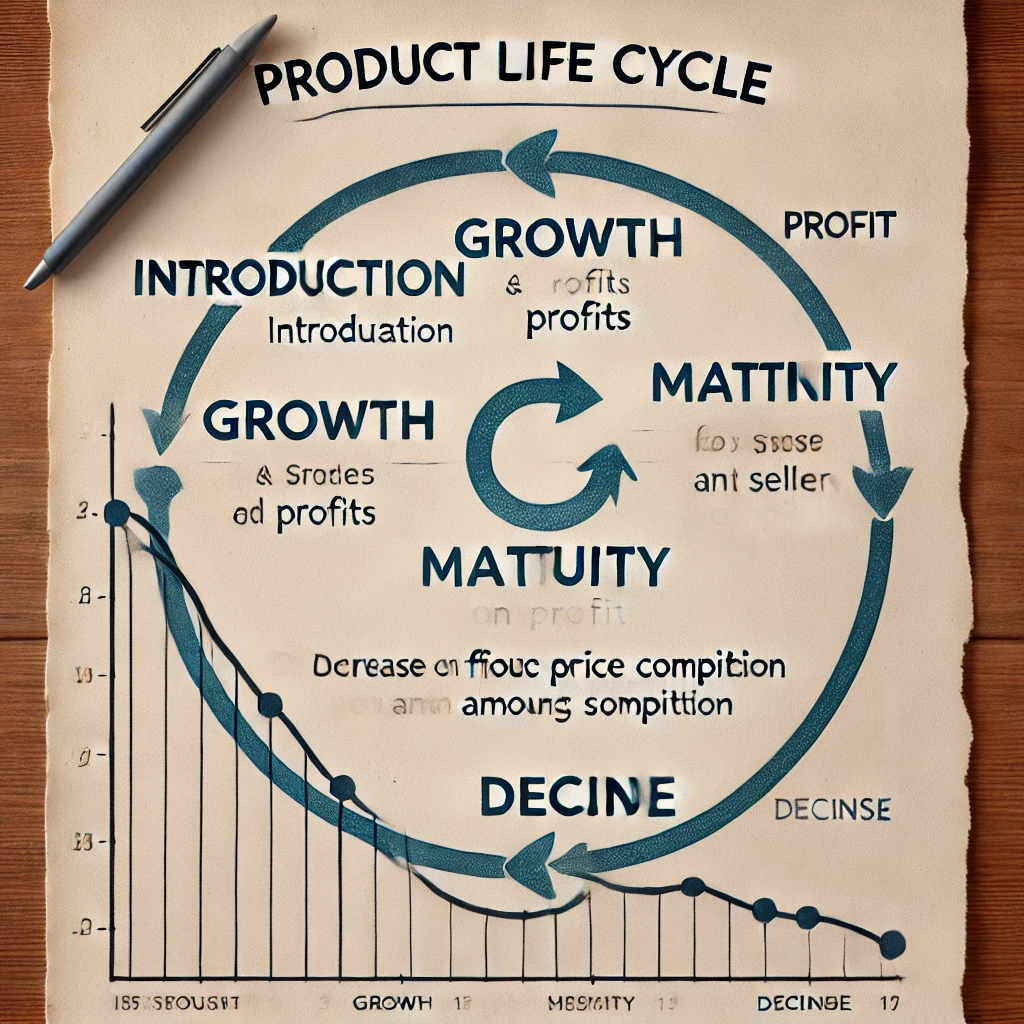
Here’s a visual representation of the product life cycle stages, emphasizing the decrease in profit during the maturity stage due to price competition. You can see how the profit starts to decline as competition increases.