How does Environmental Ethics apply the approaches of Deontological Ethics, Teleological Ethics, and Virtue Ethics to ethical reasoning?
The correct answer and explanation is :
Environmental Ethics and Ethical Reasoning Approaches
Environmental ethics addresses the moral relationship between humans and the environment, often invoking philosophical frameworks such as deontological ethics, teleological ethics, and virtue ethics to assess our duties, goals, and moral character in relation to nature. Here’s how these ethical approaches are applied to environmental concerns:
- Deontological Ethics: Deontological ethics, most famously associated with Immanuel Kant, focuses on the inherent duties and rights in ethical reasoning, irrespective of the consequences. Applied to environmental ethics, this approach emphasizes the intrinsic value of nature and argues that we have a moral obligation to protect the environment due to its inherent worth, regardless of the benefits it might bring to humans. For instance, protecting endangered species or conserving natural habitats is considered a duty, even if it doesn’t immediately benefit human well-being.
- Teleological Ethics: Teleological ethics, or consequentialism, judges actions by their outcomes. In environmental ethics, this approach evaluates the consequences of human actions on the environment. A central idea in teleological ethics is utilitarianism, which suggests that the right action is the one that maximizes overall well-being. In environmental terms, it would argue for actions that result in the greatest good for the largest number of people, which might include minimizing pollution, conserving resources, or addressing climate change for the benefit of future generations.
- Virtue Ethics: Rooted in the philosophy of Aristotle, virtue ethics focuses on the moral character of individuals rather than the nature of the actions themselves. Applied to environmental ethics, this approach encourages individuals to cultivate virtues like respect, responsibility, and care for the environment. It suggests that environmentally responsible behaviors stem from virtuous characters, such as a person who seeks to live sustainably, demonstrate compassion for animals, or strive for ecological harmony.
In conclusion, environmental ethics uses these approaches to frame our moral responsibilities, helping to shape how we understand our duties to the planet, the consequences of our actions, and the character we must cultivate to live ethically within the world.
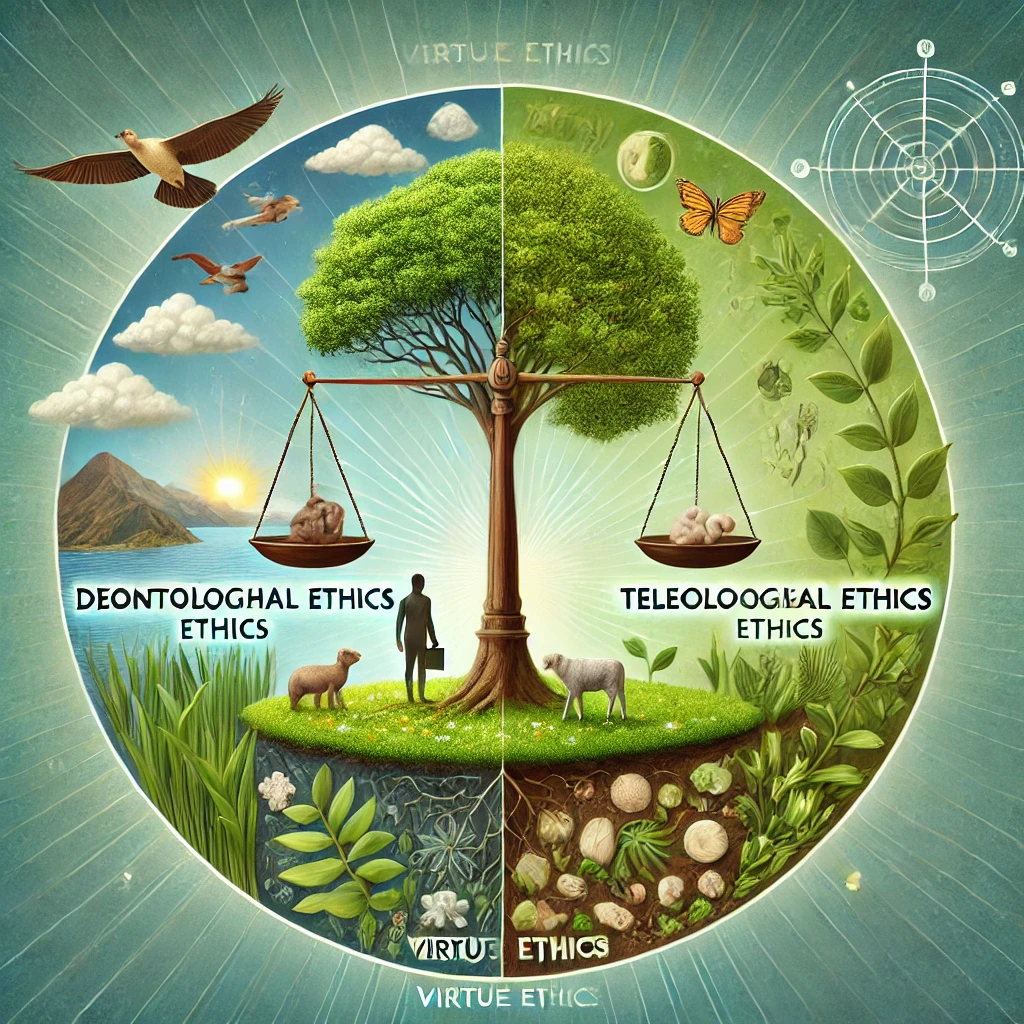
Here is the conceptual illustration representing the application of deontological ethics, teleological ethics, and virtue ethics to environmental ethics. Each approach is depicted visually, with symbols for duty, consequences, and virtues, all connected to the environment.