Which microbial group has relatively low moisture requirement for cell metabolism and growth?
A. actinomycetes
B. fungi
C. bacteria
D. protozoa
The correct answer and explanation is :
The correct answer is A. Actinomycetes.
Explanation:
Actinomycetes are a group of filamentous, gram-positive bacteria that are known for their relatively low moisture requirements compared to other microbial groups. They are typically found in dry environments, such as soil, where they play a key role in decomposing organic matter and contributing to the nutrient cycle.
These microbes belong to the order Actinomycetales and include well-known genera such as Streptomyces, Nocardia, and Micromonospora. Actinomycetes are adapted to survive in low-moisture conditions because they produce spores that can withstand dehydration. These spores can remain dormant in dry environments and only germinate when conditions become favorable (such as in the presence of water and nutrients).
Compared to other microbial groups, such as fungi, bacteria, and protozoa, actinomycetes have evolved mechanisms that allow them to thrive in desiccated or low-moisture environments. While fungi generally require higher moisture levels for growth and metabolism, and bacteria and protozoa also need a more aqueous environment to function optimally, actinomycetes are capable of surviving and growing in environments where moisture is limited.
Fungi, for instance, often require moist environments to form their fruiting bodies, and their growth is hindered by prolonged dryness. Similarly, protozoa, being primarily aquatic organisms, need moisture-rich environments for motility and reproduction. Bacteria also have diverse moisture requirements, but most require at least some moisture for metabolic processes.
In conclusion, actinomycetes are the microbial group that is most adapted to thrive in environments with low moisture availability, making them unique in their ability to grow and metabolize under such conditions.
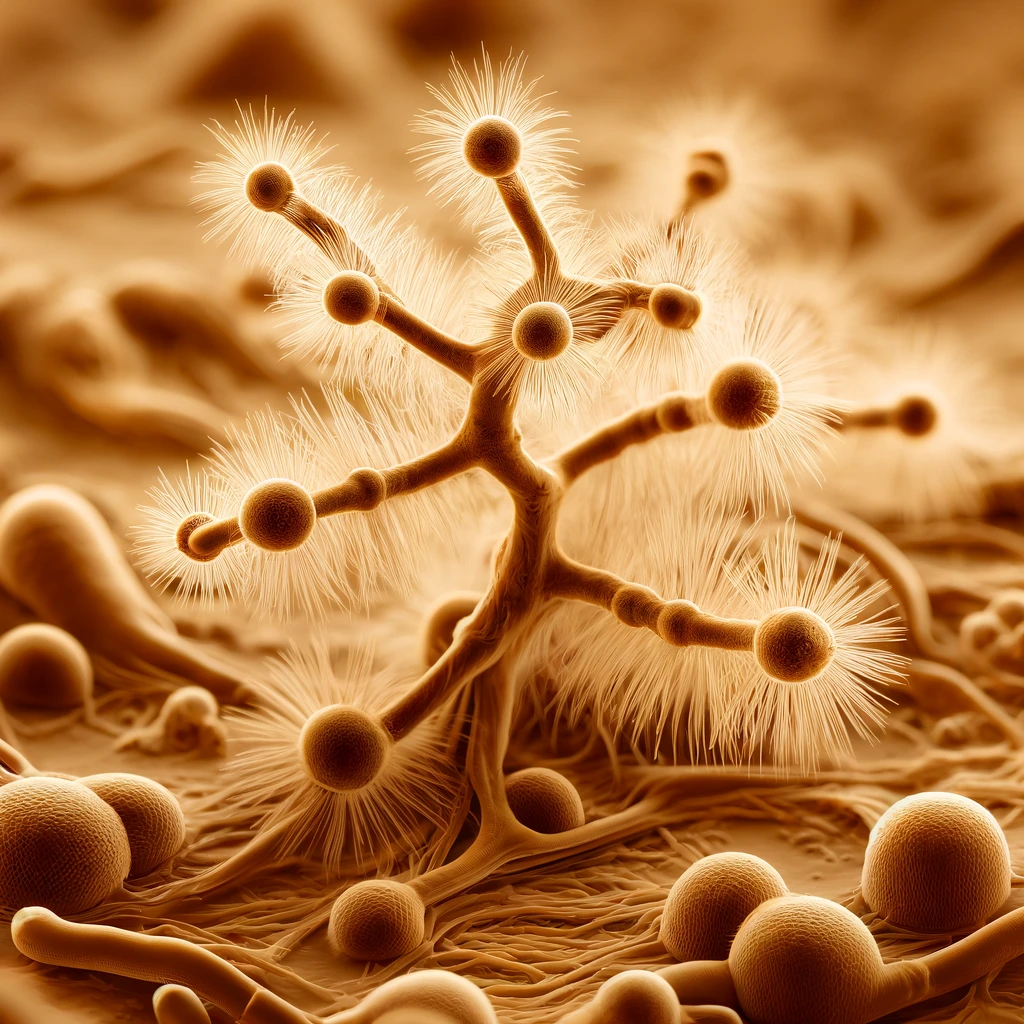
Here is the microscopic view of actinomycetes, showcasing their filamentous structures and spore formation in a dry, low-moisture environment. This highlights their ability to thrive in conditions with relatively low moisture.