Which of the following is not a geologic hazard?
Use of poor construction materials resulting in a cracked foundation
Volcanic eruptions sending lava flows toward a city
Deforestation on a floodplain increasing the severity of river floods
Climate change leading to sea-level rise
The correct answer and explanation is :
The correct answer is: Use of poor construction materials resulting in a cracked foundation.
Explanation:
A geologic hazard refers to a naturally occurring event or process related to the Earth’s geological processes that can cause damage or destruction to the environment and human infrastructure. These hazards are driven by natural forces such as tectonic activities, volcanic eruptions, earthquakes, floods, or landslides, all of which result from the movement of the Earth’s crust or other geological factors.
Let’s break down the options:
- Volcanic eruptions sending lava flows toward a city:
This is a classic example of a geologic hazard. Volcanic eruptions are natural phenomena caused by the movement of tectonic plates, the release of magma, and the eruption of lava, ash, and gases. Lava flows can devastate surrounding areas, destroy infrastructure, and even cause loss of life. This is clearly a geologic hazard. - Deforestation on a floodplain increasing the severity of river floods:
While this is an environmental issue, the primary driver of the hazard here is not geological but anthropogenic (human-caused). Deforestation can exacerbate the effects of flooding by reducing the land’s ability to absorb water, but floods themselves are a natural event often triggered by heavy rain or the overflow of rivers. The deforestation increases the risk, but the flood itself is the hazard, which may have geological origins like changes in terrain or river dynamics. - Climate change leading to sea-level rise:
Sea-level rise is caused by a combination of factors such as melting glaciers, thermal expansion of seawater, and changes in Earth’s climate system. Although it is a significant global issue and impacts coastal regions, it is driven by global climate patterns rather than specific geologic processes. However, the geological impact may be seen in increased erosion, coastal flooding, and changes in the landscape. - Use of poor construction materials resulting in a cracked foundation:
This is not a geologic hazard. The issue here lies with human decision-making in the choice of materials and construction practices. A cracked foundation due to poor materials is more related to construction standards and engineering than geological processes. While it may be exacerbated by natural events (such as earthquakes or flooding), it is not itself a geologic hazard.
Thus, the correct answer is the use of poor construction materials, as this is related to human error and not geological forces.
Image:
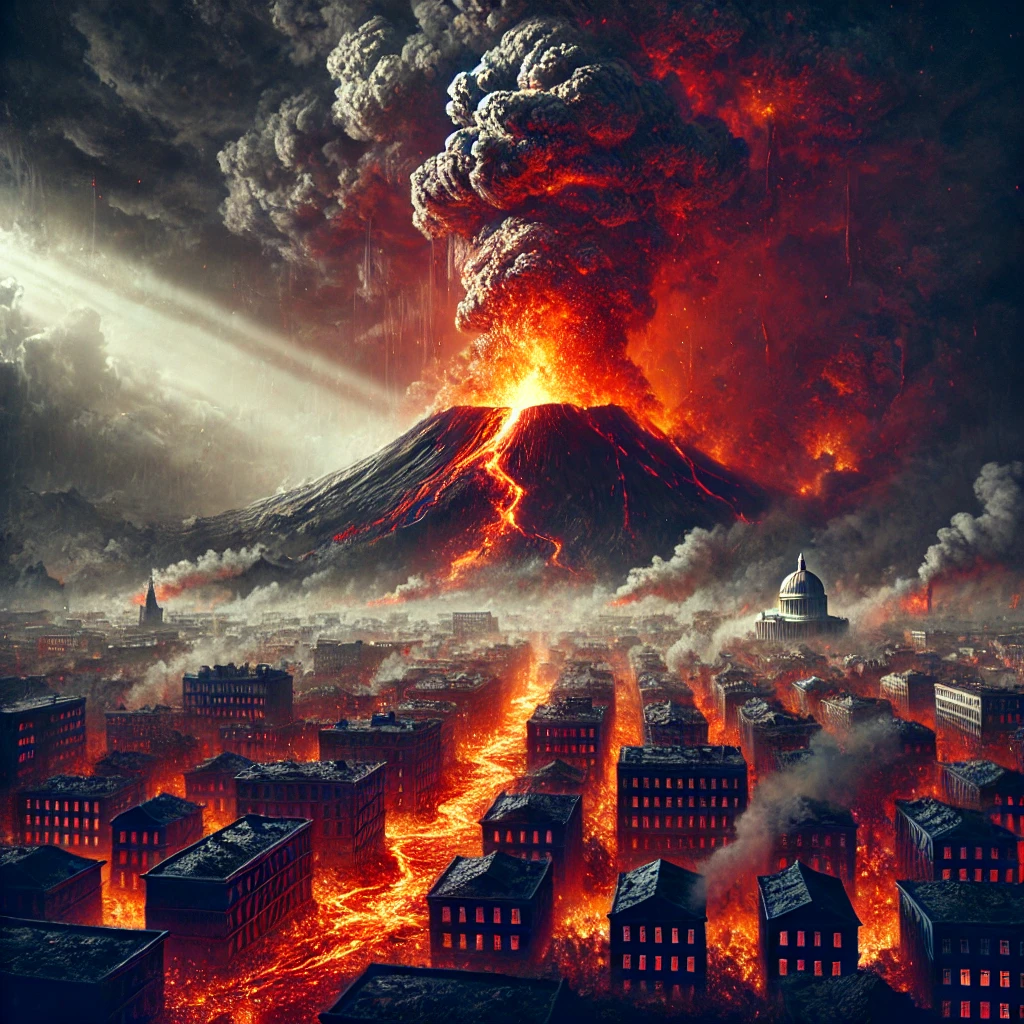
Here is an image of a volcanic eruption, which is an example of a geologic hazard. The eruption shows lava flowing toward a city, emphasizing the destructive power of natural geological events.