According to SAE Standard J1991, recycled R-12 refrigerant can not exceed what levels of contaminants?
A) Refrigerant oil: 4000 PPM by weight
B) Non-condensable gases (air): 330 PPM by weight
C) Moisture: 15 PPM by weight
D) All of the above
The correct answer and explanation is :
Correct Answer:
D) All of the above
Explanation:
SAE Standard J1991 establishes the purity requirements for recycled R-12 refrigerant to ensure its safe reuse in mobile air conditioning (MAC) systems. These limits help maintain system efficiency, prevent component damage, and reduce environmental impact. The standard specifies the following maximum allowable contaminant levels:
- Refrigerant Oil: 4000 PPM (Parts Per Million) by weight
- Excessive oil in the refrigerant can affect system performance and lead to compressor damage.
- Proper oil content is essential for lubrication without reducing refrigerant efficiency.
- Non-condensable Gases (Air): 330 PPM by weight
- Air in the refrigerant system can cause pressure fluctuations, inefficient cooling, and compressor strain.
- High levels of non-condensable gases increase discharge pressure, potentially leading to system failure.
- Moisture: 15 PPM by weight
- Moisture contamination can result in ice formation, acid buildup, and corrosion inside the AC system.
- Even small amounts of moisture can cause freeze-ups in expansion valves and restrictor tubes.
The “All of the above” (D) option is correct because each of these specifications ensures that recycled R-12 refrigerant remains within safe operating limits, preventing mechanical failures and efficiency loss. The SAE J1991 standard is crucial for maintaining refrigerant quality and ensuring compliance with EPA regulations related to refrigerant recycling and emissions reduction.
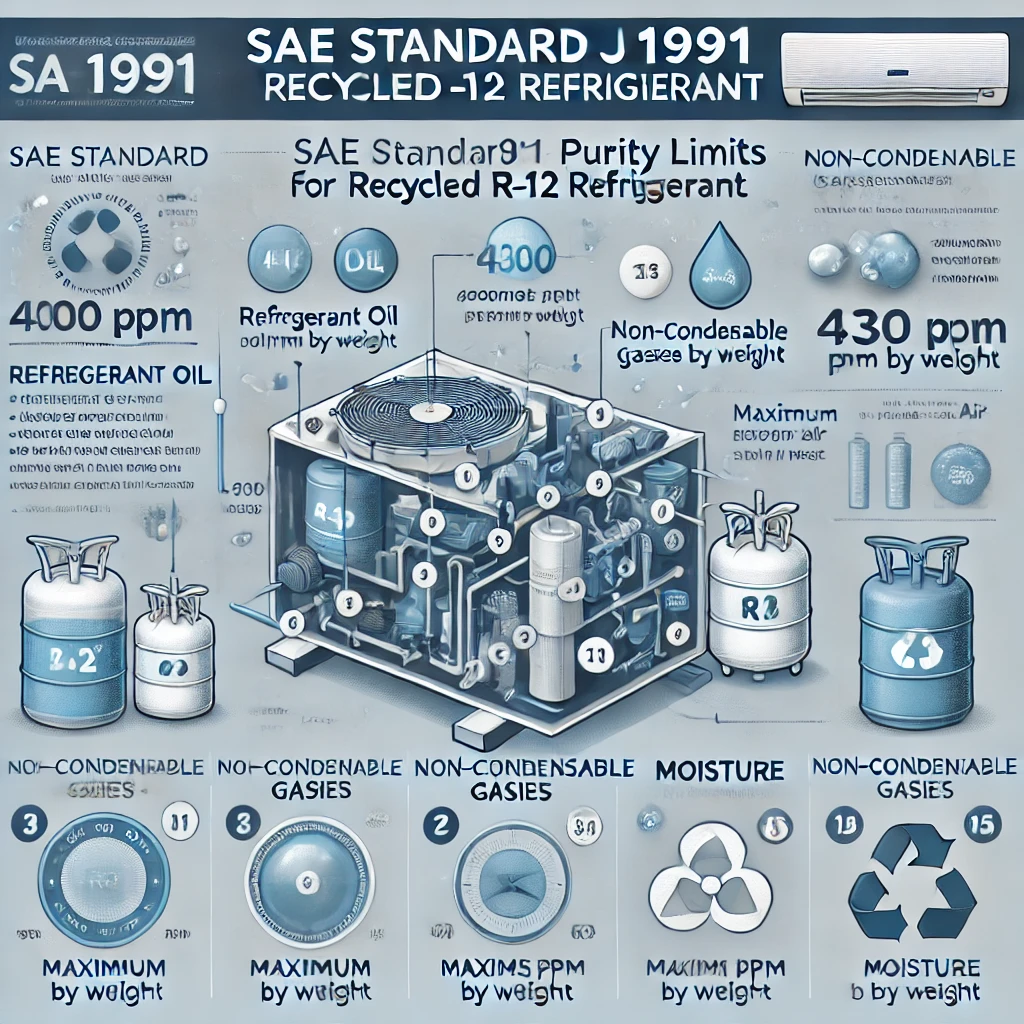
Here is an educational infographic illustrating SAE Standard J1991 purity limits for recycled R-12 refrigerant.