Choose the best definition for a project management methodology.
1 point
- A project management methodology is a set of guiding laws and measures for owning a project through its life cycle.
- A project management methodology is a set of guiding ethical values for operating a project through its life cycle.
- A project management methodology is a set of guiding principles and processes for owning a project through its life cycle.
- A project management methodology is a set of guiding tasks and measurements for owning a project through its life cycle.
The correct answer and explanation is :
Correct Answer:
A project management methodology is a set of guiding principles and processes for owning a project through its life cycle.
Explanation:
A project management methodology is a structured approach used to guide a project from its initiation to its completion. It includes a set of principles, processes, tools, and best practices that help teams plan, execute, monitor, and close a project efficiently.
Why This Definition is Correct:
- Guiding Principles and Processes: A methodology provides a structured framework for decision-making, ensuring projects are managed in an organized manner.
- Project Life Cycle: It ensures that a project moves through well-defined stages, from initiation to closure, reducing uncertainty and improving efficiency.
- Ownership of a Project: The methodology outlines roles, responsibilities, and workflows, helping teams effectively take ownership and accountability for the project’s success.
Why the Other Options Are Incorrect:
- “Guiding laws and measures”: Project management methodologies are not legally binding laws but rather best practices and frameworks.
- “Guiding ethical values”: While ethics play a role in project management, methodologies focus more on processes rather than just values.
- “Guiding tasks and measurements”: While methodologies include tasks and measurements, they primarily focus on broader principles and processes.
Examples of Project Management Methodologies:
- Waterfall: A linear, sequential approach where each phase is completed before moving to the next.
- Agile: An iterative approach that emphasizes flexibility, collaboration, and continuous improvement.
- Scrum: A framework within Agile that organizes work into sprints and daily stand-ups.
- Kanban: A visual workflow management system that focuses on efficiency and continuous delivery.
Each methodology helps teams structure their projects effectively, ensuring better planning, execution, and delivery.
Image:
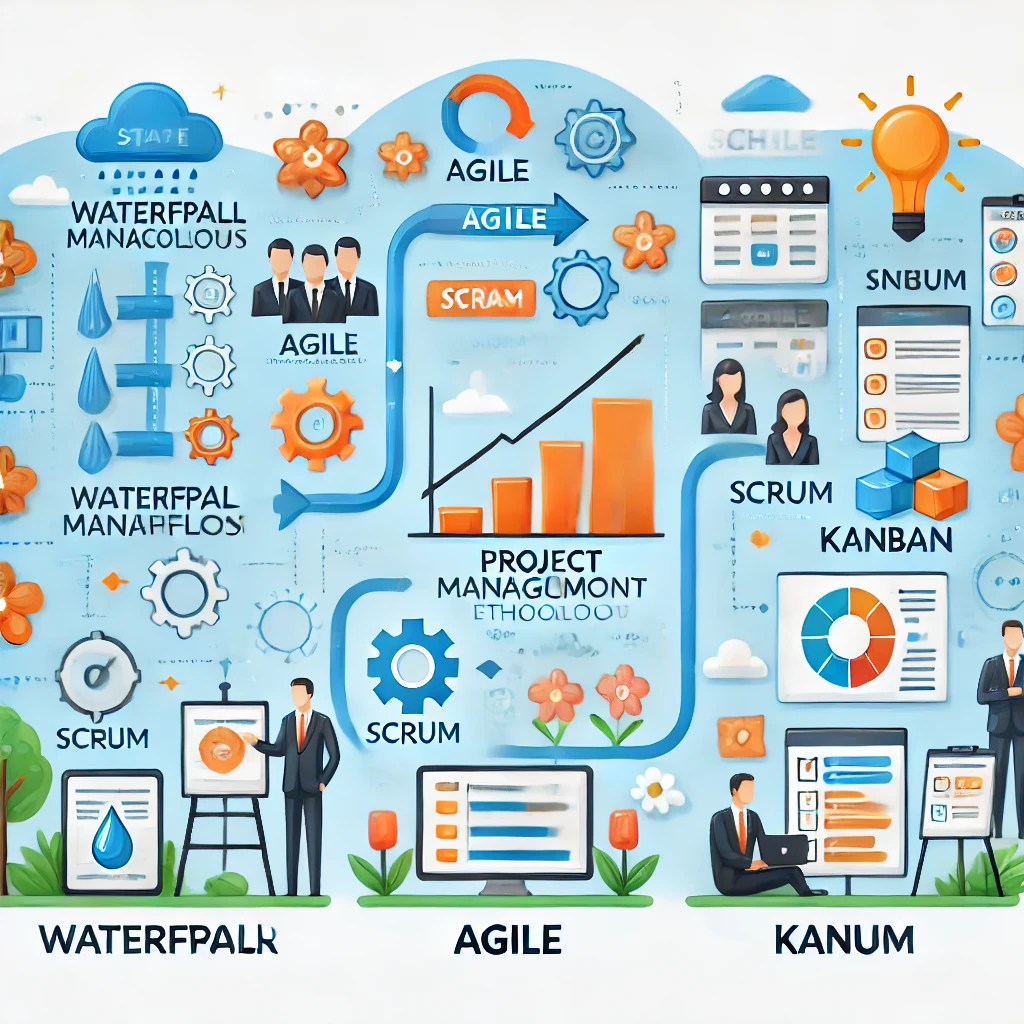
Here is an infographic illustrating different project management methodologies, including Waterfall, Agile, Scrum, and Kanban.