ERP implementation probably will not require:
frequent upgrades after installation.
intensive training.
just a few weeks to install.
high funding for both initial cost and maintenance.
cross-functional teams.
The correct answer and explanation is :
The correct answer is:
“just a few weeks to install.”
Explanation:
Enterprise Resource Planning (ERP) implementation is a complex and time-consuming process that requires extensive planning, configuration, and testing. Unlike simple software applications, ERP systems integrate various business functions such as finance, human resources, supply chain, and customer relationship management into a unified system. This level of integration cannot be achieved in just a few weeks.
Key Reasons ERP Implementation Takes Time:
- Business Process Alignment:
- ERP systems must be tailored to align with a company’s existing processes or require business process reengineering. This takes time to analyze and adjust.
- Customization & Configuration:
- Organizations often require customization to meet unique business needs. Configuring the system appropriately takes months, not weeks.
- Data Migration & Testing:
- Moving data from legacy systems to an ERP involves cleaning, organizing, and validating the data to ensure accuracy.
- Multiple testing phases are needed, such as unit testing, system testing, and user acceptance testing (UAT).
- Training & Change Management:
- Users need intensive training to ensure they can use the system effectively.
- Resistance to change can slow down adoption, requiring workshops and support sessions.
- Deployment & Post-Implementation Support:
- Companies often implement ERP in phases (e.g., pilot rollouts before full deployment) to minimize risks.
- Even after deployment, ongoing support and troubleshooting are needed.
Conclusion:
ERP implementation is a long-term project that typically takes several months to years, depending on company size and complexity. The idea that it can be done in just a few weeks is unrealistic.
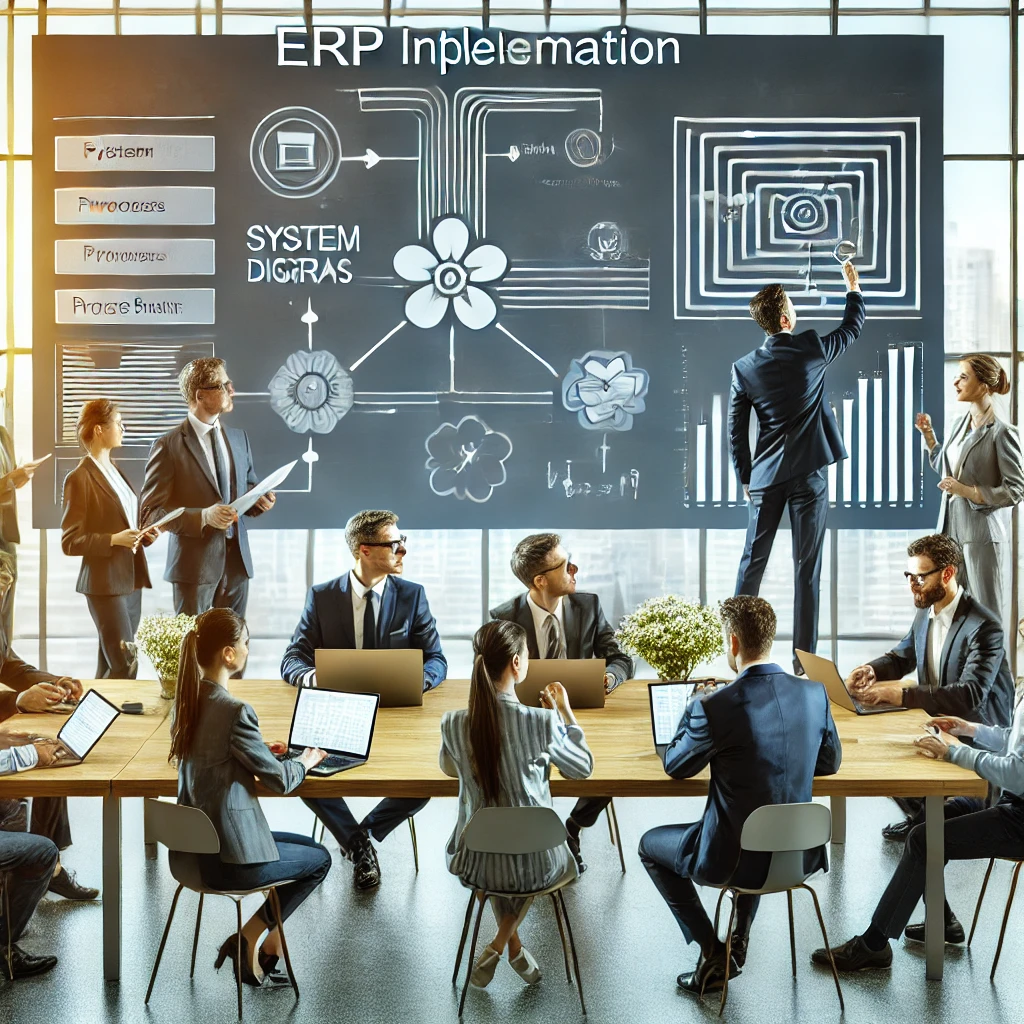
Here is the image illustrating a business team working on an ERP implementation project. It represents the complexity of ERP integration, with employees collaborating, analyzing system diagrams, and discussing configurations in a professional setting.