Why do you suppose many Germans today are opposed to genetic engineering?
The correct answer and explanation is :
Many Germans today are opposed to genetic engineering due to historical, ethical, environmental, and societal concerns. The memory of unethical human experimentation during the Nazi era, strong environmental consciousness, and skepticism toward corporate influence in biotechnology contribute to this opposition. Additionally, German society places a high value on the precautionary principle, which prioritizes safety and sustainability over potential risks.
Explanation:
- Historical Concerns: Germany has a unique historical sensitivity to genetic research due to the unethical experiments conducted during the Nazi regime. This history has led to deep-rooted ethical concerns about manipulating genes, whether in humans, animals, or crops.
- Precautionary Principle: Germans strongly adhere to the Vorsorgeprinzip (precautionary principle), which emphasizes preventing harm before adopting new technologies. Many worry that genetic engineering, particularly in food and medicine, carries unknown risks to human health and ecosystems.
- Environmental Awareness: Germany has one of the world’s strongest environmental movements. Many people fear that genetically modified organisms (GMOs) could lead to biodiversity loss, unintended ecological consequences, or increased chemical use in farming.
- Corporate Skepticism: Many Germans distrust large biotech corporations like Monsanto (now part of Bayer), fearing monopolization of food production, increased dependency on patented seeds, and profit-driven motives that may not prioritize public health.
- Cultural and Ethical Views: Ethical concerns about “playing God” also shape German attitudes. The idea of altering life forms at a genetic level raises moral dilemmas, particularly regarding animal welfare and human genetic modification.
- Legal Restrictions: Germany has some of the strictest regulations on genetic engineering in Europe. Laws restrict the cultivation of GMOs, reinforcing public perception that genetic engineering is dangerous or unnecessary.
These factors collectively make Germans highly skeptical of genetic engineering, favoring organic and natural alternatives.
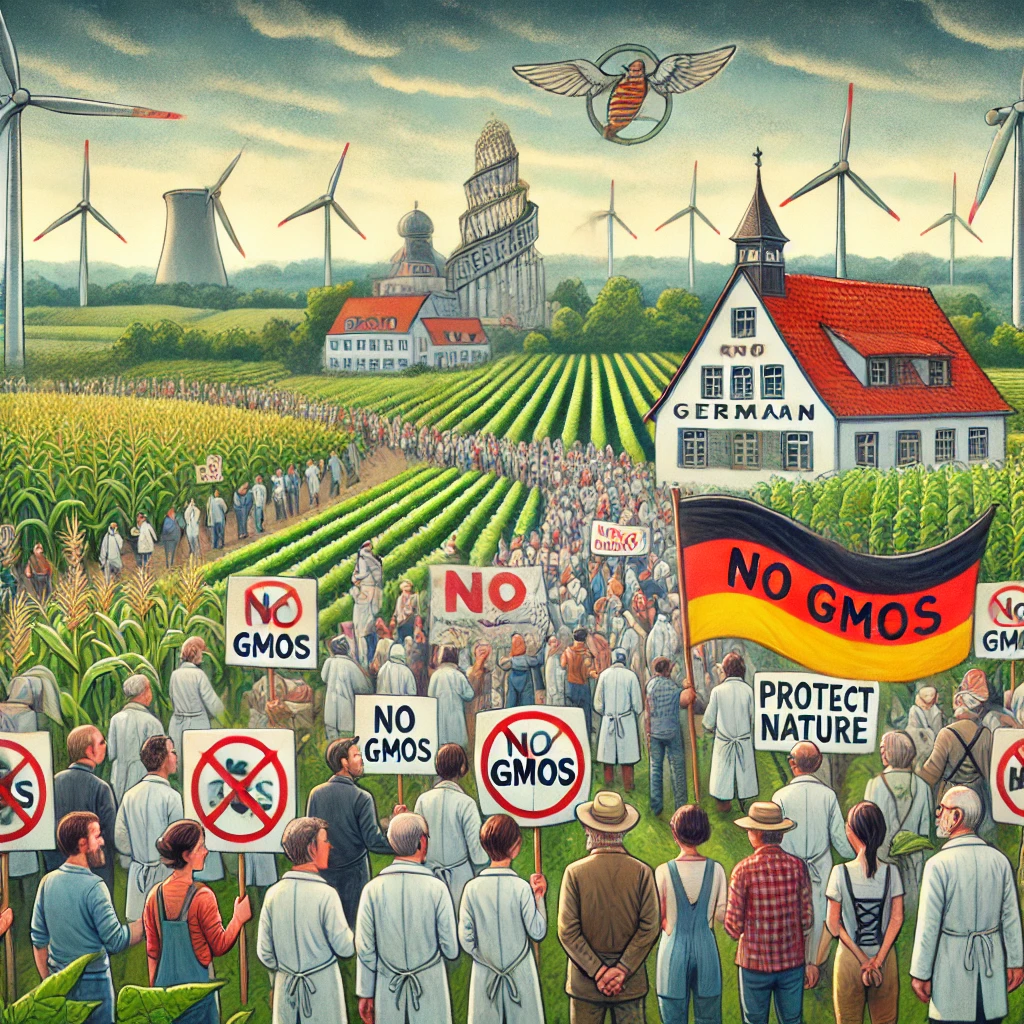
Here is the conceptual illustration depicting a protest against genetic engineering in Germany. It visually represents the concerns of environmental activists, scientists, and farmers, emphasizing the themes of sustainability and ethical considerations.