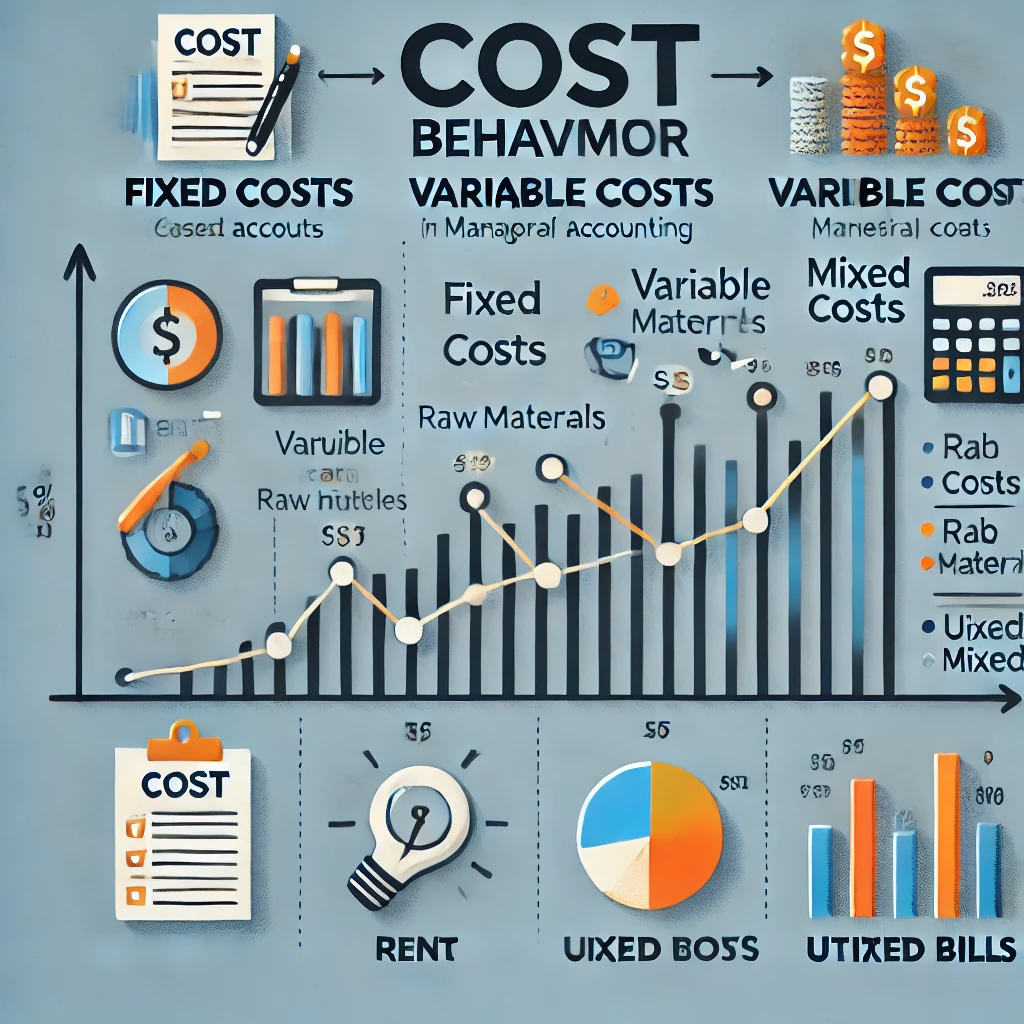
Cost behavior refers to the methods used to estimate costs for use in managerial decision making.
The correct answer and explanation is :
Correct Answer:
Cost behavior refers to the way different types of costs change in response to variations in an organization’s level of activity. It is used in managerial decision-making to predict how costs will respond to changes in production, sales volume, or other operational factors.
Explanation:
Understanding cost behavior is crucial for managers as it helps in budgeting, forecasting, and making strategic decisions. Costs generally fall into three main categories based on how they behave with changes in activity levels:
- Fixed Costs: These costs remain constant regardless of production levels. Examples include rent, salaries of administrative staff, and depreciation. Even if a company produces more or less, fixed costs do not change in the short run.
- Variable Costs: These costs change directly in proportion to production or sales volume. Common examples include raw materials, direct labor, and sales commissions. If production increases, variable costs increase, and if production decreases, variable costs decrease.
- Mixed Costs: These costs have both fixed and variable components. For instance, a company’s utility bill might have a fixed base charge plus a variable component based on usage.
Managers use cost behavior analysis to make informed decisions about pricing, cost control, and profitability. For example, understanding that variable costs increase with production allows managers to plan for necessary expenses in advance. Similarly, identifying fixed costs ensures that businesses cover these expenses even during low production periods.
Cost behavior analysis is also essential in break-even analysis, which determines the sales volume required to cover all costs and begin generating profit. Additionally, it aids in cost-volume-profit (CVP) analysis, which helps businesses understand the relationship between costs, sales volume, and profits.
By applying cost behavior principles, businesses can enhance efficiency, reduce unnecessary expenses, and improve financial performance.