The variable cost per unit remains constant with changes in the level of activity.
The correct answer and explanation is :
Correct Answer:
True
Explanation:
Variable costs are costs that change in direct proportion to changes in the level of production or sales activity. However, the variable cost per unit remains constant regardless of how many units are produced or sold. This is because variable costs are incurred for each additional unit produced, but the cost per unit remains the same.
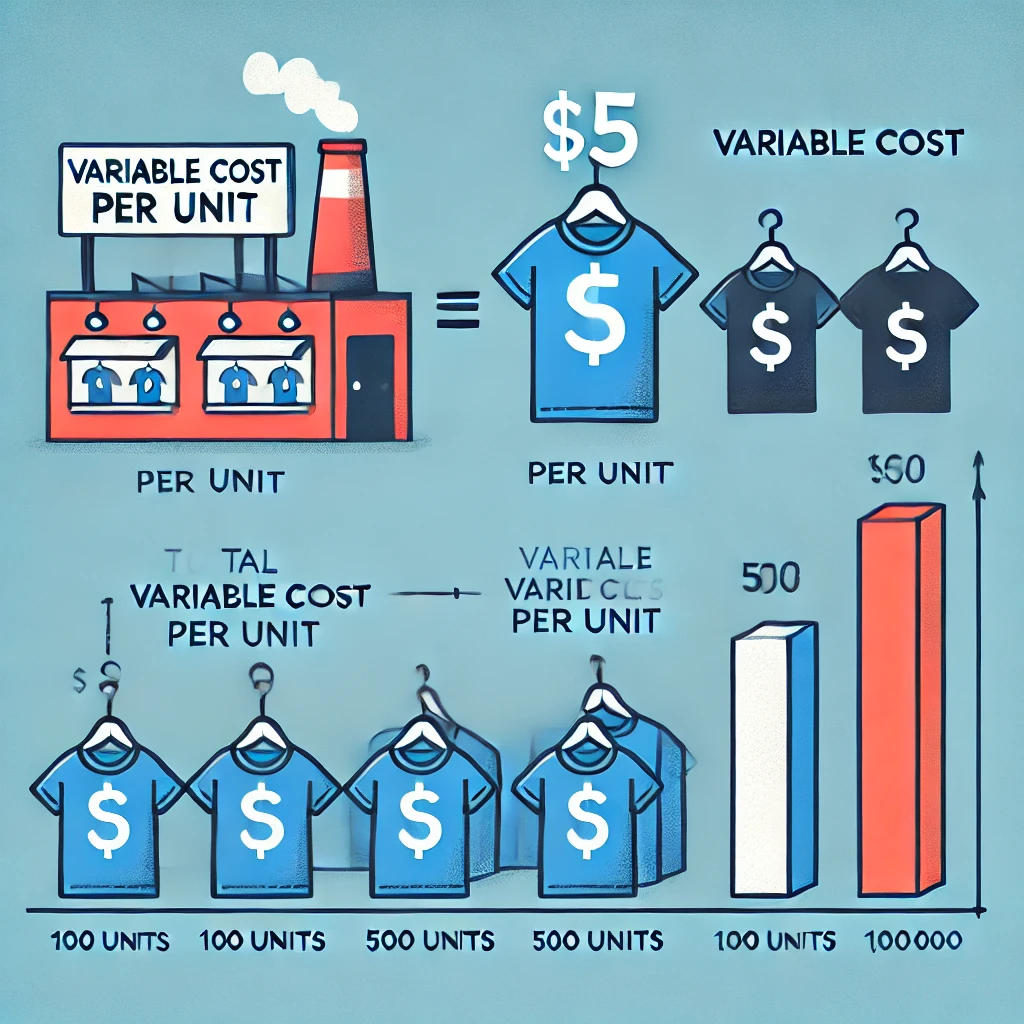
For example, consider a company that manufactures T-shirts. If the cost of fabric, labor, and other direct materials is $5 per T-shirt, then this cost remains the same whether the company produces 100 or 10,000 T-shirts. The total variable cost will increase as more units are produced, but the cost per unit remains constant.
Why Variable Cost Per Unit Remains Constant:
- Proportional Relationship – The total variable cost increases as production increases but at a consistent rate per unit.
- Cost Structure – Variable costs typically include raw materials, direct labor, and utilities that directly contribute to each unit. The per-unit cost of these elements remains unchanged unless market prices fluctuate.
- Economies of Scale Impact Fixed Costs, Not Variable Costs – Unlike fixed costs, which can decrease per unit with increased production (e.g., rent spread over more units), variable costs remain steady per unit.
Exceptions to Consider:
- If suppliers offer bulk discounts on raw materials, the cost per unit may decrease.
- Inflation or market conditions can cause an increase in the price of materials, affecting the variable cost per unit.
However, in a typical scenario, variable cost per unit is constant, making it a fundamental concept in cost accounting and managerial decision-making.
Here’s an illustrative image of total vs. per-unit variable cost: