Why is binary fission referred to as “asexual reproduction”?
The correct answer and explanation is :
Answer:
Binary fission is referred to as “asexual reproduction” because it does not involve the fusion of gametes (sperm and egg) or genetic recombination. Instead, a single parent cell divides into two identical daughter cells, each carrying the same genetic material as the original cell. This form of reproduction allows organisms, such as bacteria and some protists, to rapidly multiply without requiring a mate.
Explanation (300 Words)
Binary fission is a simple and efficient method of reproduction used by prokaryotic organisms like bacteria and archaea, as well as some single-celled eukaryotes like amoebas and paramecia. It is classified as asexual reproduction because it involves only one parent, and the offspring are genetically identical clones.
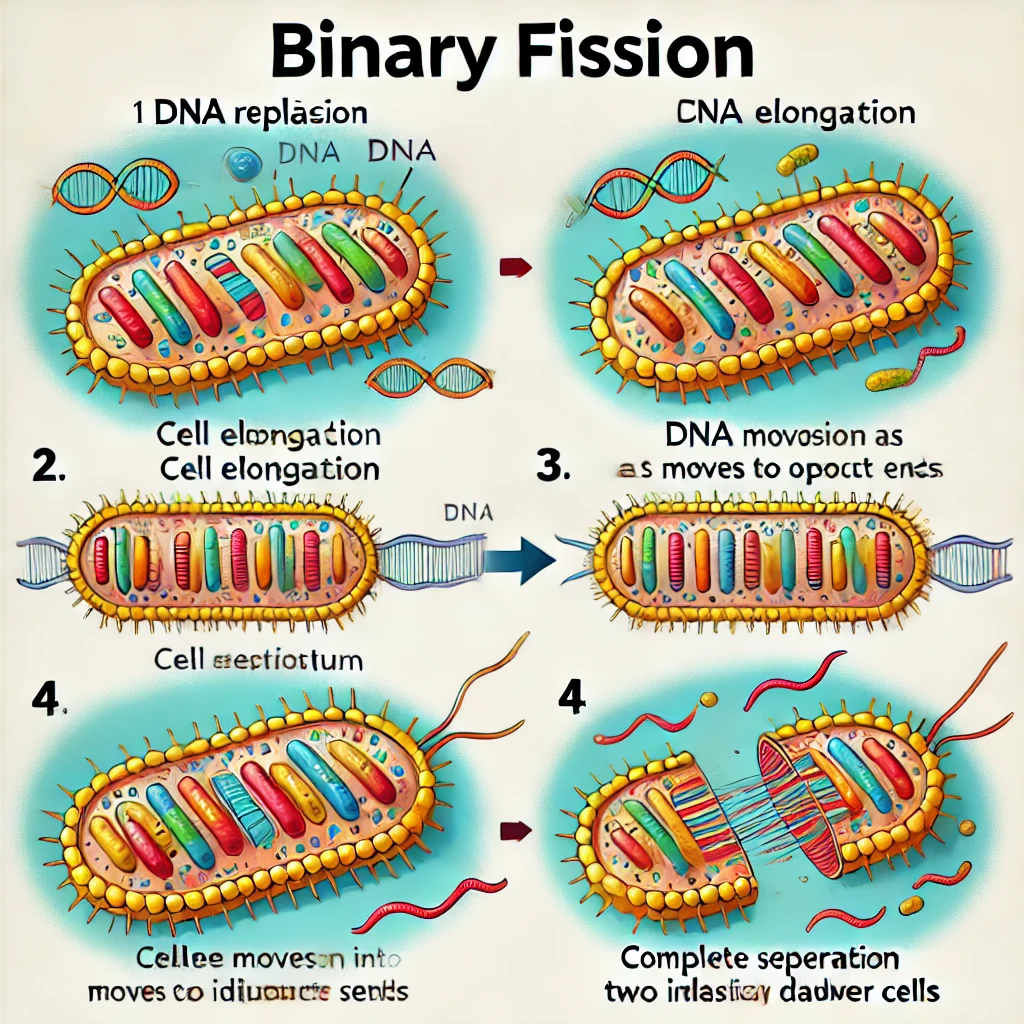
The process of binary fission involves four key steps:
- DNA Replication – The single circular DNA of the organism is duplicated.
- Cell Growth – The cell enlarges, preparing for division.
- Chromosome Segregation – The duplicated DNA molecules move to opposite ends of the cell.
- Cytokinesis – The cell membrane pinches inward, dividing the cell into two identical daughter cells.
Since binary fission does not involve the exchange or mixing of genetic material, there is no genetic variation among offspring unless mutations occur. This differs from sexual reproduction, where offspring inherit a mix of genetic traits from two parents, leading to genetic diversity.
Binary fission enables rapid population growth, making it advantageous in favorable environments where resources are abundant. However, because all offspring are genetically identical, populations can be vulnerable to environmental changes, antibiotics, or immune system responses.
This method of reproduction is crucial for bacterial survival and has implications in medicine, as it explains how bacterial infections spread quickly and how antibiotic resistance can develop through mutations in dividing bacteria.
Here is an image representing binary fission: