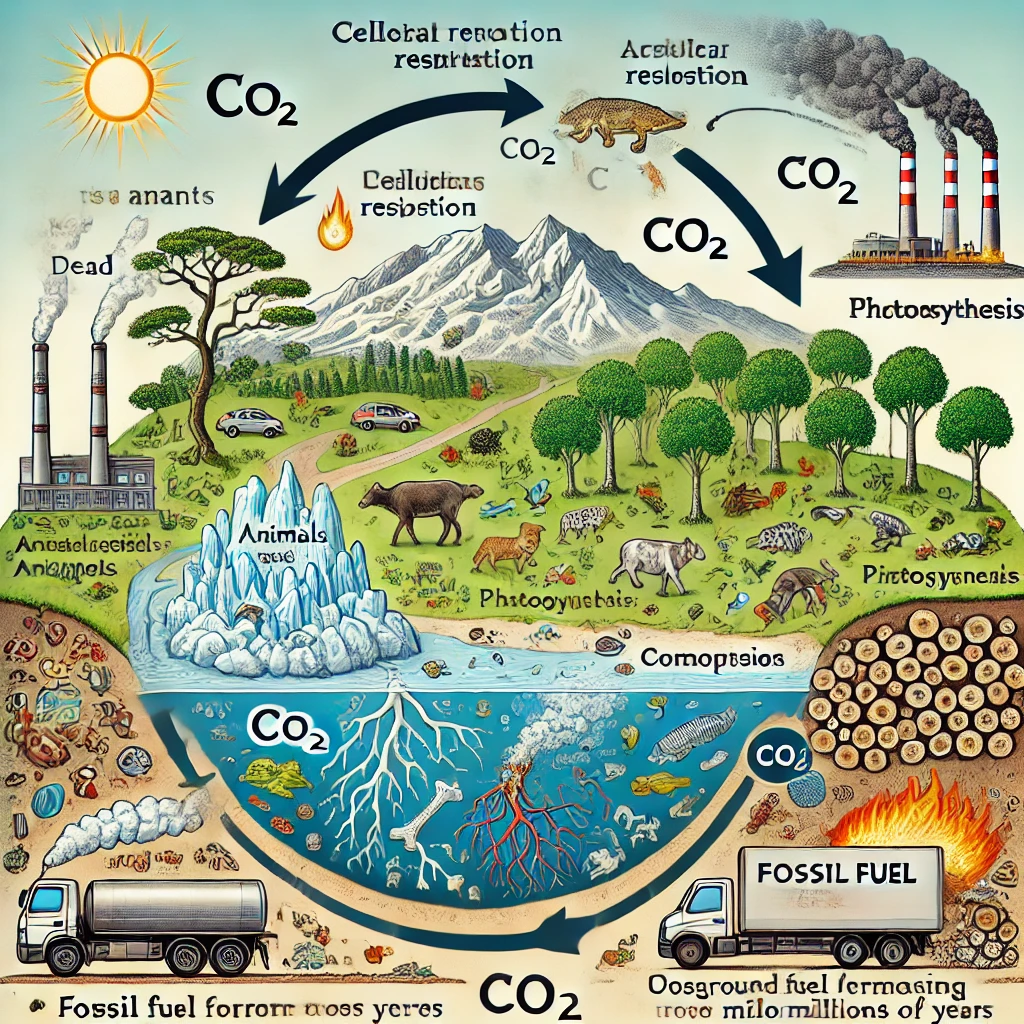
Analyzing Graphics: The Carbon Cycle Atmospheric CO2 combustion feeding death and decay fossil fuel formation
- The model is missing two labels. Locate where each of the following processes are being illustrated and label them on the diagram. Write a short description of the processes.
- Cellular Respiration:
- Photosynthesis:
- Fossil fuels are formed in the geological past from the remains of living organisms. Petroleum products, such as coal and natural gas are considered fossil fuels. Why are these types of fuels considered NON-renewable?
- When animals and plants die, microorganisms, fungi, and insects are responsible for decomposition. These organisms also respire. Show an arrow on the diagram to indicate respiration by decomposers. Scientists are concerned that melting glaciers are exposing long frozen animals. When the ice melts, the animals thaw and begin to decompose. How will this affect the amount of CO2 in the atmosphere?
- Large areas of land are being developed. In the process, thousands of trees are being removed and burned. Predict how this would affect the cycle?
- Analyze the cycle to know what activities can increase the amount of atmospheric CO2. At least 2 activities.
- Create solutions that can help to decrease the amount of atmospheric CO2.
- Evaluate how the diagram illustrates the relationship between respiration and photosynthesis. Explain this relationship.
The correct answer and explanation is:
The Carbon Cycle Analysis
Missing Labels & Descriptions:
- Cellular Respiration:
- Location in Diagram: Cellular respiration occurs in plants, animals, and decomposers, releasing CO₂ into the atmosphere.
- Description: Organisms, including plants and animals, break down glucose (C₆H₁₂O₆) during cellular respiration to produce energy (ATP). This process releases carbon dioxide (CO₂) as a byproduct, which is then absorbed by plants for photosynthesis.
- Photosynthesis:
- Location in Diagram: Photosynthesis happens in plants and algae, removing CO₂ from the atmosphere.
- Description: Plants use sunlight, water, and CO₂ to produce glucose and oxygen. This process helps maintain balance in the carbon cycle by reducing atmospheric CO₂ levels.
Why Are Fossil Fuels Considered Non-Renewable?
Fossil fuels form over millions of years from decomposed organic matter subjected to high pressure and temperature. Since this process takes such an extensive period, fossil fuels cannot be replenished at the same rate they are consumed. Once used, they cannot be regenerated in a human lifespan, making them a non-renewable resource.
Impact of Melting Glaciers on CO₂ Levels
As glaciers melt, ancient frozen organisms decompose. Decomposers break down this organic matter, releasing CO₂ into the atmosphere through respiration. This can lead to an increase in greenhouse gas concentrations, accelerating climate change.
Effect of Deforestation on the Carbon Cycle
Burning and removing trees decrease the number of plants available for photosynthesis, which reduces CO₂ absorption. Simultaneously, burning trees releases stored carbon, increasing atmospheric CO₂ levels.
Human Activities Increasing Atmospheric CO₂:
- Burning fossil fuels for energy (cars, industries, electricity).
- Deforestation for agriculture, urban development, and wood production.
Solutions to Decrease CO₂ Levels:
- Reforestation & afforestation – Planting more trees to absorb CO₂.
- Renewable energy – Transitioning to solar, wind, and hydroelectric power.
- Carbon capture technology – Using machines to trap CO₂ emissions before they enter the atmosphere.
- Reducing emissions – Using public transportation, electric vehicles, and energy-efficient appliances.
Relationship Between Respiration & Photosynthesis:
Respiration and photosynthesis are interconnected processes in the carbon cycle. Plants absorb CO₂ during photosynthesis to produce glucose and oxygen. Animals and plants then use this glucose for cellular respiration, which releases CO₂ back into the atmosphere. This cycle maintains atmospheric carbon balance. However, human activities disrupt this balance, increasing CO₂ levels and contributing to climate change.
Now, I’ll generate an image illustrating the carbon cycle.
Here is a detailed diagram of the Carbon Cycle illustrating key processes like cellular respiration, photosynthesis, combustion, decomposition, fossil fuel formation, and the effects of deforestation and melting glaciers on CO₂ levels. Let me know if you need any modifications!