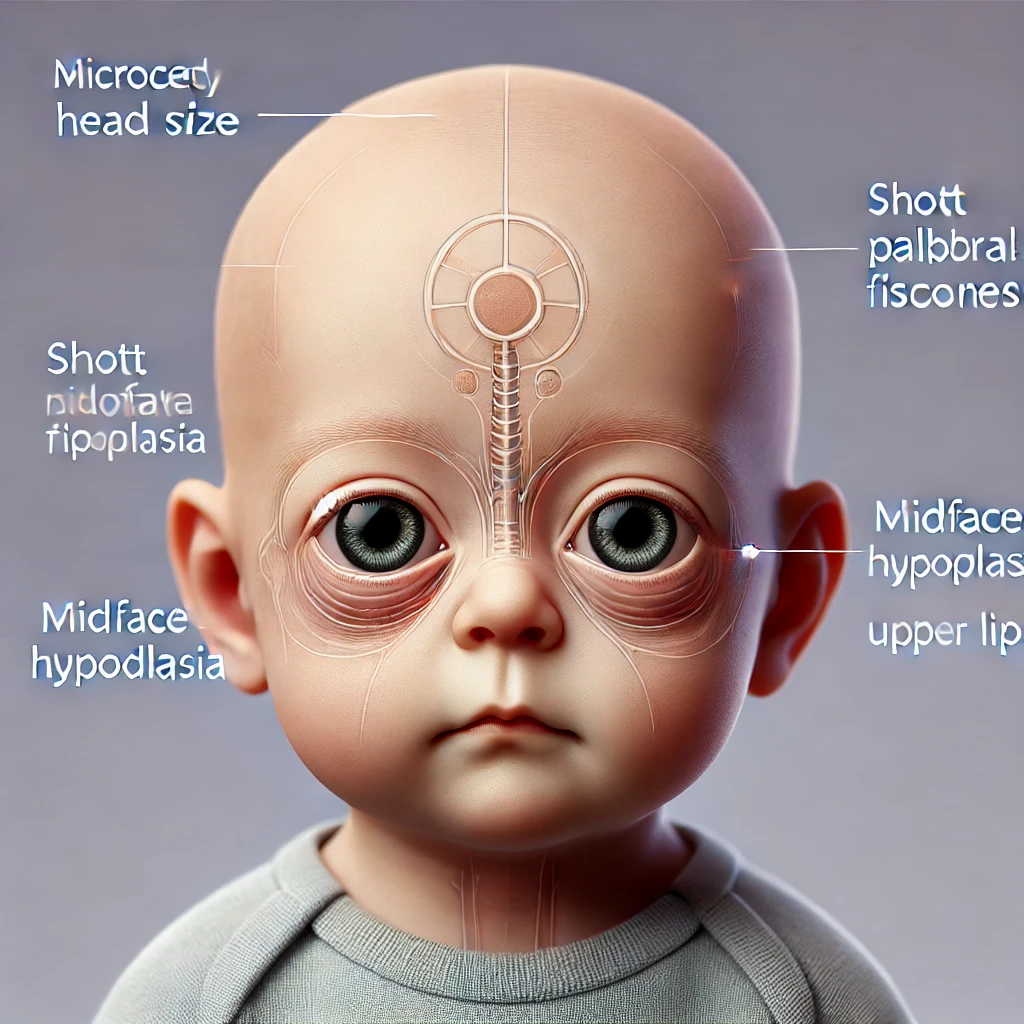
A 28-year-old woman is seen for postpartum blues by the psychiatrist. She states she is depressed because she “did this to her child.” The infant has growth retardation, microphthalmia, short palpebral fissures, midface hypoplasia, a short philtrum, a thin upper lip, and microcephaly. Which is the most likely diagnosis of the mother (besides the postpartum blues)?
a. Bipolar disorder
b. Major depression
c. Hypochondriasis
d. Alcohol dependence
e. Cocaine dependence
The correct answer and explanation is:
The correct answer is:
d. Alcohol dependence
Explanation:
The infant described in the scenario presents with characteristic features of fetal alcohol syndrome (FAS), a condition caused by maternal alcohol consumption during pregnancy. These features include:
- Growth retardation (intrauterine or postnatal)
- Facial anomalies:
- Microphthalmia (small eyes)
- Short palpebral fissures (small eye openings)
- Midface hypoplasia (underdeveloped facial structure)
- Short philtrum (flattened area between the nose and upper lip)
- Thin upper lip
- Microcephaly (small head circumference)
These physical findings, along with potential neurodevelopmental deficits, strongly suggest fetal alcohol syndrome, which is a leading preventable cause of intellectual disability and developmental delay in children.
Maternal Diagnosis:
Since FAS is caused by prenatal alcohol exposure, the most likely diagnosis in the mother is alcohol dependence. Women with alcohol dependence may continue drinking during pregnancy, despite warnings about the risks to the fetus.
- Alcohol dependence is characterized by:
- Compulsive drinking despite negative consequences
- Tolerance and withdrawal symptoms
- Inability to control alcohol intake
- Neglect of responsibilities
This woman’s guilt and depression about harming her child may contribute to postpartum blues, a transient mood disturbance seen after delivery. However, her history of alcohol use is the key factor leading to fetal alcohol syndrome in her infant.
Importance of Early Diagnosis:
Recognizing fetal alcohol syndrome early allows for early intervention, such as special education programs and behavioral therapy, to improve outcomes for affected children. Additionally, identifying maternal alcohol dependence provides an opportunity for treatment and support to prevent further complications.
Now, I’ll generate an image of a child with features of fetal alcohol syndrome as described.
Here is the medical illustration of a baby with features of fetal alcohol syndrome (FAS). Let me know if you need further explanations or modifications!