(a) Define creep. What are its advantages and disadvantages?
(b) What is shrinkage? What factors promote shrinkage? What precautions will you take to reduce it?
State the value of slump and compacting factor you will recommend for following works:
- (a) Beams
- (b) Slabs
- (c) Foundations
- (d) Retaining walls
- (e) Pavements
The correct answer and explanation is:
(a) Creep in Concrete
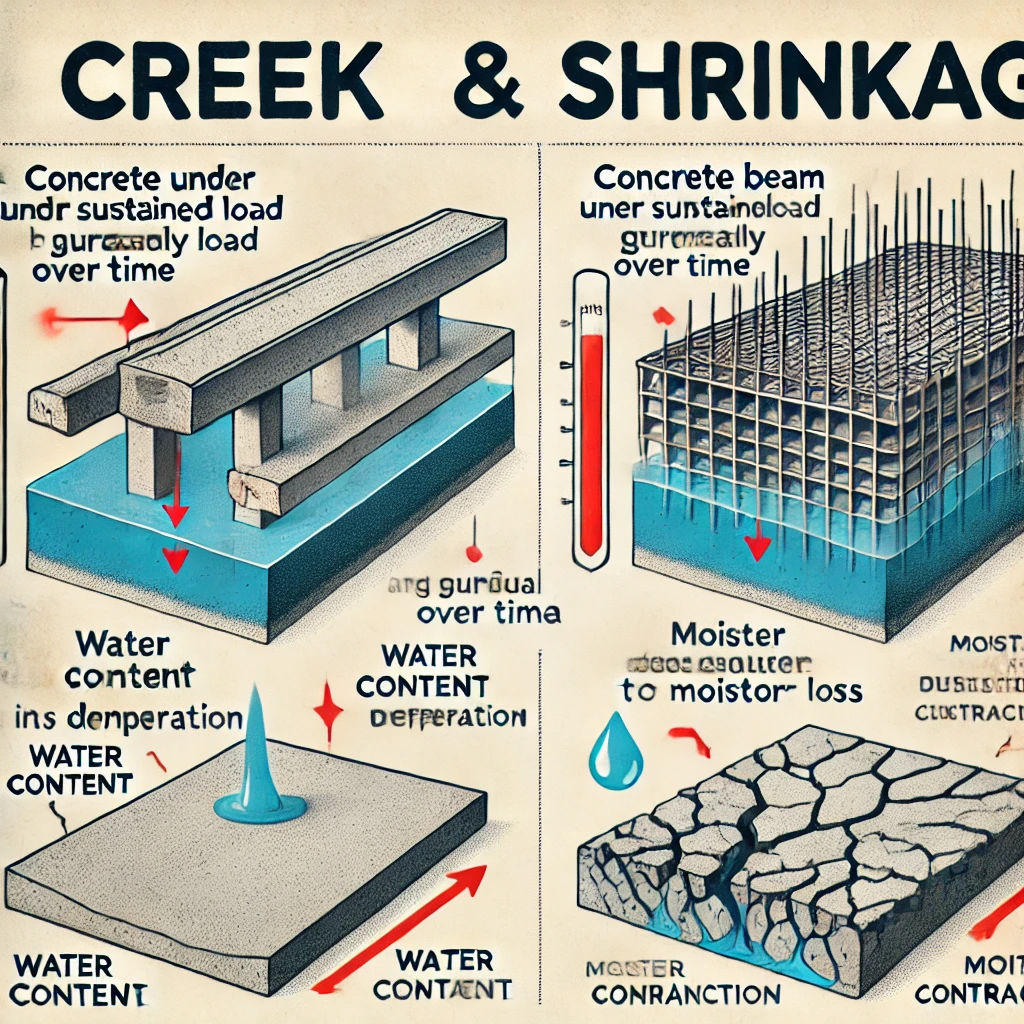
Creep is the gradual, time-dependent deformation of concrete under sustained load. It occurs due to the continuous rearrangement of the internal microstructure of concrete, leading to an increase in strain over time without additional external load.
Advantages of Creep:
- Stress Redistribution: Helps in relieving internal stresses, reducing the risk of cracks.
- Improved Ductility: Enhances the structural performance by allowing slight deformations.
- Load Sharing: Reduces peak stresses in reinforced structures, preventing sudden failure.
Disadvantages of Creep:
- Loss of Prestress: In prestressed concrete, excessive creep reduces the effectiveness of prestressing.
- Structural Deformations: Leads to excessive deflection in beams and slabs.
- Cracking in Long-Term Loadings: Can cause microcracks, affecting durability and strength.
(b) Shrinkage in Concrete
Shrinkage is the reduction in volume of concrete due to loss of moisture, temperature variations, or chemical reactions during hydration.
Factors Promoting Shrinkage:
- Water Content: Higher water-cement ratio increases shrinkage.
- Aggregate Type: Fine aggregates lead to higher shrinkage than coarse aggregates.
- Environmental Conditions: High temperature and wind accelerate drying shrinkage.
- Cement Type: Rapid-setting cements exhibit more shrinkage.
Precautions to Reduce Shrinkage:
- Use of Low Water-Cement Ratio: Ensures reduced moisture evaporation.
- Proper Curing: Keeping concrete moist prevents rapid drying.
- Use of Admixtures: Shrinkage-reducing admixtures help in minimizing shrinkage effects.
- Adequate Reinforcement: Provides resistance against shrinkage cracks.
Recommended Slump and Compacting Factor for Different Works:
| Type of Work | Slump Value (mm) | Compacting Factor |
|---|---|---|
| Beams | 75 – 100 | 0.85 – 0.92 |
| Slabs | 50 – 100 | 0.85 – 0.92 |
| Foundations | 75 – 125 | 0.85 – 0.95 |
| Retaining Walls | 75 – 100 | 0.85 – 0.92 |
| Pavements | 25 – 50 | 0.80 – 0.88 |
These values ensure workability and durability according to the type of structure.
Now, I will generate an image related to creep and shrinkage in concrete.
Here is an educational diagram illustrating creep and shrinkage in concrete. Let me know if you need any modifications or further explanations!