A multilink front suspension contains which of the following?
a. Strut
b. Control arms
c. Ball joints
d. All of the above
The correct answer and explanation is :
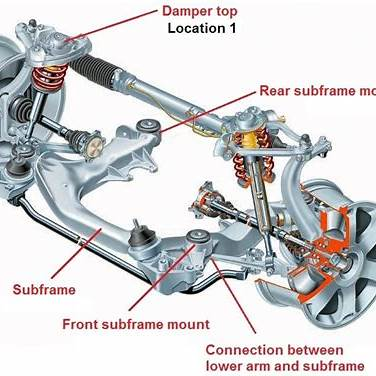
A multi-link front suspension system incorporates several components, including struts, control arms, and ball joints. Therefore, the correct answer is (d) all of the above.
A multi-link suspension is a sophisticated type of independent suspension that uses three or more lateral arms, or links, to control wheel motion. This design allows for precise management of wheel angles and positions, enhancing both ride comfort and handling performance. Each link typically has a spherical joint (ball joint) or rubber bushing at each end, allowing it to react to loads in tension and compression without bending.
Components of a Multi-Link Suspension:
- Control Arms (Links): These are the primary components connecting the wheel hub to the vehicle’s chassis. A multi-link system usually includes multiple control arms, each positioned to manage specific movements of the wheel. The precise arrangement of these arms allows for independent adjustment of parameters like camber and toe angles, contributing to improved handling and stability.
- Ball Joints: These spherical bearings connect the control arms to the wheel hub and allow for smooth rotational movement in multiple directions. Ball joints are crucial for accommodating the steering and suspension movements, ensuring that the wheels can pivot appropriately while maintaining a stable connection to the suspension system.
- Struts: In some multi-link suspension designs, struts are used in conjunction with control arms. A strut combines a shock absorber and a coil spring into a single assembly, providing structural support to the suspension and absorbing road shocks. The inclusion of struts can help in maintaining tire contact with the road, enhancing both comfort and control.
The multi-link design offers several advantages over other suspension systems. By allowing for independent movement of each wheel, it provides superior handling characteristics and ride comfort. The complexity of the system enables engineers to fine-tune the suspension geometry for optimal performance, reducing issues like torque steer and improving traction during acceleration and cornering.
However, this complexity also means that multi-link suspensions are more intricate and can be more expensive to manufacture and maintain compared to simpler designs like MacPherson struts or double wishbone suspensions. The increased number of components requires meticulous tuning and alignment to ensure optimal performance, and repairs can be more involved due to the system’s intricacy.
In summary, a multi-link front suspension system utilizes a combination of control arms, ball joints, and sometimes struts to provide a highly adaptable and performance-oriented suspension setup. This configuration allows for precise control over wheel motion, enhancing both the handling characteristics and ride quality of the vehicle.