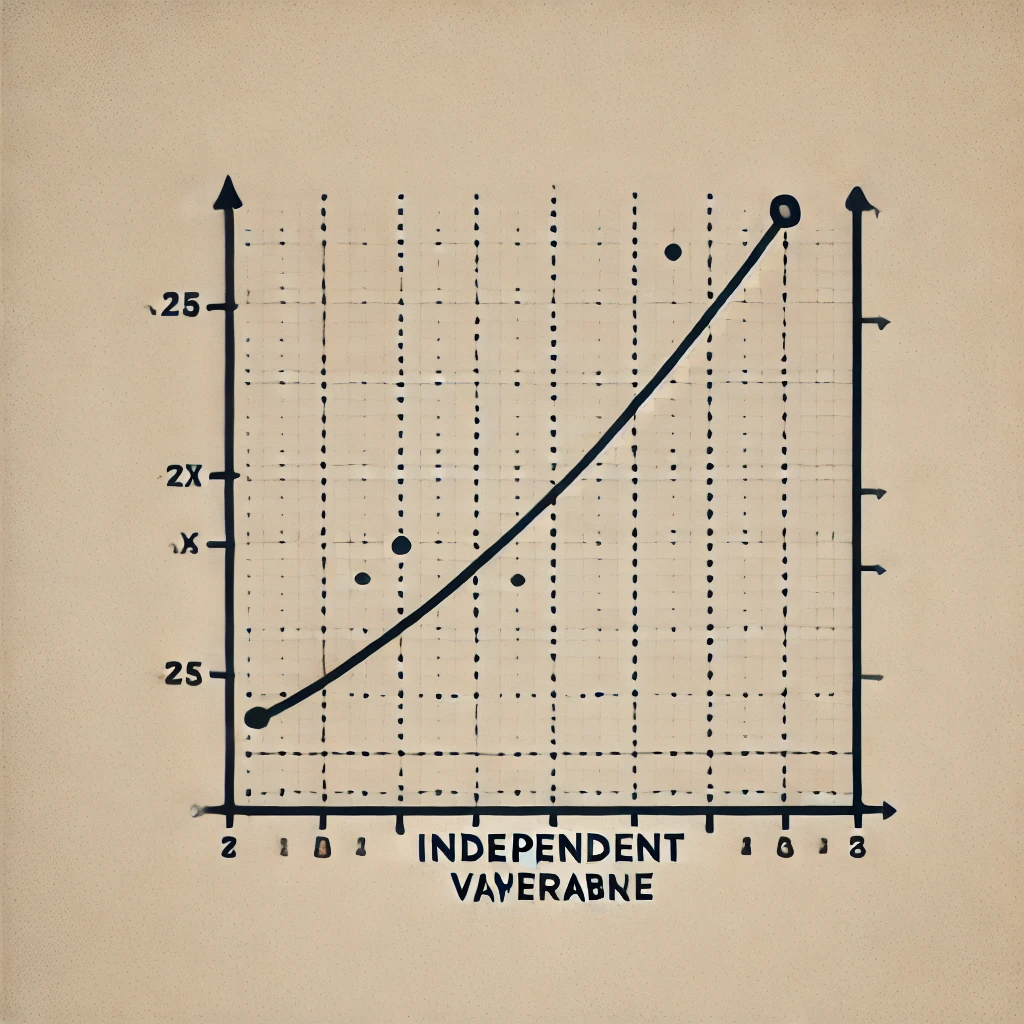
An upward-sloping line or curve is used to illustrate:
a. a direct relationship.
b. an inverse relationship.
c. two unrelated variables.
d. the ceteris paribus assumption.
The correct answer and explanation is :
Correct Answer:
a. a direct relationship.
Explanation:
An upward-sloping line or curve in a graph represents a direct (or positive) relationship between two variables. This means that as one variable increases, the other variable also increases. Conversely, when one variable decreases, the other decreases as well.
This relationship is commonly seen in various economic and scientific contexts. For example, in economics, the relationship between price and quantity supplied follows this pattern. According to the law of supply, as the price of a good increases, producers are willing to supply more of it, leading to an upward-sloping supply curve.
Mathematically, a direct relationship can be represented as:
[
y = mx + b
]
where ( m ) (the slope) is positive. This indicates that the change in ( x ) leads to a proportional increase in ( y ).
In contrast, an inverse relationship (option b) would be illustrated by a downward-sloping line, meaning that as one variable increases, the other decreases (e.g., the demand curve).
Option c, “two unrelated variables,” would result in no consistent pattern or slope.
Option d, “the ceteris paribus assumption,” refers to the idea that all other factors are held constant while examining the relationship between two variables, but it does not describe the shape of a graph.
Thus, an upward-sloping line or curve always signifies a direct relationship where both variables move in the same direction.