In the circular flow model, the market economy creates_____
a flow of goods and services among households
and expands the available resources needed for the production of goods and services
continuous flows of goods and services, resources, and money
a constant flow of money between households and businesses
The correct answer and explanation is :
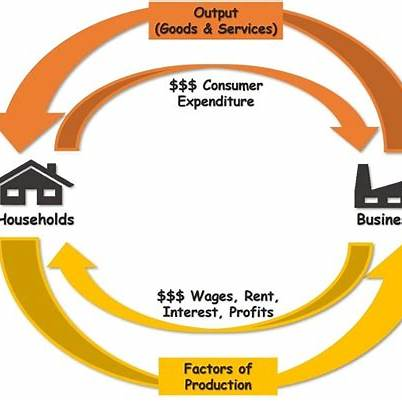
In the circular flow model of a market economy, the correct answer is:
continuous flows of goods and services, resources, and money.
Explanation:
The circular flow model is a fundamental concept in economics that illustrates how money, goods and services, and resources move throughout an economy. It demonstrates the interdependence between different economic agents, primarily households and businesses.
Key Components:
- Households: These are individuals or groups that own and supply factors of production—such as labor, land, capital, and entrepreneurship. They provide these resources to businesses and, in return, receive income in the form of wages, rent, interest, and profits. Households use this income to purchase goods and services from businesses, thereby driving consumption.
- Businesses (Firms): Businesses are entities that produce goods and services. They purchase resources from households to facilitate production. The goods and services produced are then sold to households in the product market, generating revenue. This revenue is used to pay for the factors of production, creating a continuous flow of money and resources.
Flows in the Model:
- Real Flow: This represents the movement of resources and goods and services. Households supply factors of production to businesses (resource market), and in return, businesses provide goods and services to households (product market).
- Monetary Flow: This depicts the movement of money. Businesses pay households for the use of their resources (wages, rent, etc.), and households spend this income to purchase goods and services from businesses.
This cyclical exchange ensures that money and resources circulate continuously within the economy, maintaining economic activity and growth. The model highlights the interdependence of households and businesses, where households provide the necessary resources for production, and businesses supply the goods and services that satisfy consumer needs.