The BF3 molecule is nonpolar, whereas the NF3 molecule is polar. Which of the following staternents accounts for the difference in polarity of the two molecules?
A In NF3, each F is joined to N with multiple bonds, whereas in BFg, each F is joined to 8 with single bonds
B N-F bonds are polar, whereas B-F bonds are nonpolar.
C NF3 is an ionic compound, whereas BF3 is a molecular compound.
D Unlike BF3. NF3 has a nonplanar geometry due to an unshared pair of electrons on the Natom
The correct answer and explanation is :
The correct answer is:
D. Unlike BF₃, NF₃ has a nonplanar geometry due to an unshared pair of electrons on the N atom.
Explanation:
The polarity of a molecule depends on both the polarity of its individual bonds and its overall molecular geometry.
- BF₃ (Boron Trifluoride) – Nonpolar:
- The BF₃ molecule consists of boron (B) at the center, bonded to three fluorine (F) atoms.
- Boron has only three valence electrons and forms three single bonds with fluorine.
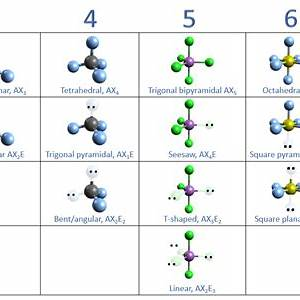
- The molecule adopts a trigonal planar geometry with bond angles of 120°, ensuring that the dipole moments of the highly electronegative fluorine atoms cancel each other out.
- Because of this symmetry, BF₃ has no net dipole moment and is therefore nonpolar.
- NF₃ (Nitrogen Trifluoride) – Polar:
- The NF₃ molecule has nitrogen (N) at the center, bonded to three fluorine (F) atoms.
- Nitrogen has five valence electrons, meaning that after forming three bonds with fluorine, it retains a lone pair of electrons.
- This lone pair pushes down the bonded fluorine atoms, creating a trigonal pyramidal geometry similar to NH₃ (ammonia).
- This geometry results in an uneven charge distribution, where the lone pair on nitrogen does not allow the dipole moments to cancel out completely.
- As a result, NF₃ has a net dipole moment, making it a polar molecule.
Why the Other Options Are Incorrect:
- Option A is incorrect because both NF₃ and BF₃ contain only single bonds.
- Option B is incorrect because B-F bonds are actually polar due to fluorine’s high electronegativity. However, in BF₃, the dipoles cancel out due to symmetry.
- Option C is incorrect because both NF₃ and BF₃ are molecular compounds, not ionic compounds.
Conclusion:
The key difference is molecular geometry. BF₃ is trigonal planar (nonpolar), whereas NF₃ is trigonal pyramidal due to the lone pair on nitrogen, making it polar.