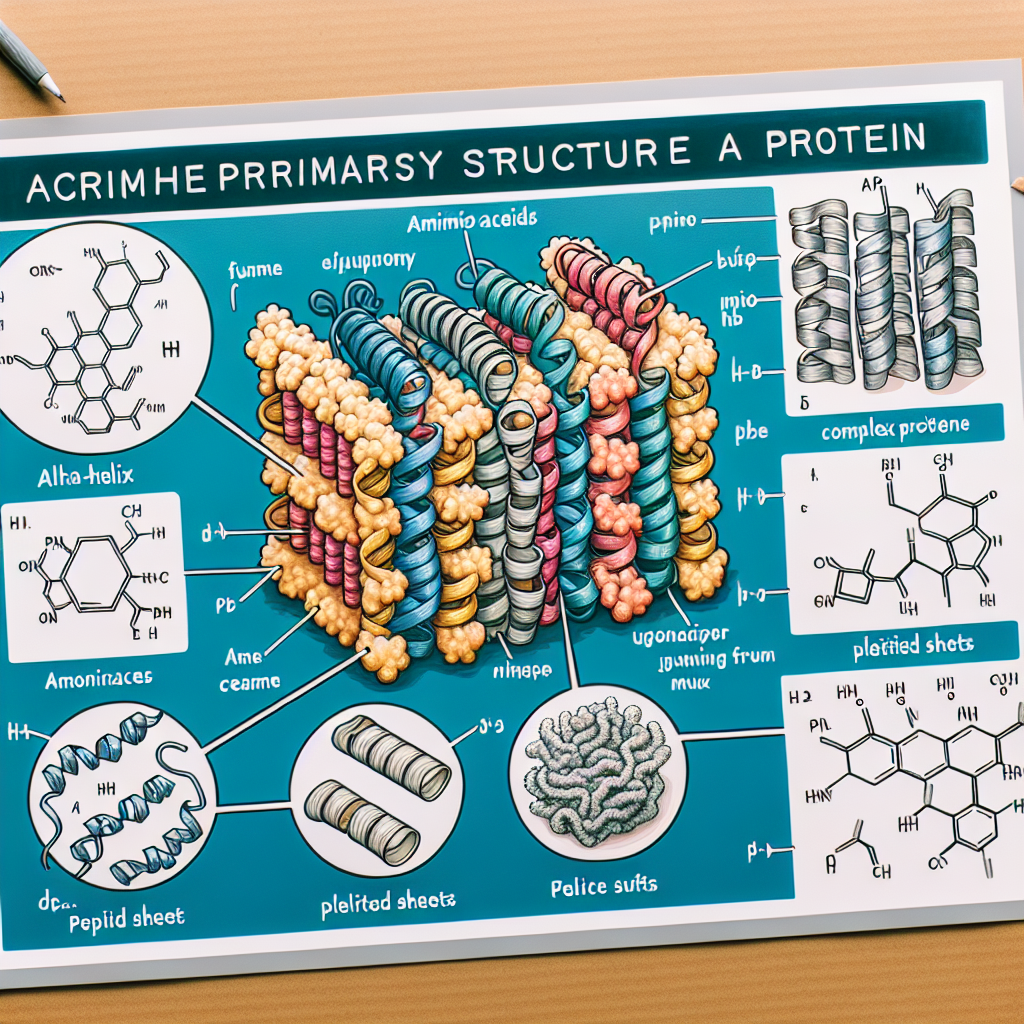
The primary structure of a protein refers to:
A) the sequence of its amino acids.
B) the orientation of a-helices.
C) the orientation of pleated sheets.
D) the orientation of peptide subunits within a complex protein.
E) the placement of the protein’s active site.
The correct answer and explanation is :
The correct answer is A) the sequence of its amino acids.
Explanation:
Proteins are complex molecules made up of chains of amino acids, and their structure is crucial to their function. The primary structure of a protein is the linear sequence of amino acids that make up the polypeptide chain. This sequence is determined by the genetic code in the DNA, which is transcribed into mRNA and then translated into the corresponding sequence of amino acids during protein synthesis. The primary structure is the foundation upon which all higher levels of protein structure (secondary, tertiary, and quaternary) are built.
Each amino acid in the sequence is connected to the next by a peptide bond, forming a long chain. The unique sequence of amino acids dictates the protein’s final three-dimensional structure and its functional properties. For instance, the order of amino acids affects how the protein folds and interacts with other molecules. A change in the primary structure, due to mutations in the DNA, can lead to the production of a dysfunctional protein, which might cause diseases like sickle cell anemia.
The secondary structure (B and C), which refers to the local folded structures formed by hydrogen bonds (like α-helices and β-pleated sheets), and the tertiary structure (the overall three-dimensional shape), depend on the primary structure, but they are not part of it. Similarly, the quaternary structure (D), involving multiple protein subunits, and the active site (E), which is crucial for the protein’s function, are influenced by the primary structure but are not considered part of it.
In summary, the primary structure is simply the sequence of amino acids in the protein and serves as the blueprint for the protein’s final structure and function.