What is the advantage of the countercurrent gas exchange in the case of some molluscs? Why is it not present in all representatives?
The correct answer and explanation is :
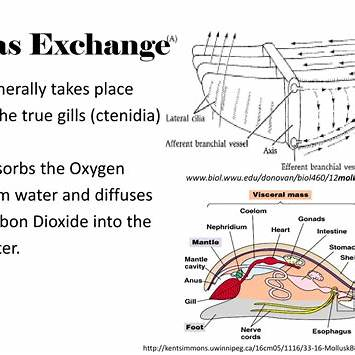
Countercurrent gas exchange is a highly efficient respiratory mechanism observed in certain molluscs, particularly in aquatic species like cephalopods (e.g., squids and octopuses). This system enhances oxygen uptake by maintaining a continuous concentration gradient between the oxygen-rich water and the blood within the gills. In this arrangement, water flows over the gill surfaces in one direction, while blood circulates in the opposite direction within the gill capillaries. This countercurrent flow ensures that blood with lower oxygen content consistently encounters water with higher oxygen levels, facilitating maximum oxygen diffusion into the bloodstream. Such efficiency is vital for molluscs with high metabolic demands, enabling them to sustain active lifestyles and complex behaviors.
However, not all molluscs employ countercurrent gas exchange. The presence or absence of this system is influenced by various factors, including the organism’s habitat, metabolic rate, and evolutionary adaptations. For instance, many sedentary bivalves and gastropods have lower metabolic rates and may rely on simpler respiratory mechanisms, such as ciliary action to move water over their gills, without the need for the enhanced efficiency provided by countercurrent exchange. Additionally, terrestrial molluscs, like certain pulmonate gastropods, have evolved lung-like structures for breathing air, rendering aquatic countercurrent mechanisms unnecessary. These variations underscore the diversity of respiratory adaptations among molluscs, each tailored to their specific environmental niches and physiological requirements.
Understanding these differences highlights the intricate balance between structure, function, and environment in the evolution of respiratory systems within the Mollusca phylum.