What is the oxidation number of the sulfur (S) atom in sulfur dioxide, ?
The correct answer and explanation is :
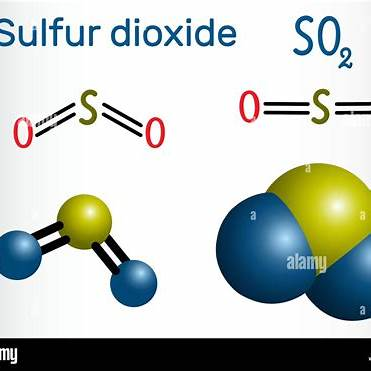
In sulfur dioxide (SO₂), the oxidation number of the sulfur (S) atom is +4. This value is determined by applying standard rules for assigning oxidation numbers, which are essential for understanding electron distribution in chemical compounds and for balancing chemical equations.
Rules for Assigning Oxidation Numbers:
- Elemental State: An atom in its elemental form has an oxidation number of 0. For example, O₂ or S₈ have oxidation numbers of 0.
- Monatomic Ions: For a monatomic ion, the oxidation number equals the ion’s charge. For instance, Na⁺ has an oxidation number of +1.
- Oxygen: Oxygen typically has an oxidation number of -2 in most compounds, except in peroxides (where it’s -1) and when bonded to fluorine.
- Sum of Oxidation Numbers: In a neutral molecule, the sum of all oxidation numbers must equal zero. In polyatomic ions, the sum must equal the ion’s charge.
Applying These Rules to SO₂:
Sulfur dioxide (SO₂) is a neutral molecule. Using the rules above:
- Each oxygen atom has an oxidation number of -2.
- Let the oxidation number of sulfur be denoted as ( x ).
The sum of the oxidation numbers in SO₂ must equal zero:
[ x + 2(-2) = 0 ]
Simplifying:
[ x – 4 = 0 ]
[ x = +4 ]
Therefore, the oxidation number of sulfur in SO₂ is +4.
Understanding Oxidation Numbers:
Oxidation numbers, also known as oxidation states, are theoretical charges assigned to atoms within a molecule, assuming that electrons in bonds are assigned to the more electronegative atom. They are crucial for:
- Redox Reactions: Identifying which atoms are oxidized and which are reduced.
- Nomenclature: Determining the correct names for chemical compounds.
- Balancing Equations: Ensuring that chemical equations are balanced in terms of both mass and charge.
Sulfur’s Oxidation States:
Sulfur is a versatile element that can exhibit multiple oxidation states, ranging from -2 to +6. This flexibility allows sulfur to form a variety of compounds:
- -2 Oxidation State: Found in hydrogen sulfide (H₂S).
- 0 Oxidation State: Elemental sulfur (S₈).
- +4 Oxidation State: Present in sulfur dioxide (SO₂) and sulfurous acid (H₂SO₃).
- +6 Oxidation State: Found in sulfur trioxide (SO₃) and sulfuric acid (H₂SO₄).
Sulfur Dioxide (SO₂):
Sulfur dioxide is a colorless gas with a pungent odor, commonly produced by volcanic activity and industrial processes. It plays a significant role in atmospheric chemistry, particularly in the formation of acid rain. Understanding the oxidation state of sulfur in SO₂ is essential for comprehending its chemical behavior, environmental impact, and its role in various industrial applications.
Conclusion:
Assigning oxidation numbers is a fundamental skill in chemistry that aids in the analysis of chemical reactions and compounds. In sulfur dioxide (SO₂), sulfur has an oxidation number of +4, reflecting its ability to form multiple oxidation states and participate in diverse chemical processes.