Which of the following solutions has the highest pH:
(a) 0.40 M HCOOH,
(b) 0.40 M HClO4,
(c) 0.40 M CH3COOH?
The correct answer and explanation is :
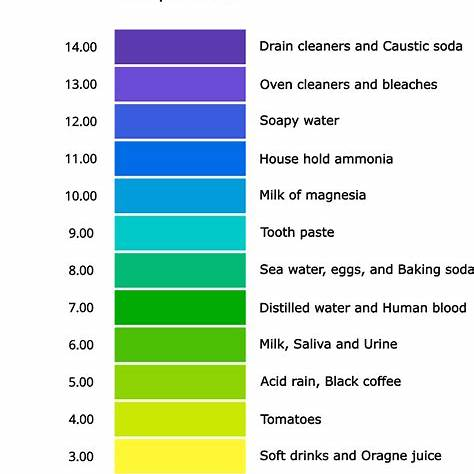
Among the given solutions—(a) 0.40 M formic acid (HCOOH), (b) 0.40 M perchloric acid (HClO₄), and (c) 0.40 M acetic acid (CH₃COOH)—the solution with the highest pH is (c) 0.40 M acetic acid.
Perchloric acid (HClO₄) is a strong acid, meaning it completely dissociates in aqueous solution, releasing a high concentration of hydrogen ions (H⁺), resulting in a low pH.
Formic acid (HCOOH) and acetic acid (CH₃COOH) are both weak acids, which only partially dissociate in solution. The degree of dissociation is characterized by their acid dissociation constant (Kₐ) values:
- Formic acid (HCOOH): Kₐ = 1.8 × 10⁻⁴, pKₐ ≈ 3.7.
- Acetic acid (CH₃COOH): Kₐ = 1.8 × 10⁻⁵, pKₐ ≈ 4.8.
A higher pKₐ value indicates a weaker acid. Since acetic acid has a higher pKₐ than formic acid, it is the weaker of the two acids. In equimolar solutions, the weaker acid dissociates less, producing fewer hydrogen ions and resulting in a higher pH.
Therefore, among the three 0.40 M solutions, acetic acid has the highest pH, followed by formic acid, with perchloric acid having the lowest pH.