Which of the following statements is true of Pavlov?
a) he was a physiologist.
b) he wanted nothing to do with the new discipline of psychology.
c) he studied classical conditioning in dogs.
d) all of the above are true of Pavlov.
The correct answer and explanation is :
The correct answer is: d) all of the above are true of Pavlov.
Explanation:
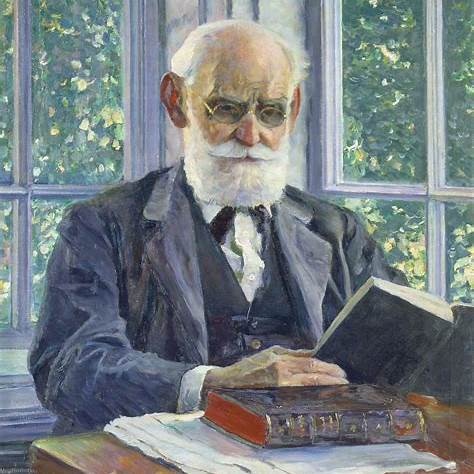
Ivan Pavlov (1849–1936) was a Russian physiologist renowned for his pioneering research in classical conditioning. Initially, Pavlov embarked on studying the digestive processes in dogs, focusing on their salivation responses to various stimuli. This research led to the discovery of classical conditioning, a fundamental concept in behavioral psychology.
a) He was a physiologist:
Pavlov was indeed a physiologist by training. He began his career studying the digestive system, which earned him the Nobel Prize in Physiology or Medicine in 1904 for his work on the physiology of the digestive glands.
b) He wanted nothing to do with the new discipline of psychology:
Initially, Pavlov had little interest in psychology. However, his observations during his digestive studies led him to explore how animals learned associations between stimuli and responses, which eventually contributed to the field of psychology.
c) He studied classical conditioning in dogs:
While studying digestion, Pavlov observed that dogs began to salivate not only when food was presented but also when they heard the footsteps of the assistant bringing the food. This led him to investigate the phenomenon of classical conditioning, where a neutral stimulus (e.g., a bell sound) becomes associated with an unconditioned stimulus (e.g., food) to produce a conditioned response (e.g., salivation).
In summary, all the provided statements accurately describe aspects of Ivan Pavlov’s contributions and interests, making option (d) the correct choice.