Why must refrigerants that fractionate, such as R-410A, be charged as a liquid?
The correct answer and explanation is :
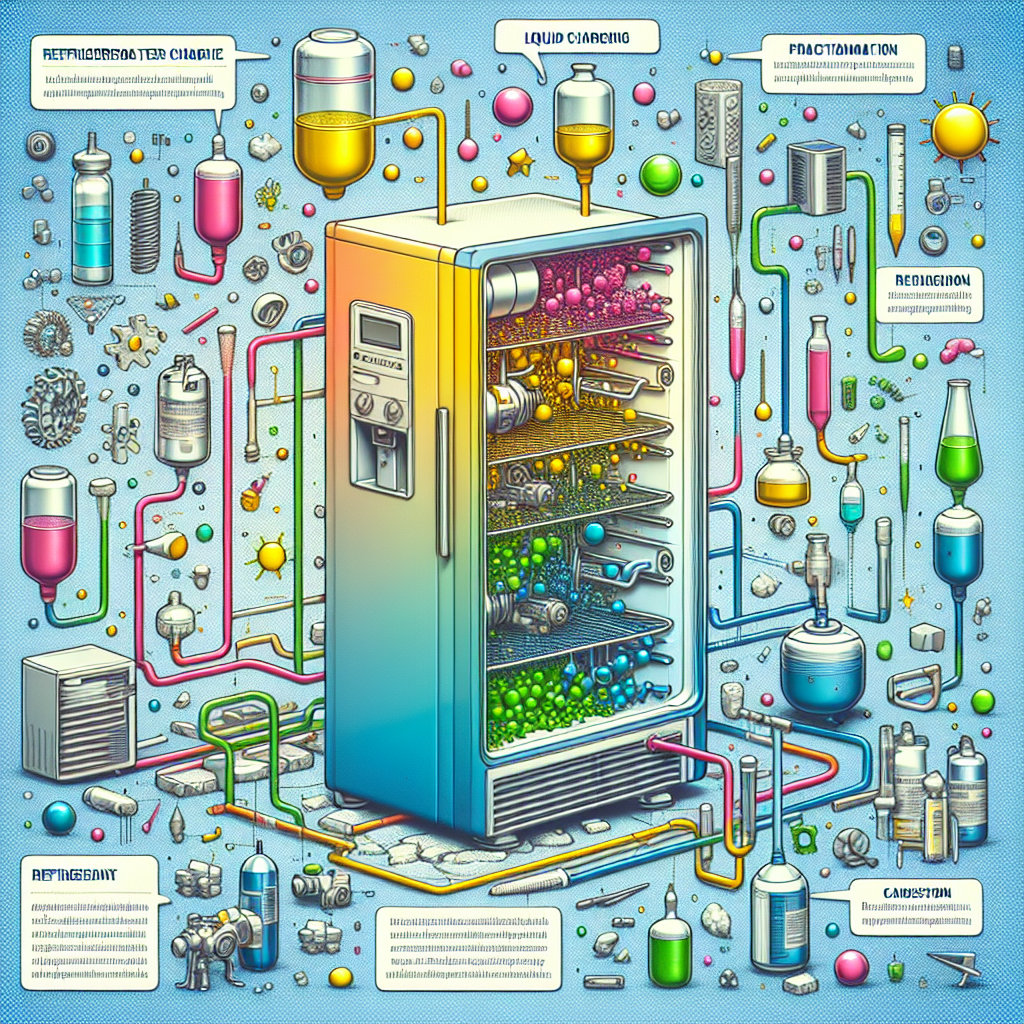
Refrigerants that fractionate, like R-410A, must be charged as a liquid to ensure proper operation of the refrigeration system and to avoid performance issues. Fractionating refrigerants are mixtures that consist of more than one component with different boiling points. When these refrigerants are used in a system and are not charged as a liquid, the components with lower boiling points will tend to vaporize first, causing an imbalance in the refrigerant composition. This leads to the system losing the intended thermodynamic properties, which are critical for efficient heat transfer.
Explanation:
- Fractionation Impact: When a refrigerant like R-410A, which is a blend of two components (tetrafluoroethane and pentafluoroethane), is charged as a vapor, the lower-boiling component will evaporate faster than the higher-boiling one. This causes the refrigerant mixture to lose its intended proportions, which can significantly alter the system’s efficiency and performance.
- Importance of Liquid Charging: Charging refrigerants as a liquid ensures that the composition of the refrigerant mixture remains constant. The liquid form allows the refrigerant to flow into the system at the correct pressure, and as it evaporates, it will maintain its required thermodynamic properties for efficient heat exchange.
- Avoiding Compressor Damage: Charging as a vapor can result in liquid refrigerant flooding the compressor, a condition known as “liquid slugging,” which can cause severe mechanical damage to the compressor. By charging the system with liquid refrigerant, the refrigerant will be properly metered and enter the evaporator in a gaseous form, avoiding the risk of compressor damage.
- Proper Evaporation Control: In the system, charging as liquid refrigerant helps regulate the temperature and pressure in the evaporator, ensuring it evaporates at the right time and at the proper rate for optimal heat absorption.