One of the primary advantages of using a three-part diagnostic statement such as the problem-etiology-signs/symptoms (PES) format includes which of the following?
- Decreases the cost of health care
- Improves communication between nurse and client
- Helps the nurse focus on health and wellness elements
- Standardizes organization of client data
The correct answer and explanation is :
The correct answer is:
4. Standardizes organization of client data
Explanation:
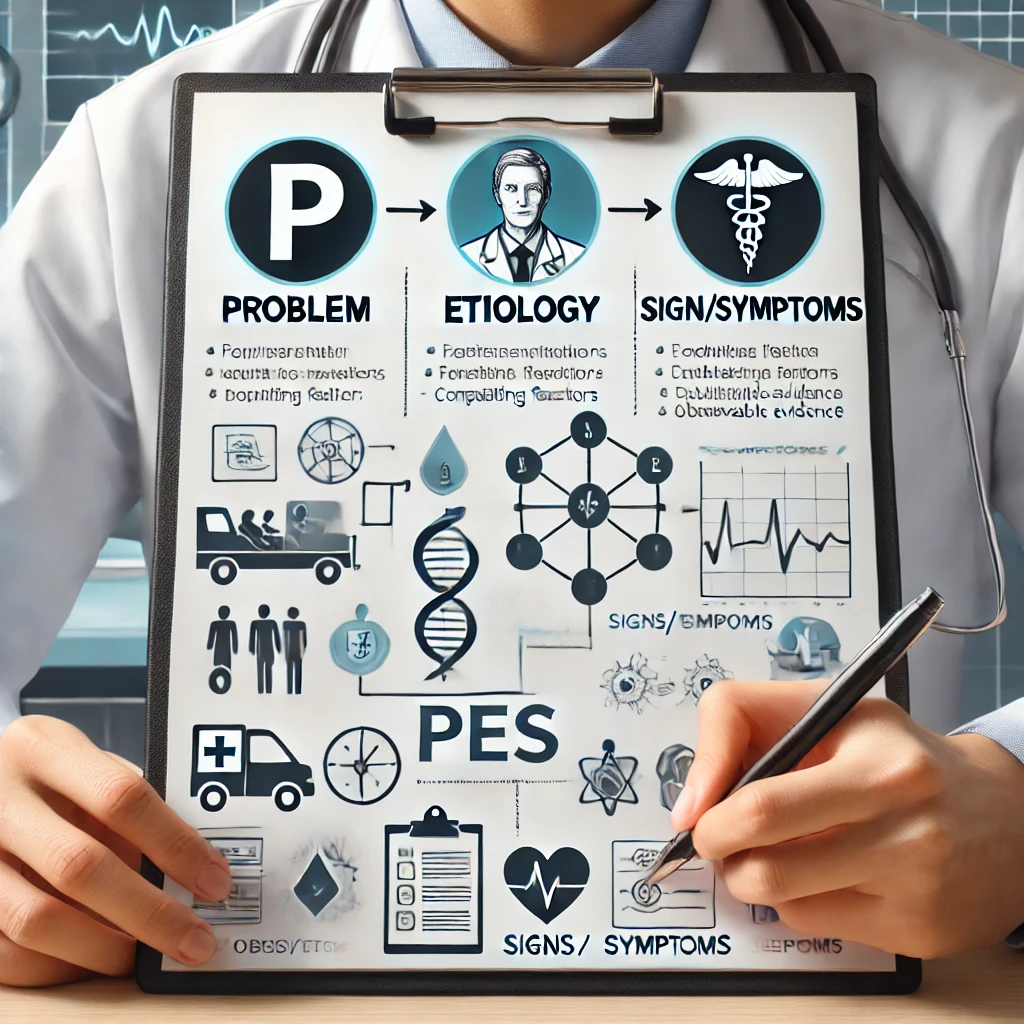
The PES (Problem-Etiology-Signs/Symptoms) format is a structured approach used in nursing diagnosis to ensure clarity, consistency, and comprehensiveness in documenting patient health concerns. This format consists of:
- Problem (P): The patient’s health issue or nursing diagnosis (e.g., “Impaired mobility”).
- Etiology (E): The underlying cause or contributing factors (e.g., “Related to muscle weakness”).
- Signs/Symptoms (S): The observable evidence supporting the diagnosis (e.g., “As evidenced by difficulty walking and requiring assistance”).
One of the primary advantages of this format is that it standardizes the organization of client data. By following a clear, structured method, nurses can efficiently collect, analyze, and communicate patient information. This improves accuracy in assessments, enhances continuity of care, and facilitates better collaboration among healthcare professionals.
Why the other options are incorrect:
- Option 1 (Decreases the cost of healthcare): While standardized documentation may contribute to efficiency, it does not directly reduce healthcare costs.
- Option 2 (Improves communication between nurse and client): While the PES format helps nurses organize data, direct communication with the client depends on verbal interaction and therapeutic communication skills.
- Option 3 (Helps the nurse focus on health and wellness elements): The PES format primarily focuses on problem identification rather than health promotion and wellness.
By providing a clear, systematic approach to nursing diagnoses, the PES format enhances clinical decision-making and ensures that patient data is consistently documented and understood across healthcare teams.