What is hemoglobin saturation?
The correct answer and explanation is :
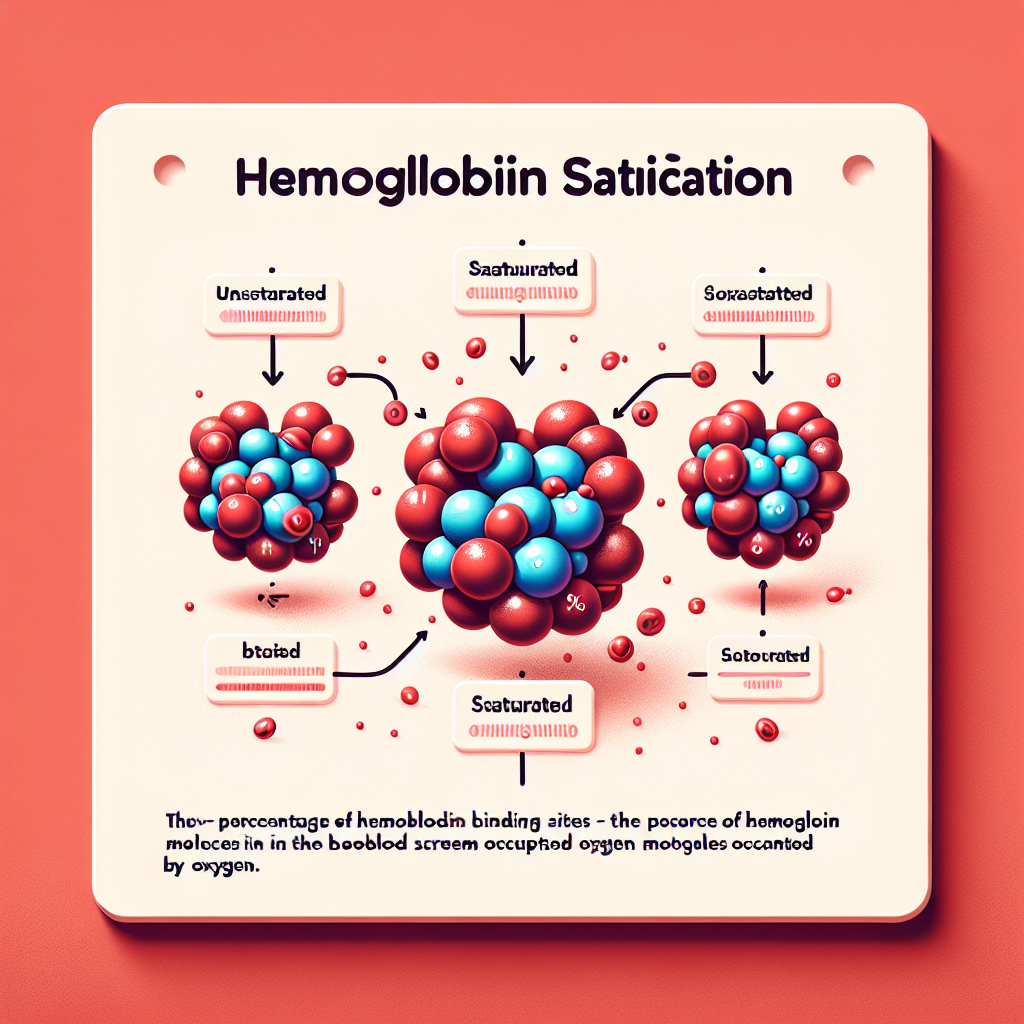
Hemoglobin saturation (SpO₂ or SaO₂) refers to the percentage of hemoglobin molecules in the blood that are bound to oxygen. It is a critical measure of how effectively oxygen is being transported throughout the body. In healthy individuals, hemoglobin saturation typically ranges between 95% and 100%. When levels drop below this range, it may indicate hypoxemia, a condition where blood oxygen levels are too low to support normal bodily functions.
Explanation:
Hemoglobin is a protein found in red blood cells that binds to oxygen in the lungs and delivers it to tissues and organs. The level of hemoglobin saturation depends on factors such as oxygen availability in the lungs, lung function, and blood circulation.
Oxygen is transported in two forms:
- Bound to hemoglobin (98% of total oxygen in the blood)
- Dissolved in plasma (2%)
The oxygen-hemoglobin dissociation curve describes the relationship between the partial pressure of oxygen (PaO₂) and hemoglobin saturation. This curve shows that hemoglobin saturation increases as PaO₂ rises, but beyond a certain point (around 100 mmHg), additional oxygen does not significantly increase saturation.
Factors Affecting Hemoglobin Saturation:
- Altitude: Higher altitudes have lower oxygen availability, reducing saturation.
- Lung diseases: Conditions like COPD, pneumonia, and asthma impair oxygen exchange.
- Anemia: A lower number of red blood cells reduces overall oxygen-carrying capacity.
- Carbon monoxide poisoning: CO competes with oxygen for hemoglobin binding sites, reducing oxygen transport.
Clinical Importance:
Measuring SpO₂ using a pulse oximeter is a non-invasive way to monitor oxygen levels. If SpO₂ drops below 90%, medical intervention may be required to prevent complications such as organ damage or respiratory failure.