What is the difference between a naked virus and an enveloped virus?
The correct answer and explanation is :
Difference Between a Naked Virus and an Enveloped Virus
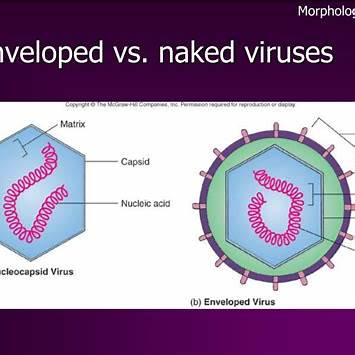
The main difference between a naked virus and an enveloped virus is the presence or absence of a lipid membrane around the virus.
- Naked Virus: Lacks an outer lipid envelope; its outermost layer is the protein capsid.
- Enveloped Virus: Has a lipid membrane derived from the host cell, surrounding its capsid.
Explanation (300 words)
Viruses can be categorized based on their structural composition into naked viruses and enveloped viruses. This structural difference influences their stability, transmission, and mode of infection.
Naked viruses consist only of a nucleocapsid, which includes the viral genome (DNA or RNA) and a protective protein coat called the capsid. These viruses are more resistant to environmental conditions, including heat, desiccation, and detergents, because they lack a fragile lipid membrane. Due to this resistance, they are commonly transmitted via the fecal-oral route, contaminated water, or direct contact. Examples include polio virus, norovirus, and rhinovirus.
Enveloped viruses, on the other hand, have an additional lipid bilayer membrane surrounding the nucleocapsid. This envelope is derived from the host cell membrane during viral budding and is embedded with viral glycoproteins, which help the virus attach and enter host cells. However, the envelope makes these viruses more sensitive to drying, heat, and detergents, limiting their survival outside the host. As a result, they are often spread through direct contact, bodily fluids, or respiratory droplets. Examples include influenza virus, HIV, and SARS-CoV-2.
Functionally, enveloped viruses are better at evading the immune system because their envelope resembles host membranes, making them less detectable. However, naked viruses are more durable and can persist longer in the environment. Understanding these differences is crucial in virology, vaccine development, and infection control.