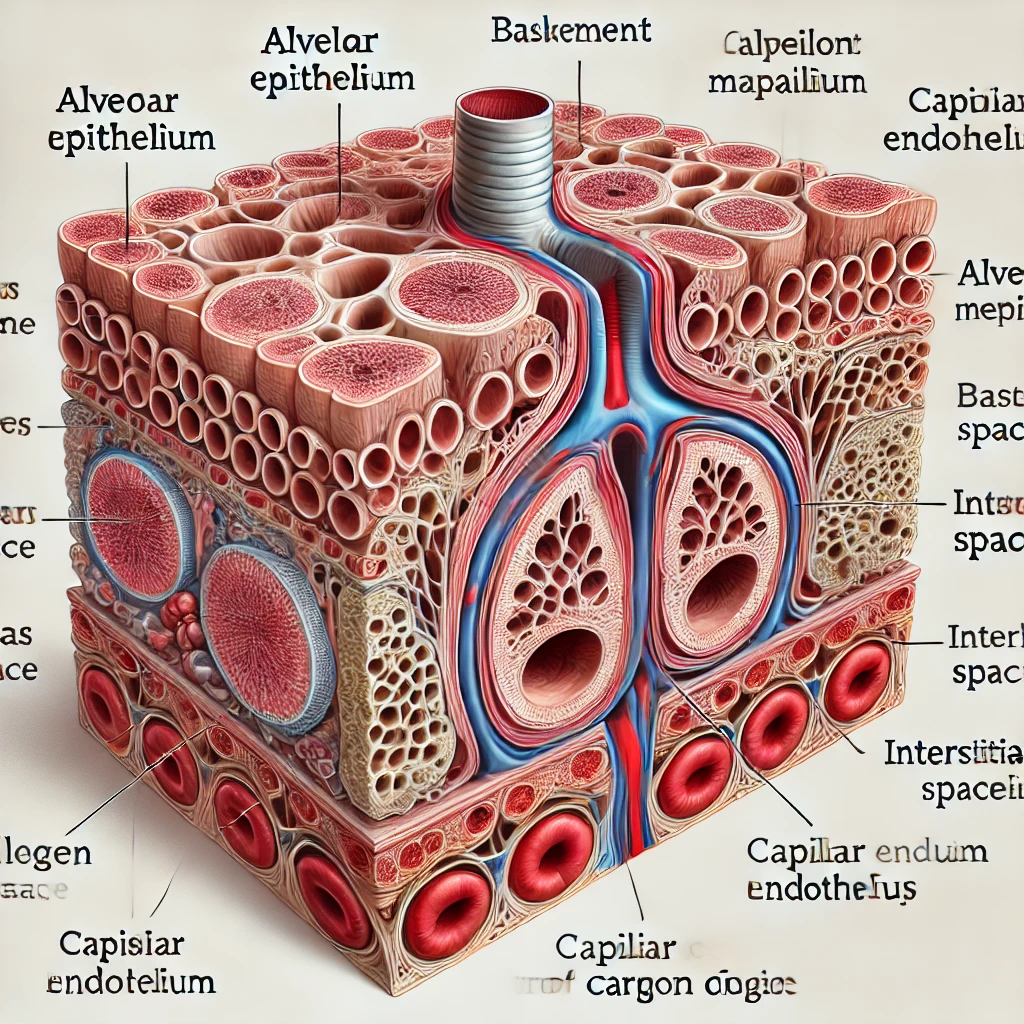
What is the structure of the respiratory membrane?
The correct answer and explanation is :
Structure of the Respiratory Membrane
The respiratory membrane is a thin barrier that facilitates gas exchange between the alveoli and pulmonary capillaries in the lungs. It consists of multiple layers that allow oxygen to diffuse into the blood while carbon dioxide diffuses out.
Components of the Respiratory Membrane:
- Alveolar Epithelium: A single layer of squamous epithelial cells (type I alveolar cells) that forms the inner surface of the alveoli. These cells are thin to allow efficient gas exchange.
- Basement Membrane of the Alveolar Epithelium: A thin layer of connective tissue that provides structural support.
- Interstitial Space: A very thin space that sometimes contains fluid or connective tissue, allowing easy diffusion of gases.
- Basement Membrane of the Capillary Endothelium: Another thin supportive layer, fusing with the alveolar basement membrane in some areas.
- Capillary Endothelium: A single layer of squamous endothelial cells that line the capillaries, allowing gases to pass through easily.
Explanation of Gas Exchange Process (300 words)
The respiratory membrane plays a crucial role in pulmonary gas exchange, ensuring that oxygen (O₂) is absorbed into the bloodstream while carbon dioxide (CO₂) is expelled from the body.
When we inhale, oxygen from the alveoli diffuses across the alveolar epithelium, basement membranes, and capillary endothelium into the blood. This movement occurs due to the difference in partial pressure—oxygen concentration is higher in the alveoli than in the blood, allowing passive diffusion.
Simultaneously, carbon dioxide moves from the blood (where its concentration is higher) into the alveoli, following the concentration gradient. This CO₂ is then expelled when we exhale.
The thin structure (about 0.5 micrometers thick) of the respiratory membrane allows for rapid and efficient gas exchange, ensuring that oxygenated blood reaches tissues while CO₂ is removed. The total surface area of this membrane in both lungs is about 70 square meters, maximizing oxygen uptake.
Diseases like pulmonary fibrosis or pneumonia can thicken the respiratory membrane, reducing gas exchange efficiency and causing breathing difficulties.