When does oxyhemoglobin form during respiration?
The correct answer and explanation is :
Answer:
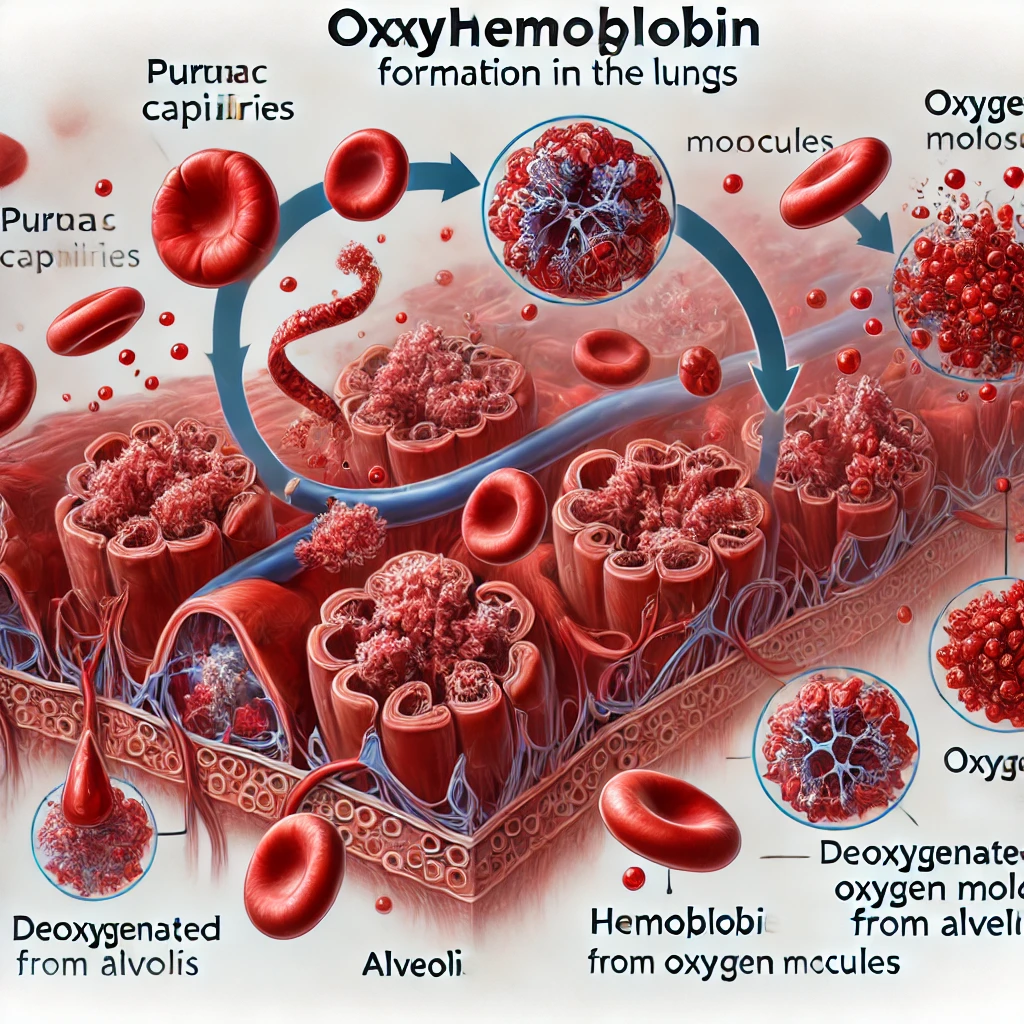
Oxyhemoglobin forms during external respiration when oxygen from the lungs binds to hemoglobin in red blood cells. This occurs in the pulmonary capillaries, where oxygen from inhaled air diffuses into the blood and attaches to hemoglobin, forming oxyhemoglobin (HbO₂).
Explanation (300 Words):
Oxyhemoglobin formation is a critical step in the respiratory process, allowing oxygen transport from the lungs to body tissues. This process occurs during external respiration, specifically in the alveoli of the lungs. Oxygen from inhaled air diffuses across the alveolar membrane into the pulmonary capillaries, where it binds to the iron-containing heme groups in hemoglobin molecules inside red blood cells.
Hemoglobin is a protein with four heme groups, each capable of binding one oxygen molecule. When oxygen binds to hemoglobin, it forms oxyhemoglobin (HbO₂), which gives arterial blood its bright red color. This process is reversible, meaning oxyhemoglobin can later release oxygen to tissues where it is needed for cellular respiration.
The formation of oxyhemoglobin is influenced by several factors, including:
- Oxygen partial pressure (pO₂): Higher pO₂ in the lungs facilitates oxygen binding.
- pH level (Bohr effect): A higher pH (less acidic environment) promotes oxygen binding.
- Temperature: Lower temperatures enhance oxygen binding to hemoglobin.
Once oxyhemoglobin is transported via the bloodstream to tissues with lower oxygen levels, oxygen is released, allowing cells to produce energy through aerobic respiration. This deoxygenated hemoglobin then returns to the lungs, where the cycle repeats.
This efficient oxygen transport system is essential for sustaining life, ensuring that every cell receives the oxygen required for metabolism.