1) When Observed Independently, Which Of The Following Are Indications That A Chemical Reaction Has Occurred? Select All That Apply. Evaporation Of A Liquid Formation Of A Precipitate Temperature Change Persistent Color Change Melting Of A Solid Change In Odor METHODS RESET MY NOTES LAB DATA SHOW LABELS
The correct answer and explanation is:
Correct Answers:
- Formation of a Precipitate
- Temperature Change
- Persistent Color Change
- Change in Odor
Explanation:
A chemical reaction occurs when substances interact to form new products with different properties. The following are reliable indicators of a chemical reaction:
- Formation of a Precipitate:
A precipitate is an insoluble solid that forms when two aqueous solutions react. This occurs due to the formation of a compound that is not soluble in water, which then settles out of the solution. For example, when silver nitrate (AgNO3AgNO_3) is mixed with sodium chloride (NaClNaCl), silver chloride (AgClAgCl) precipitates out as a solid. - Temperature Change:
Chemical reactions often release or absorb heat. Exothermic reactions release heat, making the surroundings warmer (e.g., combustion), while endothermic reactions absorb heat, making the surroundings cooler (e.g., photosynthesis). Temperature changes that are not caused by external heating or cooling suggest a chemical reaction. - Persistent Color Change:
A color change that remains even after the reaction is complete indicates a chemical change. For instance, when iron reacts with oxygen and water, it forms rust (iron oxide), which has a distinct reddish-brown color different from pure iron. - Change in Odor:
Some chemical reactions produce new substances with distinct odors. For example, when food spoils due to bacterial decomposition, new gases with strong odors are produced, indicating a chemical change.
Why Not Evaporation and Melting?
- Evaporation of a Liquid & Melting of a Solid are physical changes, as they do not create new substances. They only change the state of matter.
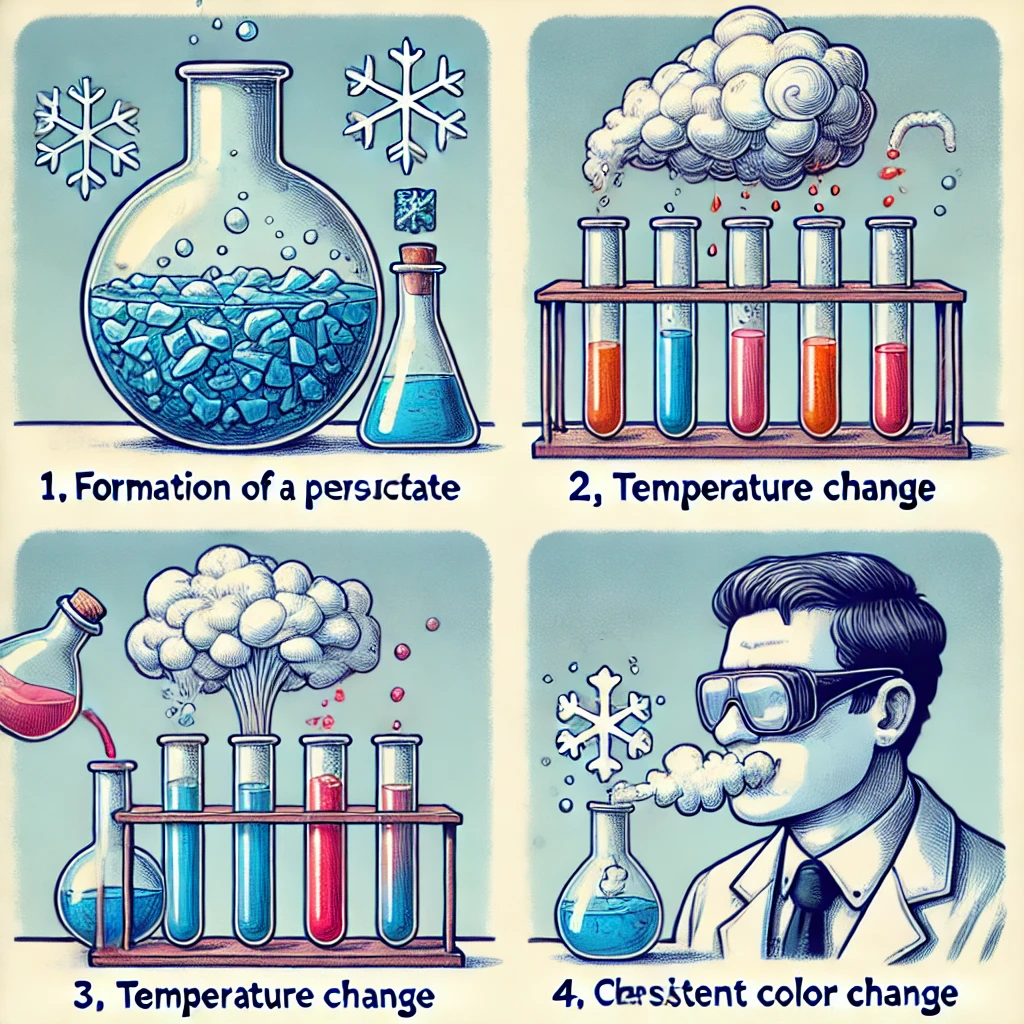
Now, I’ll generate an image representing these chemical reaction indicators.
Here is the generated image illustrating the four signs of a chemical reaction: formation of a precipitate, temperature change, persistent color change, and change in odor. Let me know if you need any modifications or explanations!