Which of the following is MOST characteristic of adequate breathing?
Select one:
- A. 20 breaths/min with shallow movement of the chest wall and pallor
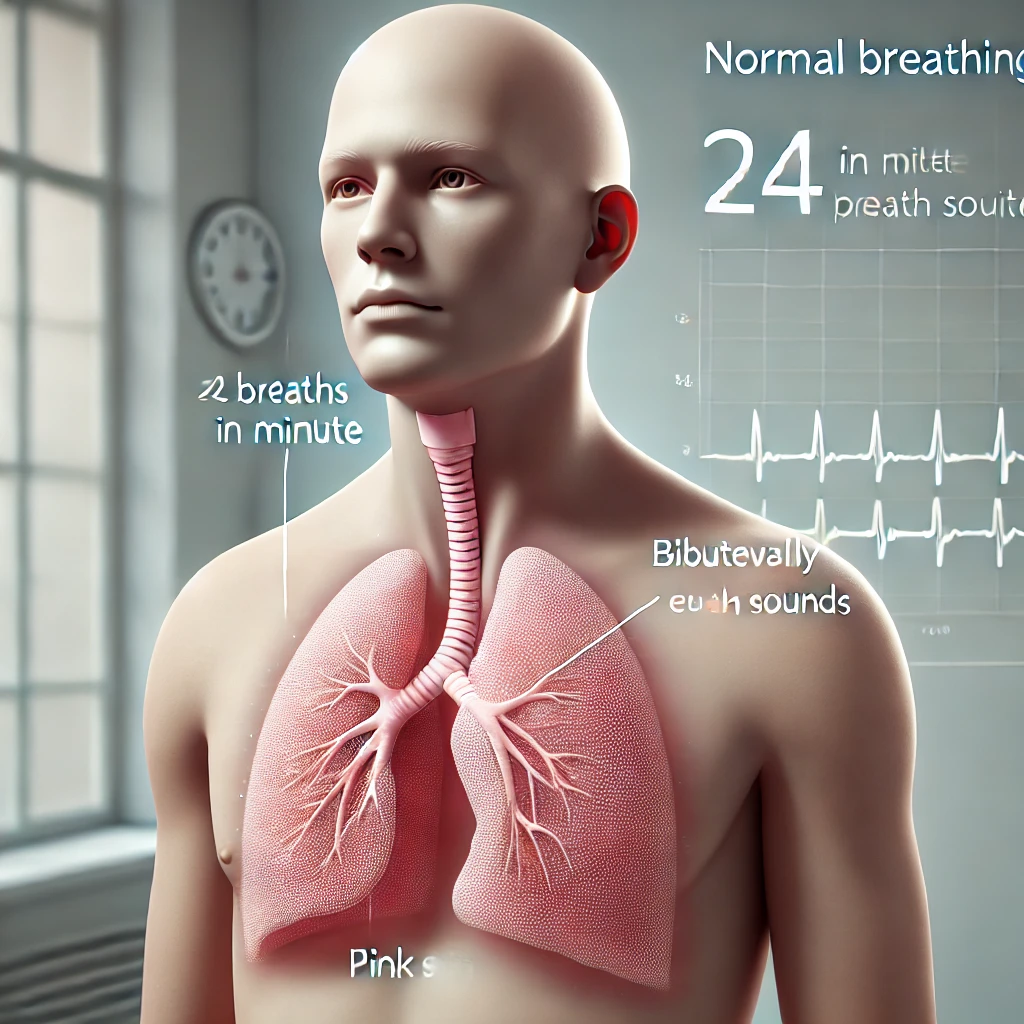
- B. 24 breaths/min with bilaterally equal breath sounds and pink skin
- C. 22 breaths/min with an irregular pattern of breathing and cyanosis
- D. 30 breaths/min with supraclavicular retractions and clammy skin
The correct answer and explanation is:
Correct Answer:
B. 24 breaths/min with bilaterally equal breath sounds and pink skin
Explanation:
Adequate breathing is essential for oxygenation and ventilation, ensuring that the body’s tissues receive sufficient oxygen and expel carbon dioxide effectively. The key characteristics of adequate breathing include:
- A normal respiratory rate (generally 12-20 breaths per minute for adults, though mild variations may still be effective)
- Equal and clear breath sounds in both lungs
- Normal skin color (pink, indicating sufficient oxygenation)
- Regular breathing pattern without excessive effort
Why Option B is Correct?
- Respiratory Rate: 24 breaths per minute is slightly elevated but still within a reasonable range for an adult. It does not necessarily indicate respiratory distress.
- Breath Sounds: Bilaterally equal breath sounds indicate that air is moving freely into both lungs, suggesting open airways and normal lung function.
- Skin Color: Pink skin is a sign of adequate oxygenation and circulation, confirming effective gas exchange in the lungs.
Why Other Options Are Incorrect?
- Option A (20 breaths/min, shallow movement, pallor):
- Although 20 breaths per minute is within normal range, shallow chest movement suggests inadequate ventilation.
- Pallor (pale skin) may indicate poor oxygenation or circulation, which is a sign of respiratory compromise.
- Option C (22 breaths/min, irregular breathing, cyanosis):
- Irregular breathing suggests disrupted respiratory control, possibly due to neurological or metabolic issues.
- Cyanosis (bluish skin) is a sign of significant hypoxia, indicating inadequate oxygenation.
- Option D (30 breaths/min, retractions, clammy skin):
- A respiratory rate of 30 is too high and suggests distress or compensation for a failing respiratory system.
- Supraclavicular retractions indicate increased work of breathing, often seen in respiratory failure.
- Clammy skin suggests poor perfusion, a sign of circulatory shock.
Thus, Option B represents the best characteristics of adequate breathing.
Here is the medical illustration of a person with normal breathing characteristics. Let me know if you need any modifications or further details!