Secondary data consists of information that already exists, having been collected for another purpose.
What are some secondary data sources you might take a look at if you were helping your school develop a marketing strategy?
The correct answer and explanation is:
Secondary Data Sources for School Marketing Strategy
When developing a marketing strategy for a school, various secondary data sources can be valuable. These include:
- Government Reports & Educational Statistics – Data from the Department of Education, census reports, and school district records provide insights into enrollment trends, demographics, and academic performance.
- Market Research Reports – Studies from organizations like IBISWorld or Nielsen offer data on education industry trends and parental preferences.
- Competitor School Websites & Brochures – Analyzing promotional materials from competitor schools helps identify their strengths, weaknesses, and unique selling points.
- Social Media & Online Reviews – Platforms like Facebook, Google Reviews, and Niche.com reveal public perceptions of the school.
- Alumni Databases & Surveys – Data on past students’ career paths and satisfaction can be leveraged to showcase long-term success.
- Local Community & Economic Reports – Chamber of Commerce reports and local economic data provide insights into potential student populations and community needs.
Explanation
Secondary data sources are cost-effective and time-saving since they provide readily available information. By examining government reports, the school can assess enrollment trends and make data-driven decisions about outreach efforts. Market research reports help in understanding industry shifts, such as increasing demand for STEM programs or bilingual education.
Studying competitor marketing materials allows the school to differentiate itself by emphasizing unique programs or extracurricular activities. Social media and online reviews provide direct feedback from parents and students, helping to address concerns and improve public perception. Alumni data serves as a powerful tool for marketing, showcasing success stories that attract prospective students.
Finally, local economic and demographic reports help in identifying potential student bases, ensuring that marketing efforts are targeted effectively. By utilizing these secondary data sources, the school can build a strong, informed marketing strategy.
Now, I’ll generate an image to represent this concept.
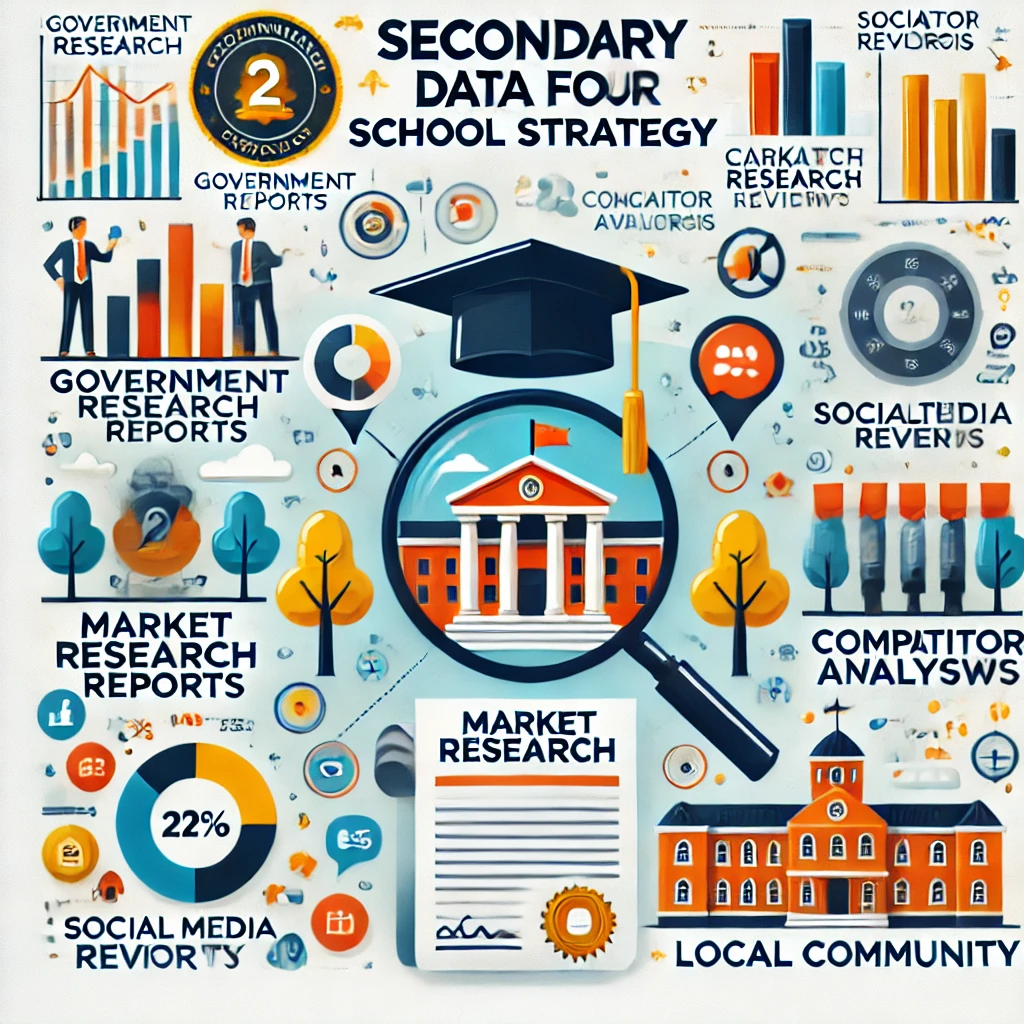
Here is the infographic illustrating secondary data sources for a school marketing strategy. Let me know if you need any modifications!