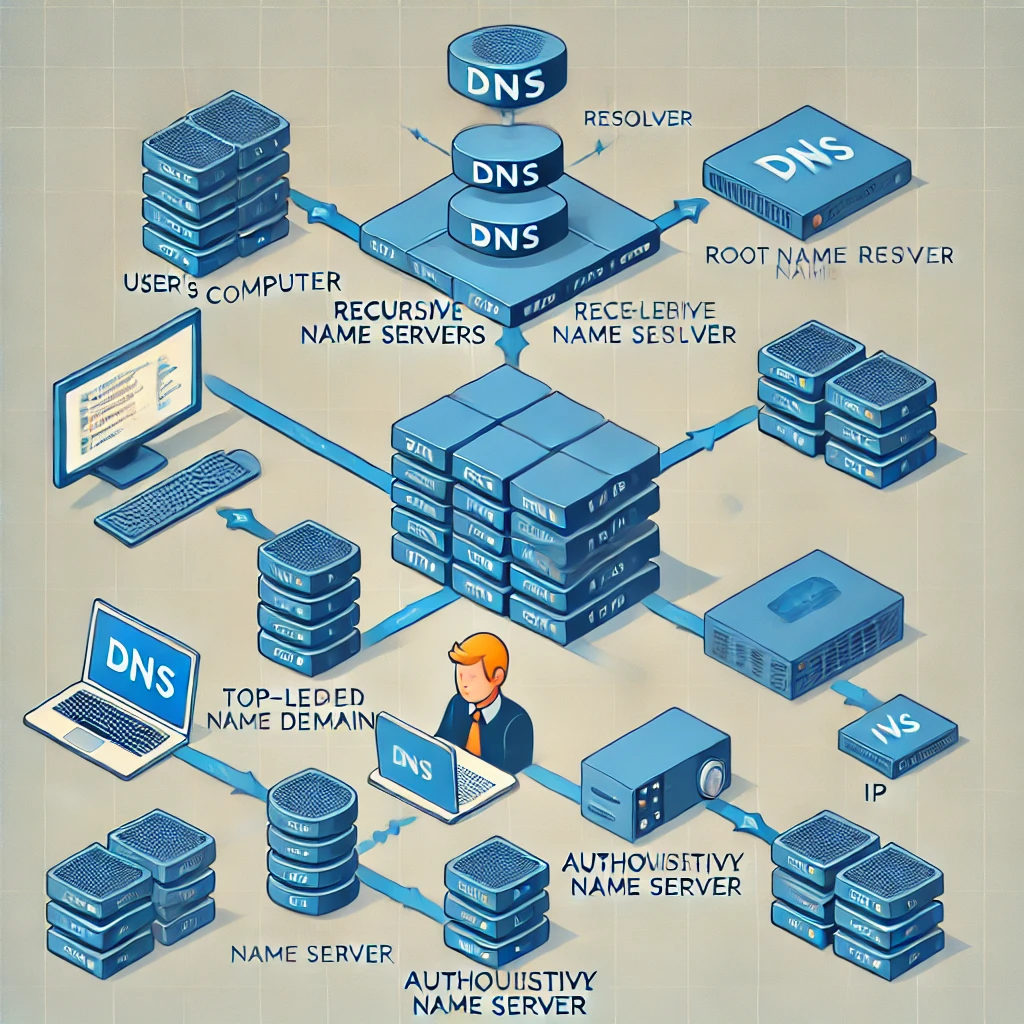
Which of the following statements about DNS are correct?
A typical answer from a top level domain name includes the IP address of the requested domain name.
DNS provides one single service: to translate a name to an IP address.
A DNS server uses caching to quickly answer similar questions.
A local server helps other computer to ask their DNS questions.
A typical answer from an authoritative domain server has the name of the name server that can finally answer the question.
A root server performs recursive lookups on behalf of the requesting clients.
The correct answer and explanation is :
Correct Statements:
- A DNS server uses caching to quickly answer similar questions. ✅
- DNS servers cache responses to reduce the time needed to resolve frequently requested domain names. This improves performance and reduces network traffic.
- A typical answer from an authoritative domain server has the name of the name server that can finally answer the question. ✅
- If the authoritative server doesn’t have the final answer, it will return the name of the next server in the hierarchy that can provide the requested IP address.
Incorrect Statements:
- “A typical answer from a top-level domain name includes the IP address of the requested domain name.” ❌
- TLD (Top-Level Domain) servers do not return the final IP address. Instead, they provide the names of authoritative name servers responsible for the domain.
- “DNS provides one single service: to translate a name to an IP address.” ❌
- DNS does more than just resolve names to IPs. It supports reverse lookups (IP to name), mail exchange (MX records), and service discovery.
- “A local server helps other computers to ask their DNS questions.” ❌
- A local DNS server primarily resolves queries for devices within a network but does not necessarily help others beyond its network.
- “A root server performs recursive lookups on behalf of the requesting clients.” ❌
- Root servers only direct clients to the appropriate TLD servers. Recursive lookups are handled by resolvers (like ISP DNS resolvers).