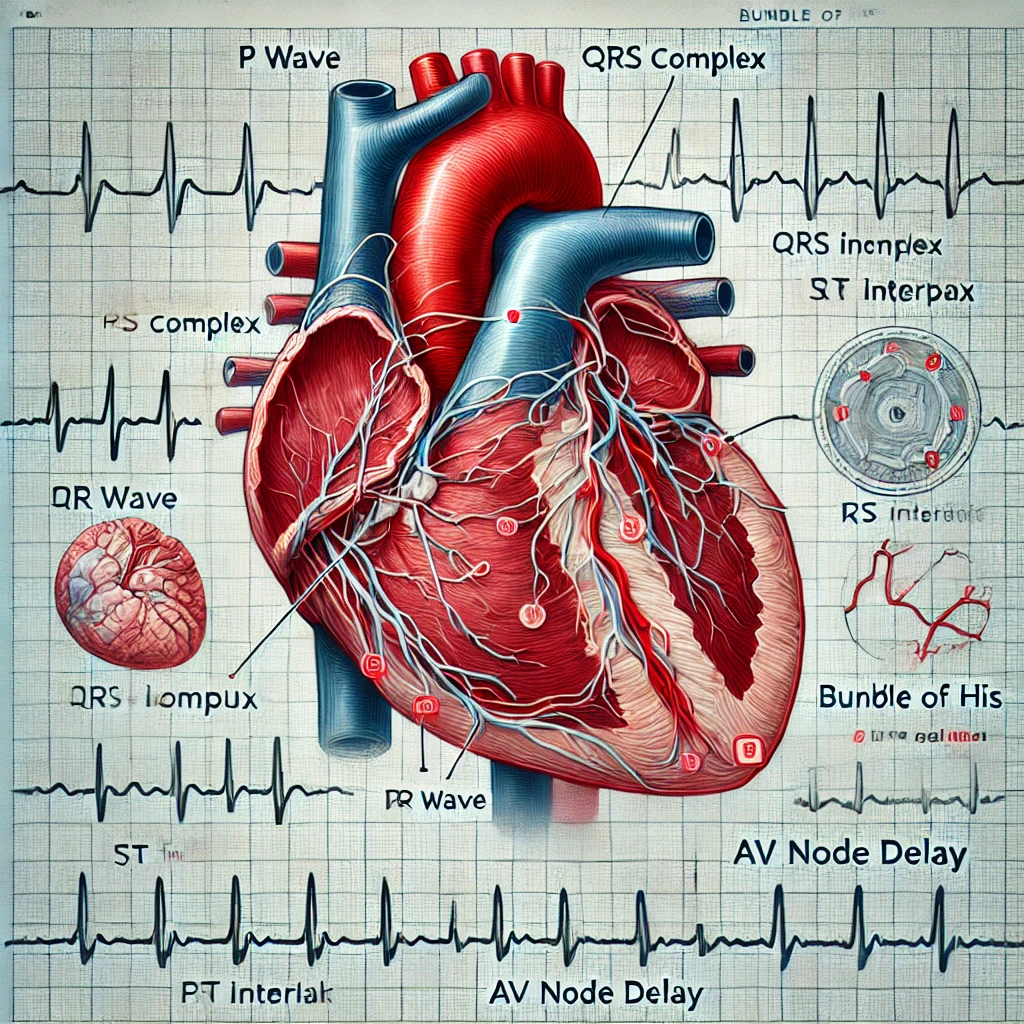
Match the terms below with their descriptions.
a. AV node _ 1. the intrinsic conduction system structure that initiates atrial depolarization
b. interval _ 2. a region on an ECG tracing that is between two waves but doesn’t include a wave
c. P wave _ 3. the deflection on the ECG that is a result of atrial depolarization
d. QRS complex _ 4. the deflection on the ECG that is a result of ventricular depolarization
e. SA node _ 5. the deflection on the ECG that is a result of ventricular repolarization
f. segment _ 6. a region on an ECG tracing that includes a segment and at least one wave
g. T wave _ 7. the intrinsic conduction system structure where the conduction of the impulse is delayed
The correct answer and explanation is :
Correct Answers:
a. AV node ➝ 7. the intrinsic conduction system structure where the conduction of the impulse is delayed
b. interval ➝ 6. a region on an ECG tracing that includes a segment and at least one wave
c. P wave ➝ 3. the deflection on the ECG that is a result of atrial depolarization
d. QRS complex ➝ 4. the deflection on the ECG that is a result of ventricular depolarization
e. SA node ➝ 1. the intrinsic conduction system structure that initiates atrial depolarization
f. segment ➝ 2. a region on an ECG tracing that is between two waves but doesn’t include a wave
g. T wave ➝ 5. the deflection on the ECG that is a result of ventricular repolarization
Detailed Explanation:
The electrocardiogram (ECG or EKG) is a recording of the electrical activity of the heart, which consists of several waves and intervals that represent different phases of cardiac function. The components of the ECG correspond to specific physiological events:
- SA Node (Sinoatrial Node): The SA node is the heart’s natural pacemaker and initiates atrial depolarization, leading to the P wave on an ECG. This depolarization triggers atrial contraction.
- AV Node (Atrioventricular Node): The AV node delays the electrical impulse before it reaches the ventricles. This delay allows time for the atria to fully contract and push blood into the ventricles.
- P Wave: This is the first deflection seen on an ECG and represents atrial depolarization (when the atria contract).
- QRS Complex: This large deflection represents ventricular depolarization (when the ventricles contract). It includes the Q wave (small downward deflection), R wave (large upward deflection), and S wave (downward deflection after the R wave).
- T Wave: This represents ventricular repolarization, where the ventricles recover after contraction and prepare for the next cycle.
- Segments vs. Intervals: A segment refers to a portion of the ECG between waves (e.g., the ST segment is between the QRS complex and T wave). An interval includes both a segment and at least one wave (e.g., the PR interval includes the P wave and the PR segment).
Understanding these components is crucial in diagnosing heart conditions like arrhythmias, heart block, or myocardial infarction.