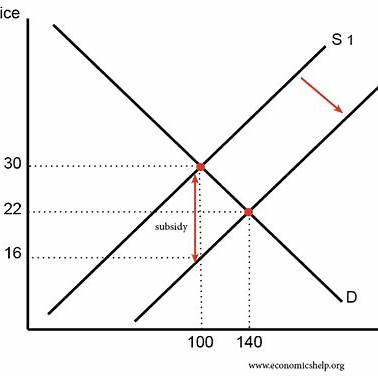
The government passes a law that allows a substantial subsidy for every acre of land use to grow tobacco. How does this program affect the long- run supply curve of tobacco?
The correct answer and explanation is :
Correct Answer: The long-run supply curve of tobacco shifts to the right (or increases).
Explanation:
When the government provides a substantial subsidy for each acre of land used to grow tobacco, the cost of production for tobacco farmers decreases. A subsidy is essentially a financial incentive, which encourages more producers to enter the market or expand their production.
- Lower Production Costs:
A subsidy reduces the effective cost of production for farmers, making it more profitable to grow tobacco. Since growing tobacco becomes more financially attractive, existing farmers may increase their output, and new farmers may enter the industry. - Increase in Supply:
Because the subsidy encourages more land to be used for tobacco farming, the total market supply of tobacco increases. In the long run, more farmers cultivating tobacco leads to a rightward shift of the supply curve, meaning a larger quantity is supplied at the same or even lower prices. - Market Equilibrium Adjustments:
As the supply of tobacco increases, prices may decrease due to higher availability. This could encourage more demand, depending on factors such as government regulations and consumer preferences. However, if demand does not increase at the same rate as supply, there could be a surplus, potentially leading to lower prices in the long run. - Industry Expansion:
If subsidies continue, the tobacco industry will grow as more land and resources are allocated to tobacco farming. This long-term expansion further solidifies the shift in the supply curve.
Conclusion:
In the long run, a government subsidy for tobacco farming leads to an increase in supply, shifting the supply curve to the right, resulting in higher production and potentially lower prices.