Which of the following is a nonelectrolyte? Please state why or why not for each. Thanks
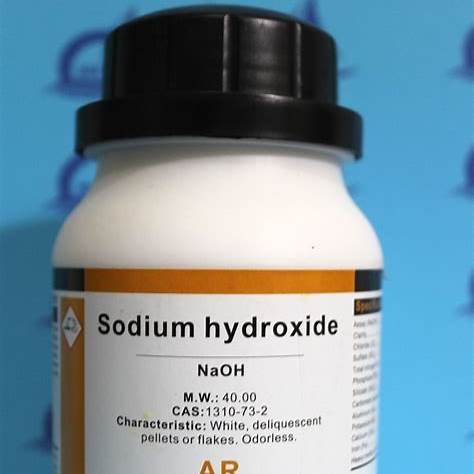
a) NaOH
b) HNO3
c) C2H6O (ethanol)
d) KF
e) CH3COOH (acetic acid)
The correct answer and explanation is :
Correct Answer: c) C₂H₆O (ethanol)
Explanation:
Electrolytes are substances that dissolve in water to produce ions, enabling the solution to conduct electricity. Nonelectrolytes, on the other hand, do not ionize in water and do not conduct electricity. Let’s analyze each option:
- (a) NaOH (Sodium Hydroxide) – Electrolyte
Sodium hydroxide is a strong base that dissociates completely in water into sodium ions (Na⁺) and hydroxide ions (OH⁻), making it a strong electrolyte. - (b) HNO₃ (Nitric Acid) – Electrolyte
Nitric acid is a strong acid that completely ionizes in water into H⁺ and NO₃⁻ ions, making it a strong electrolyte. - (c) C₂H₆O (Ethanol) – Nonelectrolyte
Ethanol is a covalent compound that dissolves in water but does not produce ions. Since no charged particles are formed, ethanol does not conduct electricity, making it a nonelectrolyte. - (d) KF (Potassium Fluoride) – Electrolyte
Potassium fluoride is an ionic compound that dissociates completely in water into K⁺ and F⁻ ions, making it a strong electrolyte. - (e) CH₃COOH (Acetic Acid) – Weak Electrolyte
Acetic acid only partially ionizes in water, producing H⁺ and CH₃COO⁻ ions. Because of this incomplete ionization, it is a weak electrolyte rather than a nonelectrolyte.
Conclusion:
Among the given choices, ethanol (C₂H₆O) is the only nonelectrolyte because it does not ionize in water and does not conduct electricity. Other substances either fully or partially ionize, classifying them as strong or weak electrolytes.