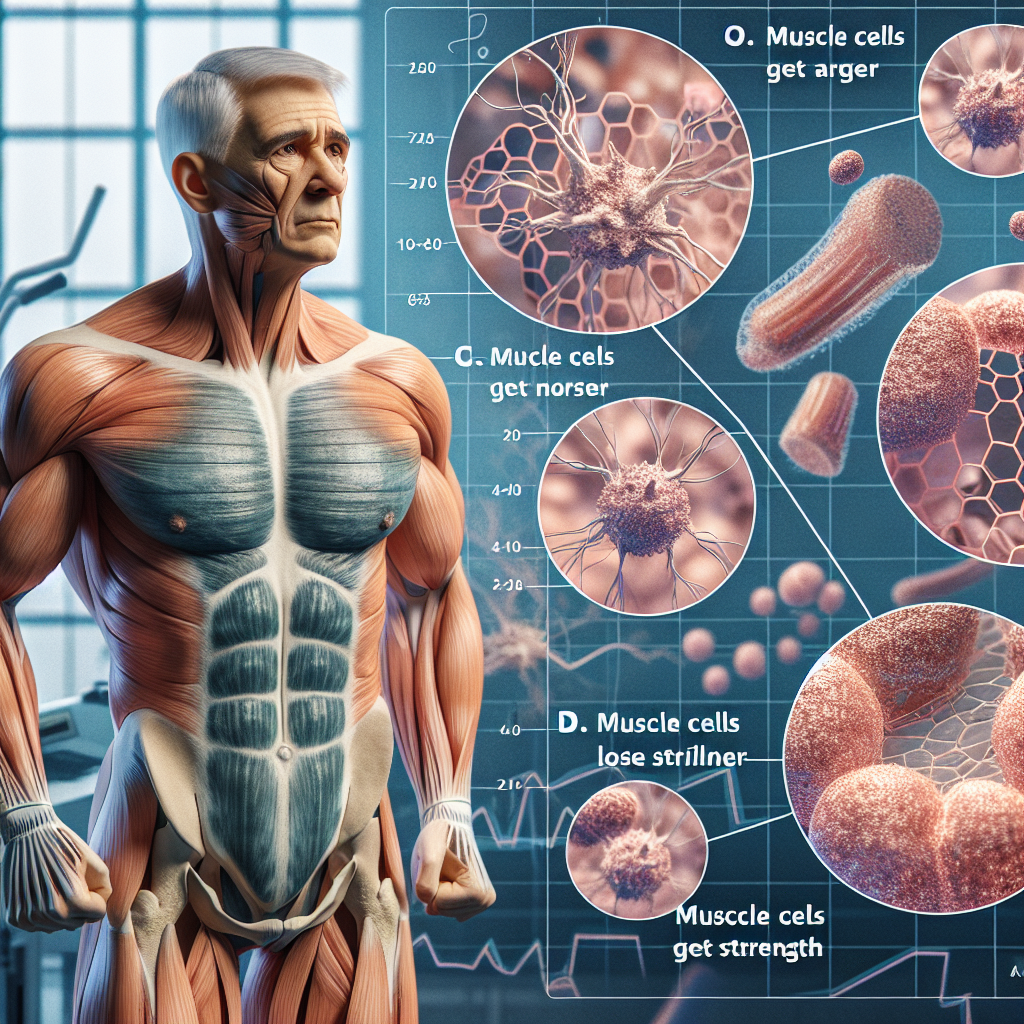
Older adults tend to lose muscular strength because muscle cells
get larger in size.
attach to the nervous system.
increase in number.
get smaller in size.
The correct answer and explanation is :
Correct Answer: get smaller in size.
As people age, one of the most noticeable changes in the body is a loss of muscular strength. This decrease is largely due to a process called sarcopenia, which refers to the age-related loss of muscle mass and function. The correct answer—muscle cells get smaller in size—explains a key reason behind this decline in strength.
With aging, muscle fibers shrink, particularly the fast-twitch (Type II) fibers responsible for quick, powerful movements. These fibers tend to atrophy (decrease in size) more than the slow-twitch (Type I) fibers, leading to a reduction in overall muscle power and endurance. In addition to shrinking, the total number of muscle fibers also declines, further compounding the strength loss.
Another contributing factor is a decrease in physical activity, which often accompanies aging. Muscles that are not regularly used become weaker over time, a principle known as “use it or lose it.” Older adults may also experience hormonal changes (such as decreased testosterone and growth hormone levels), reduced protein synthesis, and impaired nerve signaling, all of which can negatively impact muscle size and function.
Importantly, while muscle cells don’t typically increase in number during adulthood, their size can be influenced by factors like resistance training and diet. Strength training, for instance, can help older adults maintain or even increase muscle mass and strength, mitigating some of the effects of sarcopenia.
In summary, the age-related loss of muscular strength is primarily due to muscle cells getting smaller in size, not larger, not attaching more to the nervous system, or increasing in number. Understanding this helps in promoting strategies like regular strength exercise and proper nutrition to support healthy aging.