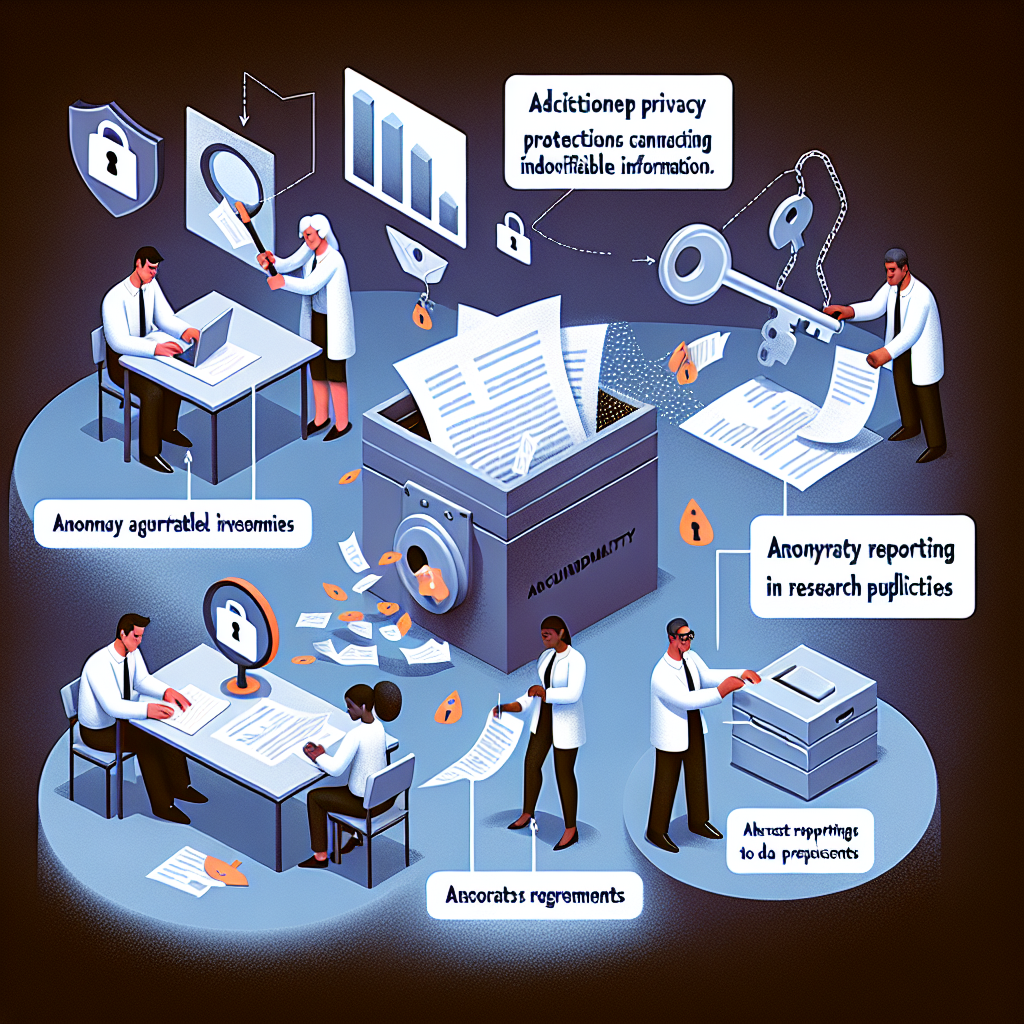
Additional protections researchers can include in their practice to protect subject privacy and data confidentiality include:
Reporting data in aggregate form in publications resulting from the research.
Destroying all identifiers connected to the data.
Requiring all members of the research team to sign confidentiality agreements.
Keeping the key linking names to responses in a secure location.
All of the above
The correct answer and explanation is :
Correct Answer: All of the above
All of the listed practices are important additional protections researchers can implement to safeguard subject privacy and maintain data confidentiality. Together, these measures create a robust framework to ensure ethical and secure handling of sensitive information.
- Reporting data in aggregate form helps protect individual identities by presenting data in a way that makes it difficult to trace back to specific participants. Rather than sharing individual responses, researchers summarize findings across groups. This is especially important when dealing with small populations or sensitive topics, as it minimizes the risk of deductive disclosure, where someone could infer personal identities from detailed data.
- Destroying all identifiers connected to the data is a crucial step after the data analysis phase is complete. Identifiers such as names, addresses, or social security numbers can be used to trace responses back to individual subjects. By removing or destroying these identifiers, researchers further reduce the chance of a data breach or accidental disclosure.
- Requiring all members of the research team to sign confidentiality agreements reinforces the ethical responsibility each team member holds. These agreements establish clear expectations about how data must be handled and the legal or institutional consequences of breaching confidentiality. They also help foster a culture of trust and accountability within the research team.
- Keeping the key linking names to responses in a secure location (such as a locked file cabinet or encrypted digital folder) ensures that if identifiers are temporarily necessary for tracking or verification purposes, they are not easily accessible to unauthorized individuals. This practice is especially important when data is being collected longitudinally or when follow-up with participants is planned.
By using all of these protections in combination, researchers can significantly enhance the privacy and confidentiality of their participants, comply with institutional and legal requirements (such as HIPAA or IRB guidelines), and uphold ethical standards in research practice.