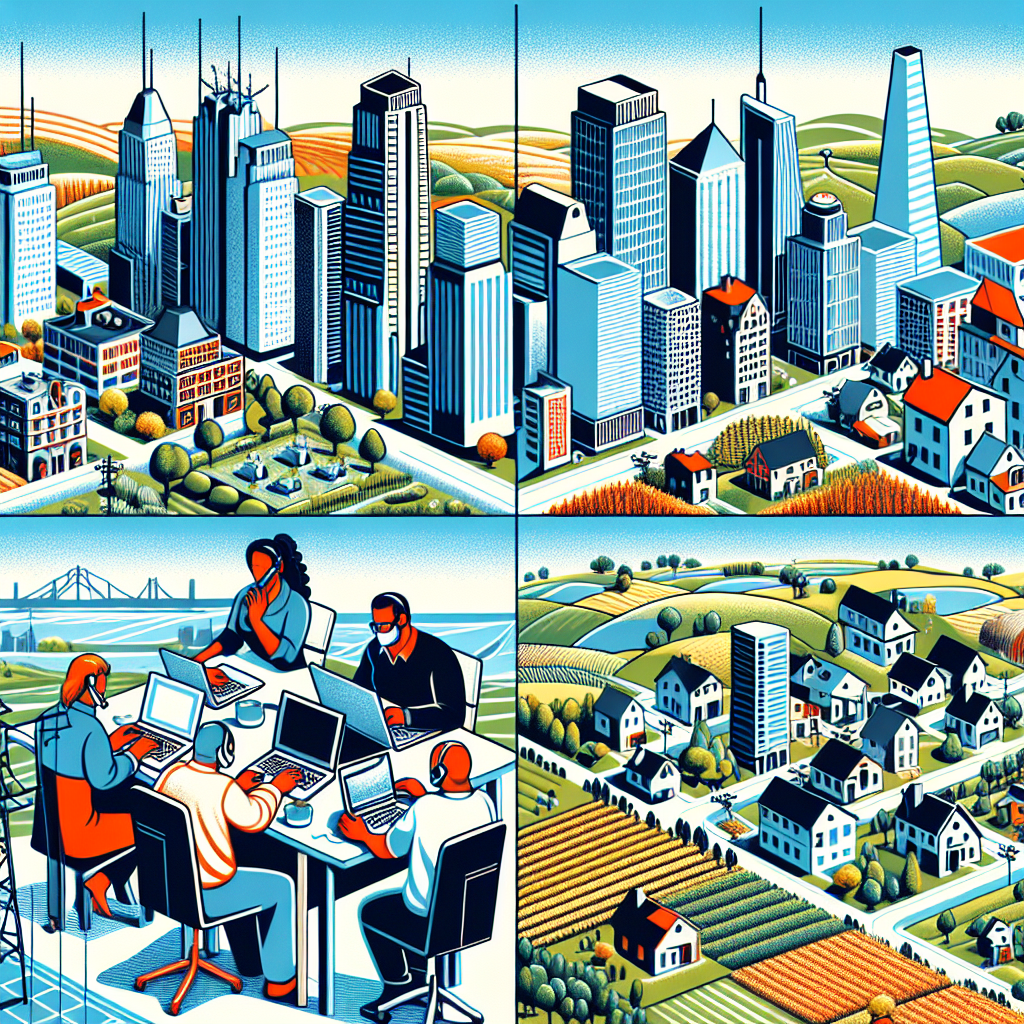
In the context of geographical shifts in population, the migration toward ________ areas has resulted in a rapid increase in the number of people who telecommute.
A) urban
B) remote
C) rural
D) metropolitan
E) micropolitan
The correct answer and explanation is :
The correct answer is: C) rural
Explanation (300 words):
In recent years, population migration patterns have undergone significant changes, largely influenced by advancements in technology, shifting economic factors, and evolving lifestyle preferences. One notable trend is the movement of people away from densely populated urban centers toward rural areas. This shift has been driven by several factors, including the high cost of living in cities, the desire for more space and a better quality of life, and—most critically—the rise of remote work options.
The COVID-19 pandemic accelerated the adoption of telecommuting, or working from home, as businesses adapted to lockdowns and social distancing requirements. As more companies embraced flexible work arrangements, employees gained the freedom to live further from their physical offices. Consequently, many chose to relocate to rural areas, which offered more affordable housing, less congestion, and closer proximity to nature. Because rural regions often lack large employment centers, the ability to telecommute has been essential for maintaining employment while residing in these locations.
This migration has contributed to a rapid increase in the number of people who telecommute. Previously, rural areas were considered impractical for professionals due to long commutes and limited job opportunities. Now, however, high-speed internet and digital collaboration tools enable people to perform their jobs effectively from almost anywhere.
While options like “urban” (A) or “metropolitan” (D) refer to already dense areas and thus do not reflect a shift, and “micropolitan” (E) refers to small-scale urban areas that aren’t rural enough, the word “rural” best fits the context of people moving away from cities and embracing telecommuting lifestyles. “Remote” (B), although tempting, refers to geographical isolation but doesn’t specifically capture the idea of established communities people are migrating to.
Thus, the migration toward rural areas has significantly contributed to the growth of telecommuting.