Which of the following are primary lymphoid organs?
spleen and thymus
lymph nodes and tonsils
bone marrow and thymus
appendix and spleen
The correct answer and explanation is :
Correct Answer: Bone marrow and thymus
Explanation (300 words):
The lymphatic system is a crucial part of the immune system, and it consists of various organs, tissues, and cells that work together to defend the body against infections and diseases. Lymphoid organs are categorized into primary and secondary lymphoid organs based on their function and role in lymphocyte development and immune responses.
Primary lymphoid organs are the sites where lymphocytes (a type of white blood cell) are produced and mature. These organs provide the necessary environment for the development and maturation of B cells and T cells, two critical components of the adaptive immune system.
The two primary lymphoid organs are:
- Bone Marrow:
- This is the soft tissue found within bones.
- It is the origin of all blood cells, including lymphocytes.
- B cells mature in the bone marrow. (In birds, B cells mature in the bursa of Fabricius, which is where the “B” in B cells comes from.)
- Thymus:
- Located in the upper chest behind the sternum.
- It is the site where T cells mature. Immature T cells from the bone marrow migrate to the thymus for maturation and selection to ensure they can properly recognize antigens and do not attack the body’s own tissues.
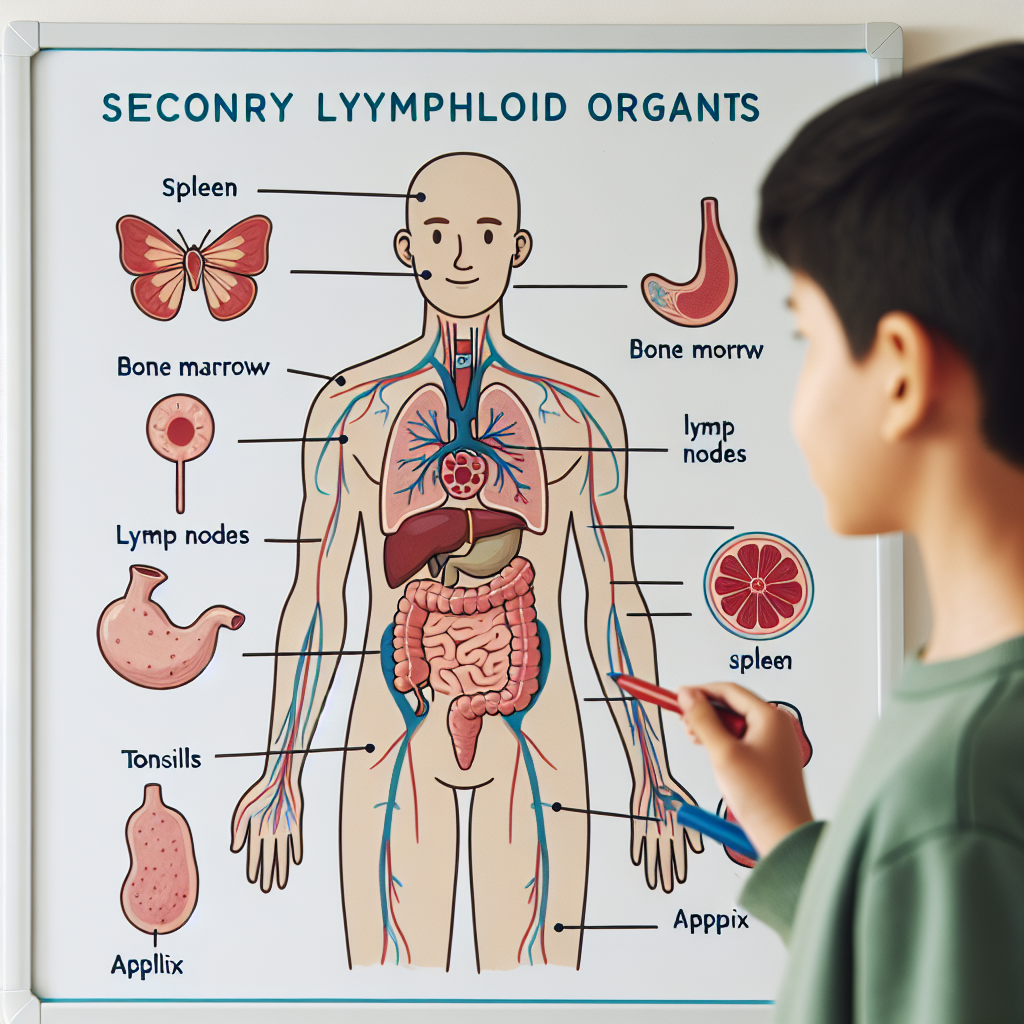
In contrast, secondary lymphoid organs—such as the spleen, lymph nodes, tonsils, and appendix—are sites where mature lymphocytes become activated in response to encountering antigens. These organs are important for initiating adaptive immune responses but are not involved in the development or maturation of lymphocytes.
Therefore, the correct answer is bone marrow and thymus, as they are the only lymphoid organs where lymphocyte development and maturation occur, making them primary lymphoid organs.