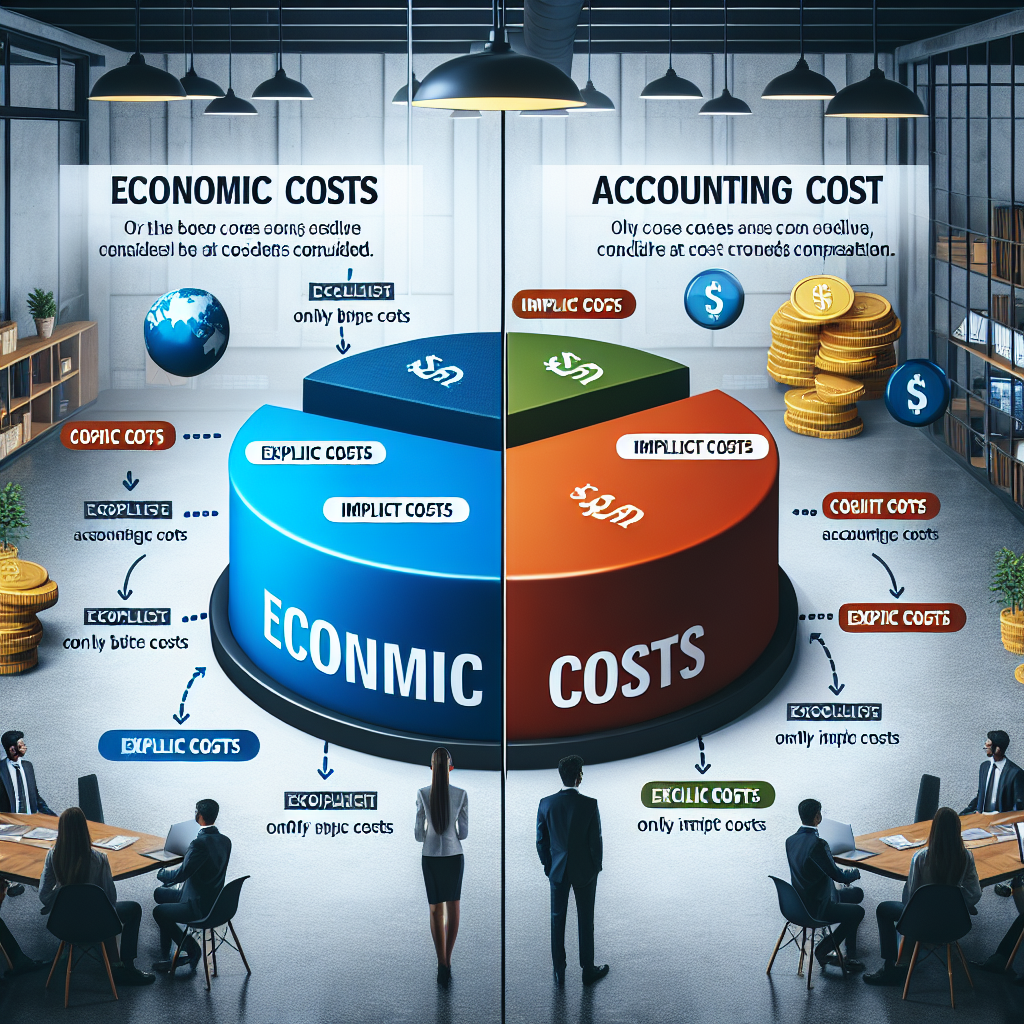
Economic costs and accounting costs differ became accountants include
only explicit costs.
both explicit and implicit costs.
only implicit costs.
neither explicit nor implicit costs
The correct answer and explanation is :
Correct Answer: Only explicit costs.
Explanation (300 words):
Economic costs and accounting costs differ primarily in the types of costs they include. Accounting costs refer to the actual monetary expenditures a firm makes and are recorded in financial statements. These are also known as explicit costs, which include wages, rent, utilities, materials, and other out-of-pocket payments. Accountants focus on these tangible, historical costs because they are verifiable and used for reporting profits, taxes, and financial performance.
In contrast, economic costs go beyond just the explicit costs. Economists consider both explicit and implicit costs. Implicit costs represent the opportunity costs of using resources owned by the firm. For example, if the owner of a business uses a building they own instead of renting it out, the forgone rental income is an implicit cost. Similarly, if an entrepreneur uses their own time and skills to run the business, the salary they could have earned elsewhere is an implicit cost.
Therefore, economic costs = explicit costs + implicit costs.
The key reason for this distinction is the concept of opportunity cost in economics. Economists aim to evaluate the full cost of decisions by considering what is given up in the next best alternative. This helps in assessing the true profitability and efficiency of a business.
In summary, accounting costs include only explicit costs, making them narrower in scope than economic costs. This is why a firm may appear profitable from an accounting standpoint (revenue > explicit costs), but may not be economically profitable if the implicit costs are substantial. Understanding both perspectives is crucial: accounting costs help with financial reporting, while economic costs aid in decision-making and resource allocation.