Question 10 (10 points)
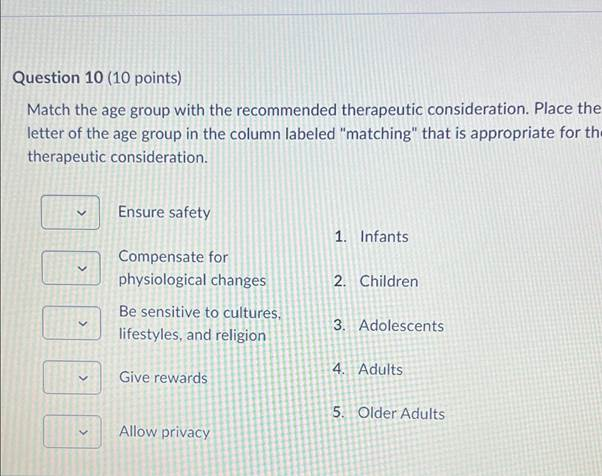
Match the age group with the recommended therapeutic consideration. Place the letter of the age group in the column labeled “matching” that is appropriate for the therapeutic consideration.
Ensure safety – Infants
Compensate for physiological changes – Children
Be sensitive to cultures, lifestyles, and religion – Adolescents
Give rewards – Adults
Allow privacy – Older Adults
The Correct Answer and Explanation is:
Correct Answers:
- Ensure safety – 1. Infants
- Compensate for physiological changes – 5. Older Adults
- Be sensitive to cultures, lifestyles, and religion – 4. Adults
- Give rewards – 2. Children
- Allow privacy – 3. Adolescents
Explanation
Therapeutic considerations must be tailored to the developmental and psychological characteristics of each age group to ensure effective and compassionate care.
Infants require constant supervision and physical protection due to their vulnerability and limited ability to respond to environmental dangers. Therefore, the primary therapeutic consideration for this group is to ensure safety. This includes practices such as safe handling, secure environments, and vigilant monitoring.
Older Adults often experience physiological changes such as decreased mobility, vision, hearing, and slower metabolism. These changes can affect how they respond to medications, therapy, and physical activity. Hence, health professionals must compensate for these changes by adjusting treatments and environments to suit their aging bodies.
Adults come from a wide range of cultures, lifestyles, and religious backgrounds. Sensitivity to these factors is essential in adult care to build trust, ensure comfort, and respect the individual’s values and preferences. Personalizing care in this way improves compliance and outcomes.
Children are in a stage of development where motivation and engagement can be enhanced through positive reinforcement. Therefore, it is effective to give rewards for cooperation in treatment or behavioral progress. This helps to instill a sense of accomplishment and promotes ongoing participation in therapeutic activities.
Adolescents are in a critical period of identity formation and are particularly sensitive to issues of autonomy and body image. Thus, they highly value privacy. Respecting their need for confidentiality and personal space helps build rapport and encourages open communication with healthcare providers.
In summary, age-specific therapeutic considerations enhance care effectiveness by addressing physical, emotional, and social needs unique to each developmental stage.